
A failed flashing detail can allow water behind otherwise sound tiles, slates or cladding, turning a local repair into damage to battens, timbers and internal finishes. When considering zinc versus aluminium flashing, the right choice is not simply about the initial material price. The roof design, surrounding materials, location and expected service life all matter.
For many UK properties, flashing is associated with leadwork around chimneys, abutments and valleys. Zinc and aluminium can also be suitable in the right application, particularly on modern roof details, wall junctions and certain commercial roofing projects. A professional inspection should establish why the existing flashing has failed before any material is selected.
What flashing needs to do
Flashing bridges vulnerable joints where water naturally collects or is driven by wind. It may sit where a pitched roof meets a wall, around a chimney stack, beside a dormer, at a roof valley or at a transition between different roof coverings.
The material has to remain watertight while allowing for movement. Roof coverings expand and contract with changes in temperature, buildings settle over time, and wind can place considerable pressure on exposed edges. Poorly formed laps, inadequate upstands or incorrect fixings can cause leaks whatever metal is used.
That is why a flashing repair should be judged as a complete detail, not just a choice between two metal sheets. The condition of the underlay, tiles or slates, mortar, timber and adjacent guttering may also need attention.
Zinc versus aluminium flashing: the key differences
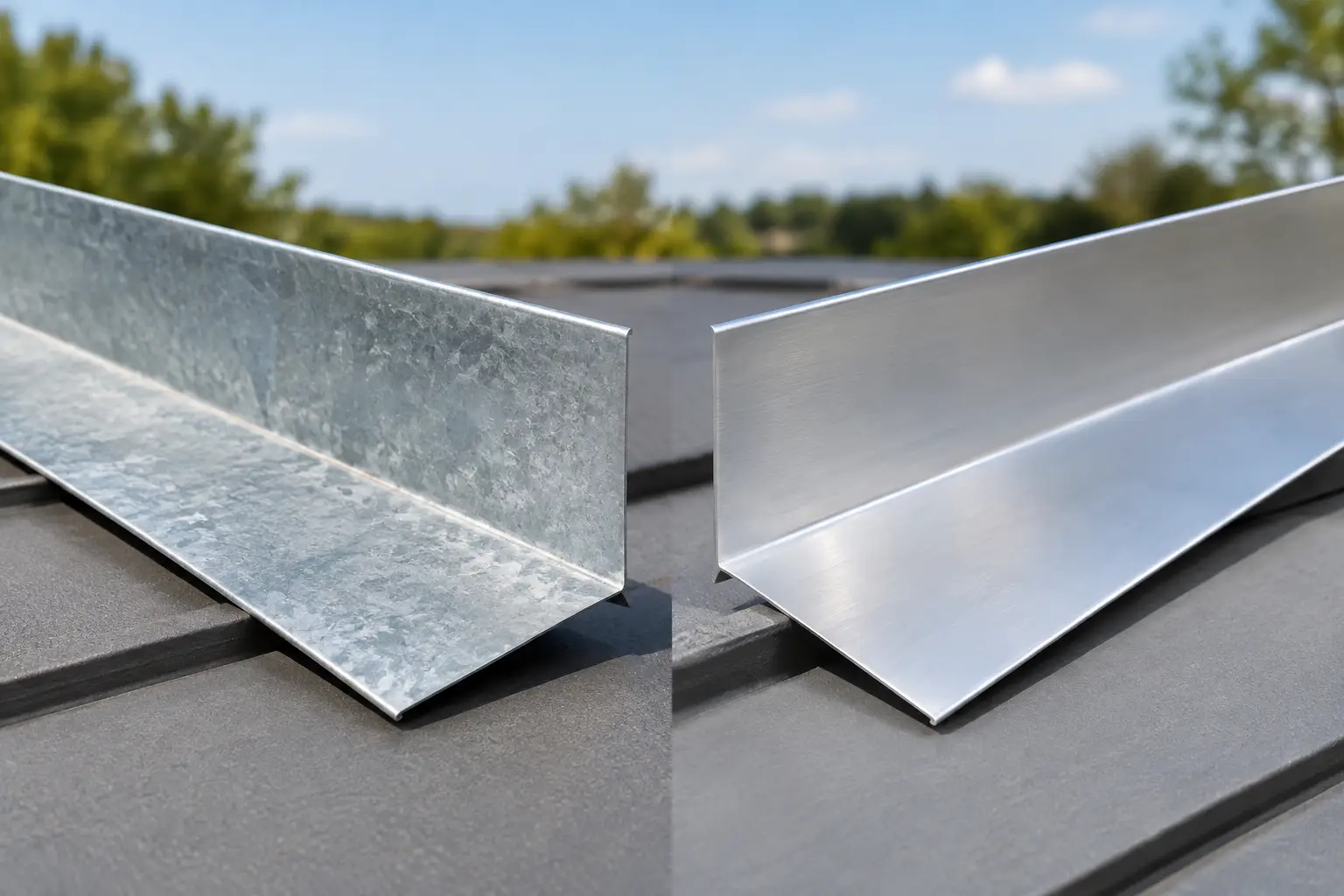
Zinc and aluminium are both lightweight, corrosion-resistant metals, but they behave differently on a roof. Zinc is often chosen where longevity and a traditional, high-quality finish are priorities. Aluminium can be a practical option where low weight, ease of handling and a lower initial cost are more important.
Lifespan and weathering
Zinc develops a natural protective surface as it weathers. When correctly specified and installed, it can provide a long service life and is well suited to architectural details where appearance matters. Its finish gradually changes from a bright metallic tone to a softer grey, which many property owners find attractive.
Aluminium also resists corrosion because it forms a protective oxide layer. It does not rust in the way untreated steel can, and painted or coated aluminium is available in a wide range of finishes. However, its long-term performance depends heavily on coating quality, installation and exposure. Damage to a coating or repeated abrasion from debris can leave a detail looking tired sooner than expected.
In harsh coastal locations, both materials require careful consideration. Salt-laden air, persistent moisture and strong winds increase the importance of correct laps, fixings and compatibility with nearby metals. The most suitable option may differ between a sheltered suburban house and an exposed commercial building near the coast.
Strength and movement
Aluminium is exceptionally light, which can make it easier to handle on larger sections or complex details. It is also straightforward to form, though it can dent more readily than zinc if knocked during works or hit by ladders, falling branches or maintenance equipment.
Zinc is also workable but needs room to expand and contract. Long lengths should be detailed properly rather than fixed so tightly that movement causes distortion or stress. A competent roofer will allow for thermal movement, use appropriate clips or fixings, and avoid creating areas where water can sit.
Neither material should be treated as a quick cover-over for a poorly prepared junction. If the roof line is uneven, the masonry is defective or the substrate has deteriorated, those underlying faults should be put right first.
Appearance on traditional and modern roofs
For period homes with slate, clay tile or traditional brickwork, zinc can offer a refined finish that weathers naturally with the building. It is often selected for visible dormer cheeks, parapets, box gutters and bespoke roof features where the finish is part of the overall design.
Aluminium is frequently used where a consistent factory-coated colour is wanted. It can suit contemporary extensions, commercial premises and details that need to match cladding, fascias or rainwater goods. Its lighter weight can be useful where a structure has limited load capacity, although a roofer must still assess the full build-up rather than relying on material weight alone.
The most visually appropriate choice is not always the most economical one. On a prominent roof elevation, a material that complements the existing slate or tile can add value and avoid a patchwork appearance after repair work.
Material compatibility is not optional
One of the most common causes of premature failure is incompatible metal contact. When certain metals are placed together in wet conditions, galvanic corrosion can occur. Water running from one material onto another can also carry residues that affect the surface below.
Zinc should not be positioned where it receives uncontrolled runoff from copper. It also needs suitable separation from treated timber, cement-based products and some roofing membranes where moisture may be trapped. Aluminium can be affected by contact with alkaline materials, including wet mortar or concrete, and should be protected accordingly.
This is one reason flashing work should not be approached as a simple DIY material swap. The correct underlay, separation layer, sealants, fixings and drainage route are just as important as the visible metal. A repair that looks neat on day one can fail early if these details have been overlooked.
Cost: look beyond the sheet price
Aluminium is often less expensive to buy and can reduce handling time in some installations. That can make it attractive for straightforward repairs or larger projects where budget control is essential. Zinc generally has a higher upfront cost, especially where bespoke forming or specialist detailing is required.
However, the lower purchase price is not automatically the lower lifetime cost. Replacing damaged flashing can involve lifting surrounding tiles or slates, rebuilding a chimney chase, renewing underlay and making good internal damage caused by a leak. Spending more on a correctly installed, durable detail may be sensible where access is difficult or the flashing is intended to remain in place for decades.
A clear quotation should identify the proposed material, the extent of strip-out, preparation to the surrounding roof area and any associated repairs. If a contractor quotes only for a narrow strip of flashing without assessing the cause of water ingress, ask whether nearby tiles, pointing, gutters or roof timbers have been checked.
When zinc is usually the better choice
Zinc is often worth considering for long-term planned works, heritage-sensitive properties and highly visible architectural details. It is particularly effective where natural weathering is desired and the detail can be installed with proper provision for ventilation, drainage and movement.
It may be the stronger choice for a premium re-roof, a dormer refurbishment or a carefully specified chimney and abutment detail. That does not mean it is automatically right for every property. On a small repair where matching surrounding materials, access constraints or budget are the deciding factors, another solution may be more practical.
When aluminium may be more suitable
Aluminium can be a sensible choice for lightweight flashing details, colour-matched exterior works and straightforward installations where the material is protected from incompatible contact. It can also work well on commercial properties where large areas of coated metal need a consistent finish.
The material needs careful handling and correct edge detailing. Thin, poorly supported aluminium may deform, while inappropriate sealant or direct contact with wet mortar can shorten its service life. Quality of installation remains the deciding factor.
Arrange the repair before a small leak grows
Water marks near a chimney breast, staining around a dormer or damp at a wall-to-roof junction should be inspected promptly. The visible symptom may be a split flashing, but it could also involve cracked pointing, slipped tiles, blocked gutters or failed underlay.
Armstrong Roofing & Building can inspect flashing defects as part of a wider roof assessment, from localised repairs and leadwork to planned re-roofs, tile and slate work, chimney repairs and guttering. Free quotes and no call-out charge help property owners understand the required work before committing, while a 24-hour emergency response is available when active water ingress cannot wait.
The best flashing is the one specified for the building, installed as a complete weatherproofing detail and checked before a minor weakness becomes a larger roof repair.