

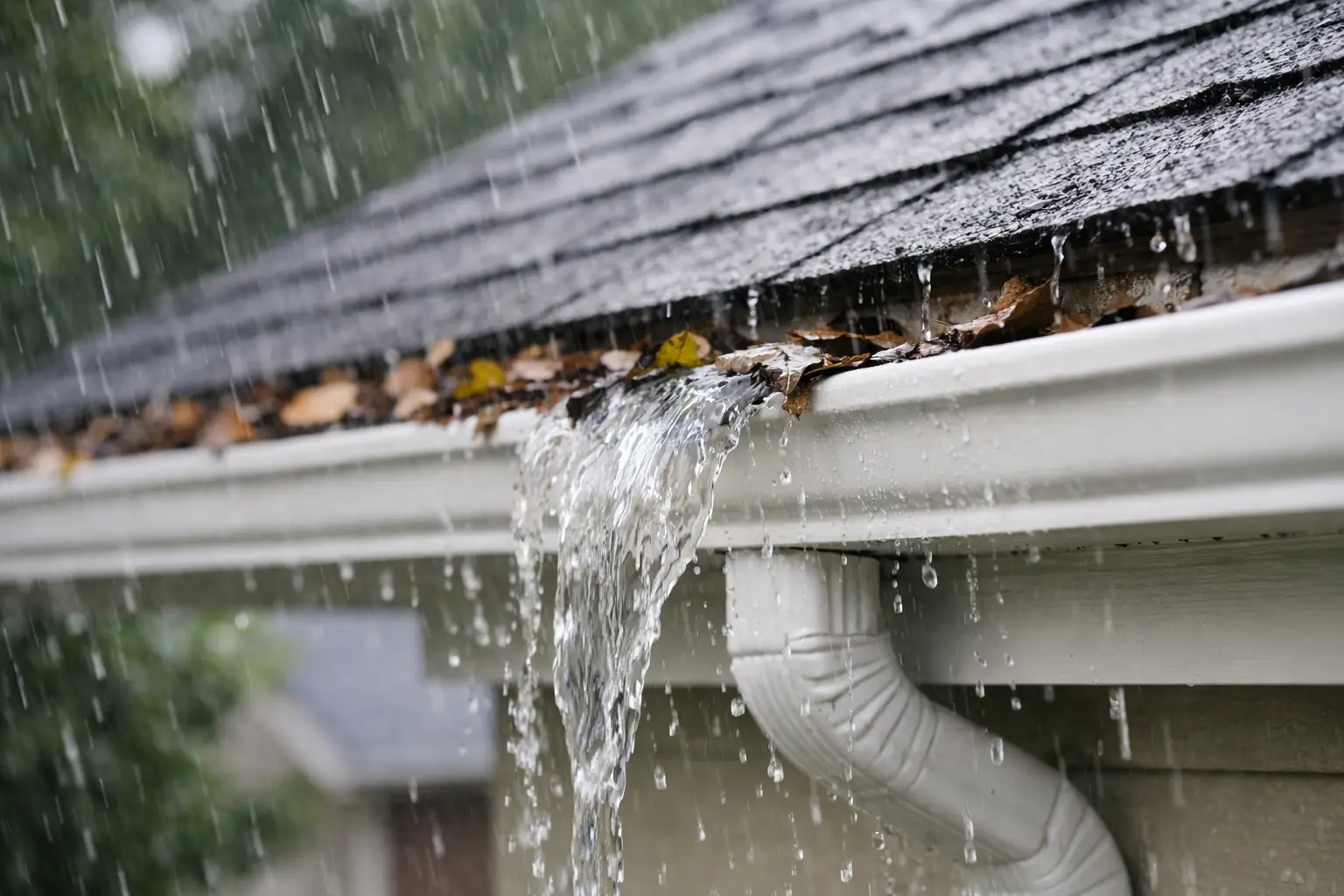
A gutter that spills over during a downpour is not simply an annoyance at the front door. If you are asking, “why are gutters overflowing in rain?”, the answer may range from a straightforward blockage to a drainage system that is too small, incorrectly fitted or damaged. Left unresolved, the water can soak fascias, run down external walls, flood paths and contribute to damp or damage around the property.
For homeowners, landlords and property managers, the key is to establish whether the overflow happens only in exceptional weather or during ordinary rainfall. A brief overspill in a severe storm can be unavoidable with some older systems. Regular overflow, however, needs attention before it turns into a wider roofing or building repair.
Why are gutters overflowing in rain?
Gutters are designed to collect water from the roof and channel it safely into downpipes and drains. Overflow occurs when water cannot enter the gutter quickly enough, cannot travel along it freely, or has nowhere to go once it reaches the downpipe.
The location of the overflow provides a useful clue. Water spilling over the front edge commonly points to a blocked gutter, poor fall or inadequate capacity. Water running behind the gutter towards the fascia may indicate that the gutter has pulled away from the roofline, the brackets are loose, or the roof covering and eaves detail are directing water incorrectly.
It is worth inspecting during rainfall from ground level where it is safe to do so. You can often see exactly where the problem starts. Do not climb ladders in wet or windy conditions, and avoid trying to clear high-level obstructions without the right access equipment.
Blocked gutters and downpipes
Leaves, moss, twigs, roof grit and wind-blown debris build up in gutters over time. In autumn, a system beneath trees can block surprisingly quickly. Moss is particularly common on older tile and slate roofs; when it loosens, rain carries it into the gutter, where it forms a dense, wet blockage.
A partial blockage may allow water through in light rain but fail when the roof is shedding a larger volume of water. This is why an issue can seem to appear suddenly during a heavy shower. The gutter is already restricted, and the extra flow exposes the problem.
Downpipe blockages are equally common. Water may gather at one end of the gutter and then overflow because it cannot descend. Look for standing water, a downpipe that does not discharge during rain, or damp staining near the base of the wall. The obstruction may be at the outlet, within a bend, or at the connection to the drain.
Routine clearing is often the solution, but it should include the downpipes and outlets rather than just the visible gutter channel. Gutters that fill repeatedly with moss may also justify a closer look at the roof covering and its general condition.
Poor gutter fall and loose brackets
Gutters need a gradual fall towards the downpipe. It is subtle enough that it should not be obvious from the ground, but it is essential for drainage. If brackets have moved, failed or been fixed at the wrong level, water pools in the gutter instead of moving to the outlet.
Standing water adds weight, which can pull older brackets further out of position. In freezing weather, that trapped water expands and can crack joints or distort sections of plastic guttering. What begins as an occasional overflow may then become a sagging, leaking system.
Loose or damaged brackets can also create a gap between the back of the gutter and the fascia. Rainwater then passes behind the gutter, soaking the timber or uPVC board. If the fascia is timber, repeated wetting can lead to rot and make future gutter fixing less secure.
Correcting the fall is not simply a matter of lifting one section. The line, bracket spacing, outlet position and condition of the fascia all need checking. A professional repair can reset the system so water flows properly without creating low points elsewhere.
Gutters that are too small for the roof
Not every overflowing gutter is dirty or damaged. Some systems are undersized for the roof area they serve, especially where extensions have been added, roof pitches direct large volumes of water into one valley, or a former installation used narrow domestic guttering on a large roof.
Heavy rain is becoming a practical test for many older drainage arrangements. A gutter may cope with steady rainfall but be overwhelmed by a short, intense burst. This is particularly likely on commercial units, large detached homes, blocks of flats and roofs with wide slopes feeding one run of guttering.
The answer may be larger-capacity guttering, additional downpipes or a redesigned arrangement around valleys and junctions. Increasing the gutter size alone will not solve a blocked underground drain or an incorrectly positioned outlet, so the full rainwater route should be assessed first.
Roof valleys, slipped tiles and eaves problems
Water does not always reach the gutter where it should. A roof valley concentrates runoff from two slopes into a narrow channel. If the valley is damaged, incorrectly detailed or obstructed by debris, water can shoot over the gutter during heavy rain. This can look like a gutter fault even when the gutter itself is clear.
Slipped, broken or poorly aligned tiles near the eaves can also direct water behind or beyond the gutter. On tiled and slate roofs, the eaves support detail helps guide water into the gutter. If it has deteriorated, water may track back onto the fascia or drip at awkward points along the roofline.
Leadwork around chimneys, abutments and roof junctions can create similar issues when it has failed or been altered incorrectly. These are areas where a gutter clean will not address the cause. A roofing inspection is needed to distinguish between a drainage problem and a defect in the roof covering.
Leaking joints can look like overflow
A dripping gutter joint is different from a full gutter overflowing, but the effects can be similar. Rubber seals dry out, plastic sections expand and contract, and older cast-iron systems can corrode at joints. Water escaping from a joint can repeatedly soak the same part of a wall or entrance below.
During heavy rain, a leaking union may appear to be an overflow because the volume of water is greater. Check whether the water is coming over the edge, from the rear of the gutter, or directly from a connection. This distinction helps determine whether the repair requires cleaning, realignment, resealing or replacement of a damaged section.
Temporary sealants sometimes provide a short-term fix, but they are rarely suitable where the gutter has sagged, the joint is cracked or movement has caused the seal to fail. Replacing worn sections and correcting the support is usually the more dependable option.
When overflowing gutters need urgent attention
Arrange prompt repairs if water is entering the building, running behind the fascia, affecting electrics, washing out ground near the foundations, or causing a visible bulge or sag in the gutter. These signs suggest the issue is doing more than creating a nuisance outside.
Landlords and commercial property managers should treat persistent overflow as a maintenance priority. Apart from the risk of damage to walls and roofline timber, water on access routes can create a slip hazard. Regular inspections are especially useful after storms, before winter and where buildings sit beneath mature trees.
If rainwater is pouring through a roof edge following storm damage, a loose gutter is accompanied by damaged tiles, or there is an active leak indoors, an emergency call-out may be appropriate. Taking photographs from a safe position can help record the issue, but personal safety comes first.
Preventing gutter overflow before the next storm
Most properties benefit from gutter clearing at least once or twice a year. Homes close to trees, older roofs that shed moss, and commercial buildings with wide roof areas may need more frequent checks. Clearing should be paired with an inspection of brackets, joints, downpipes, outlets and the condition of the roof edge.
Gutter guards can reduce leaf build-up in some settings, but they are not maintenance-free. Fine debris and moss can collect on top of them, and the wrong product can restrict flow. They work best when chosen for the roof type and maintained as part of the wider system.
For recurring problems, the most cost-effective route is usually a proper diagnosis rather than repeated emergency clearing. Armstrong Roofing & Building Limited can assess guttering alongside tile and slate roofing, fascias, valleys, leadwork and chimney details, with free quotations and no call-out charge. For urgent weather-related faults, a 24-hour emergency response is available across the UK.
The next time rain spills from the roofline, take notice of where the water is travelling. A clear gutter that still overflows is often telling you something important about the roof, the fall or the drainage route - and dealing with it early can protect far more than the gutter itself.