

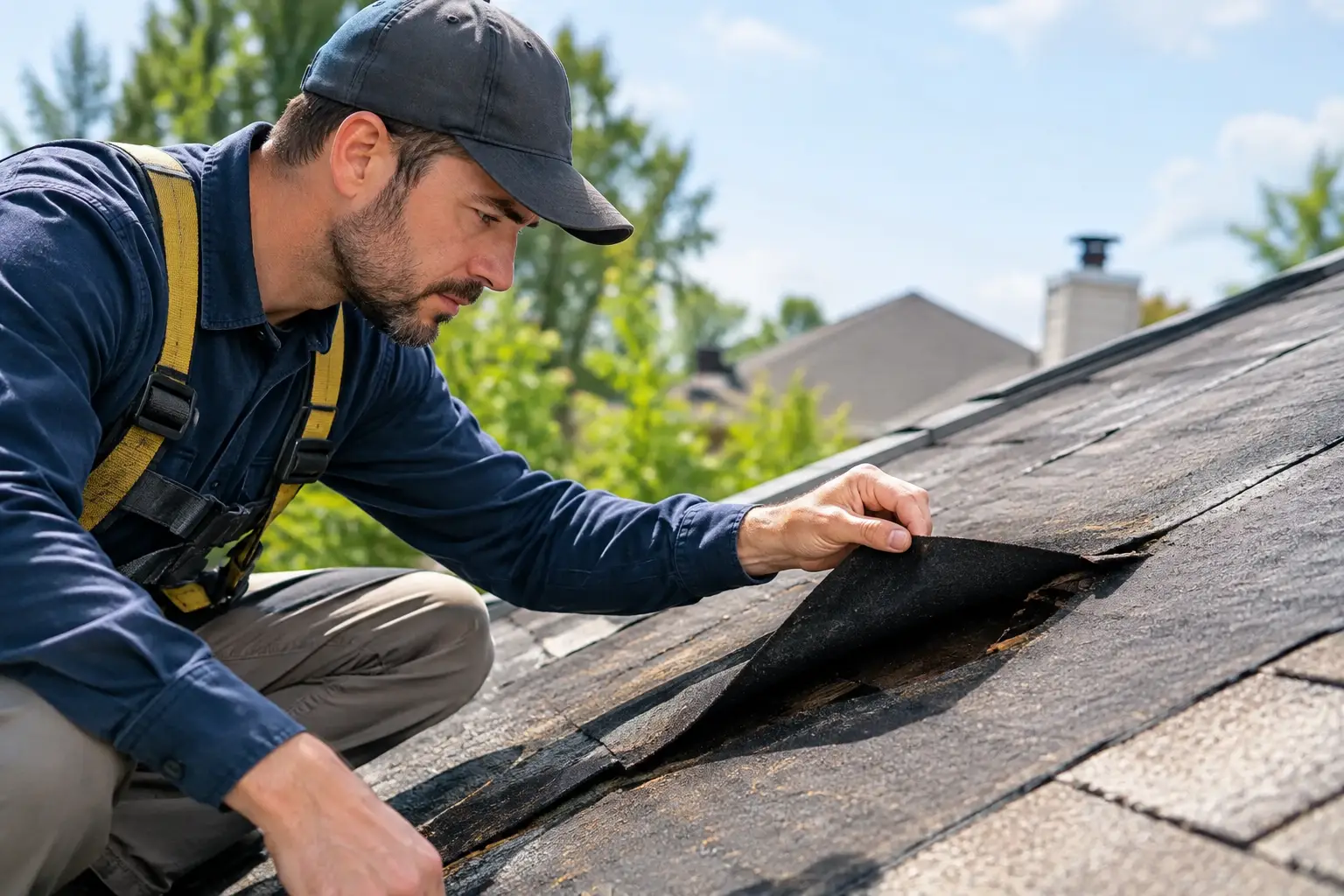
A missing tile may be obvious, but worn roof felt can cause a leak long before there is visible damage on the roof. Knowing when to replace roof felt helps homeowners, landlords and property managers deal with the real cause of water ingress, rather than repeatedly repairing the ceiling below it.
Roof felt is not usually the outer weatherproof finish. On pitched roofs, it sits beneath the tiles or slates as a secondary barrier that directs wind-driven rain towards the eaves. If it fails, water can reach timbers, insulation and internal finishes. On some flat roofs, however, felt may be the main waterproof covering, so the signs and urgency are different.
What roof felt does - and why it fails
Traditional bitumen felt underlay has been used on UK roofs for decades. It provides a backup layer beneath tile and slate coverings, catching moisture that passes through small gaps or is driven beneath the roof covering in severe weather. Modern breathable membranes perform the same broad role while allowing moisture vapour to escape from the roof space.
Over time, felt can become brittle, tear, sag or detach from its fixings. Heat and cold cycles, condensation, poor ventilation, storm damage and an ageing roof covering all contribute. On older properties, the felt may simply have reached the end of its serviceable life.
A failure in the underlay does not always mean the whole roof must immediately be stripped. The right answer depends on the condition of the tiles or slates, battens, rafters, leadwork and roofline. That is why a proper inspection matters before committing to a repair or re-roof.
Signs it is time to replace roof felt
The clearest warning signs are usually found inside the loft, not from ground level. Only inspect where it is safe to do so, and avoid walking on ceiling joists or disturbing insulation unnecessarily.
Torn, cracked or perished felt in the loft
If the felt is split, crumbling, heavily creased or breaking away around nail holes, it is no longer providing reliable protection. Small tears may be isolated, especially following a storm, but widespread deterioration normally points to a larger renewal project.
Pay particular attention to areas around valleys, chimneys, roof windows and eaves. These details receive more water and are common locations for hidden defects.
Sagging felt between rafters
Felt that hangs in deep pockets between the rafters is often a sign of age, failed fixings or repeated wetting. Water can collect in these low areas rather than draining safely out at the eaves. Sagging may also restrict airflow within the roof space, increasing the risk of condensation.
A limited section may sometimes be repaired from inside the loft. If sagging is extensive, replacement is usually more cost-effective when the roof covering is next removed.
Damp patches, drips or staining after rain
A damp patch on a bedroom ceiling does not prove that the felt is at fault. Broken tiles, slipped slates, defective flashing, damaged valleys and failed chimney leadwork can all allow water in. However, if water appears in the loft beneath otherwise intact tiles, failed underlay is a likely cause.
Fresh staining after wind-driven rain deserves prompt attention. Water may travel along timbers or the back of the felt, so the visible drip is not always directly below the entry point.
Rotting battens or damp roof timbers
Roof battens should remain dry and sound. Soft timber, black staining, mould growth or rusted fixings can indicate that moisture has been getting behind the roof covering for some time. In severe cases, prolonged damp can affect rafters and require more extensive structural repairs.
This is not a job to put off. Replacing felt before decay spreads can protect the wider roof structure and reduce the scope of the work.
Recurring leaks despite tile repairs
Replacing a cracked tile or resetting a slipped slate is often the correct repair. But where leaks keep returning in different places, or repairs have not resolved water ingress, the underlying issue may be tired felt and battens.
This is particularly common on older roofs where tiles still look reasonable from outside but the underlay has become fragile. A roofer can assess whether targeted repairs remain sensible or whether planned re-roofing offers better value.
How long should roof felt last?
There is no fixed expiry date. Older bitumen felt beneath a tiled or slate roof commonly lasts around 20 to 30 years, although ventilation, installation quality and local exposure can shorten or extend that lifespan. Modern synthetic breathable membranes can last considerably longer when correctly installed as part of a sound roof system.
For flat roofs, traditional mineral felt systems may last roughly 10 to 20 years depending on the number of layers, detailing, drainage and maintenance. Blisters, splits, exposed reinforcement, lifting seams and standing water are all reasons to arrange an inspection.
Age alone is not a reason to strip a roof that remains dry and structurally sound. Equally, a younger roof with poor installation, storm damage or persistent condensation may need attention much sooner. Condition should guide the decision.
Replace the felt or repair the roof?
Replacing roof felt beneath tiles or slates usually requires the roof covering to be lifted. This makes it a substantial job, so it is often completed alongside a re-roof, tile or slate renewal, replacement battens, improved ventilation or chimney and leadwork repairs.
A local repair can be appropriate where the problem is confined to a small, accessible area and the remaining underlay is in good condition. It may be possible to replace damaged felt from inside the loft or lift a limited section of roof covering. This can keep disruption and cost lower.
Full replacement is usually the better long-term option when the felt is brittle across large areas, battens are decayed, leaks are recurring, or the existing tiles and slates are nearing the end of their life. It also gives the opportunity to install a modern breathable membrane and correct defects that cannot be properly addressed from inside the loft.
For listed buildings, conservation areas and roofs with natural slate, materials and detailing need especially careful consideration. Reusing sound original slates can retain the property’s character while allowing the underlay and battens beneath to be renewed.
Do not confuse underlay failure with condensation
Condensation can look remarkably like a roof leak. If moisture is forming mainly on the underside of the felt, rafters or nails during cold weather, inadequate loft ventilation or insulation may be the cause. Bathrooms, kitchens and unvented tumble dryers can add significant moisture to the home.
A roofing inspection should distinguish between rainwater ingress and condensation before work is specified. Replacing felt alone will not solve a ventilation problem, and adding ventilation without addressing genuine leaks will not keep the roof dry. The solution may involve eaves ventilation, tile vents, insulation adjustments or repairs to the roof covering and underlay.
What happens during roof felt replacement?
For a pitched roof, the contractor will generally remove tiles or slates in sections, inspect the roof structure, replace any failed battens, fit the new membrane with correct overlaps, and reinstate or renew the covering. Flashings, valleys, chimney details, gutters and fascias may also be assessed because these connected elements affect the roof’s ability to shed water.
The scale of the work depends on access, roof pitch, material type and the extent of deterioration. A simple section repair can be relatively contained, while a full re-roof requires planning, safe access equipment and careful weather management. A clear quotation should explain what is included, what materials are proposed and whether any timber repairs are allowed for.
When to call a roofer urgently
Arrange prompt professional help if water is actively entering the property, the ceiling is bulging, roof timbers appear wet or rotten, or storm damage has exposed the underlay. Move valuables away from the affected area and contain drips where possible, but do not climb onto a wet or damaged roof.
For less urgent concerns, a planned inspection is still worthwhile before another winter or period of heavy rain. Armstrong Roofing & Building Limited provides free quotations, no call-out charge and 24-hour emergency support for urgent roofing problems across the UK.
If your loft shows torn felt, damp timbers or unexplained staining, acting before the next spell of bad weather can turn a major repair into a controlled, well-planned piece of roofing work.