

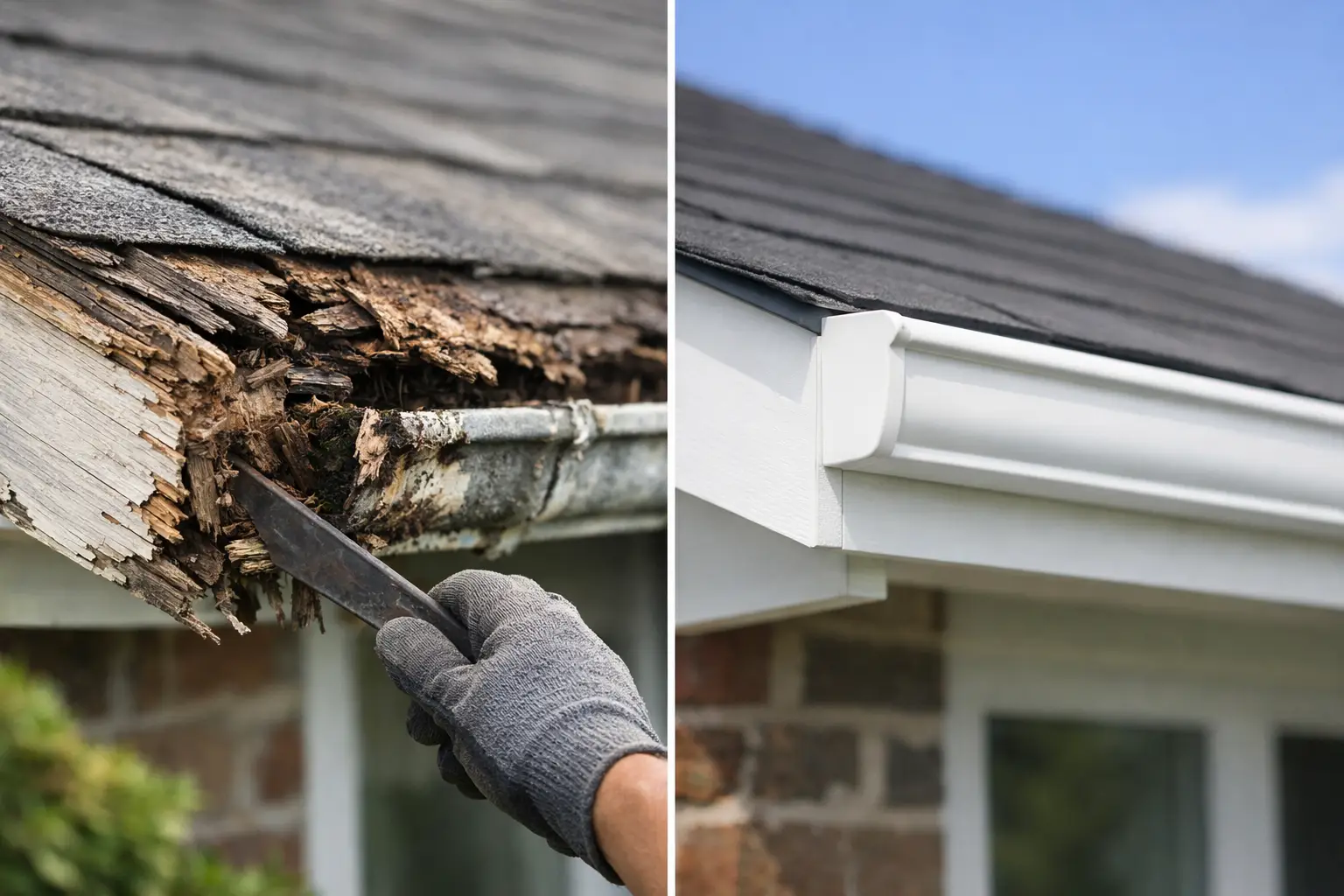
A sagging gutter, peeling paint at the roofline or water marks on an external wall can all point to one overlooked problem: failing fascias. If you are wondering when should fascias be replaced, the answer depends less on their age alone and more on whether they are still protecting the roof edge, rafters and guttering properly.
Fascia boards sit directly beneath the bottom row of roof tiles. They provide a neat finish to the eaves, support the guttering and help shield the timber structure behind them from rain. When they deteriorate, water can find its way into places it should never reach. Acting early can often prevent a relatively contained exterior job becoming a roofline or rafter repair.
What fascias do for your roof
Fascias are often confused with soffits, but they have different jobs. The fascia is the vertical board fixed along the lower edge of the roof. Gutters are normally attached to it. The soffit is the horizontal underside of the roof overhang, between the fascia and the external wall.
On older UK properties, fascias may be timber, sometimes covered with uPVC. Newer installations are commonly uPVC, although aluminium and composite options are also available. A quality uPVC board is low-maintenance and resistant to rot, but it can still fail if water is overflowing from gutters, fixings loosen or the timber beneath was already decayed before it was covered.
A sound fascia helps maintain the correct fall and secure support for the guttering. It also works alongside underfelt, eaves trays, tiles and leadwork to keep rainwater moving away from the property. That is why a roofline inspection should look beyond the board itself.
When should fascias be replaced rather than repaired?
Replacement is usually the sensible option where damage is widespread, the board has lost its structural strength or water has reached the timber behind it. A small area of flaking paint on a timber fascia may be repairable if the wood remains dry and firm. Rot that crumbles under light pressure is different. Painting over it will only hide the issue temporarily.
The same applies where gutters have repeatedly pulled away from the roofline. A loose bracket can sometimes be refixed, but several loose brackets, sagging lengths of guttering or visible movement in the fascia may mean the fixing points are no longer reliable. During heavy rain, a gutter full of water places significant weight on the board.
Replacement is also worth considering when planned roofing work is already under way. If a re-roof, tile and slate repair, chimney project or substantial gutter renewal requires access at the eaves, replacing tired fascias at the same time can be more practical than arranging a separate job later. It allows the roof edge, felt support and guttering to be inspected as one connected system.
Signs that replacement should not be delayed
Some warning signs require a prompt professional assessment, especially after prolonged rain or storm damage:
- Soft, split, bowed or visibly rotten timber fascia boards
- Gutters that sag, overflow regularly or pull away from their brackets
- Paint that is persistently peeling, blistering or discoloured in the same areas
- Water staining on soffits, brickwork or internal ceilings close to the outside wall
- Gaps at the roof edge, damaged eaves felt or evidence of birds and insects entering
- Mould, damp smells or decayed rafter ends in the loft near the eaves
Water running behind a gutter is a particular concern. The cause may be blocked guttering, incorrect gutter alignment, slipped tiles or damaged felt rather than the fascia alone. However, repeated soaking quickly accelerates timber decay. A proper inspection identifies the source before recommending the work.
Repair, overcladding or full replacement?
There is no single answer for every property. The right approach depends on the board material, the condition of the supporting timber and how far the problem has spread.
A local repair can be suitable where damage is confined to one short section and the surrounding fascia remains structurally sound. For painted timber, this may involve cutting out decayed material, treating any affected area and fitting a matching replacement section. The gutters must then be securely reinstated and tested.
Overcladding means fitting uPVC capping boards over existing timber. It can create a tidy, low-maintenance finish where the timber is dry, sound and capable of supporting the new installation. It is not a fix for concealed rot. Covering failing timber can trap moisture, conceal deterioration and leave gutter brackets attached to a weak substrate.
Full replacement involves removing the old fascia, checking the rafter ends and eaves, replacing any defective timber and installing new boards correctly. This is the more thorough option for widespread rot, long-standing leaks or unreliable gutter support. It can cost more initially, but it deals with the condition beneath the visible surface rather than simply improving appearances.
How long should fascias last?
Well-maintained timber fascias can last for decades, but their lifespan depends heavily on paint maintenance, roof drainage and exposure to the weather. South-west facing elevations and exposed coastal or high-wind locations can deteriorate faster. If gutters overflow every winter, even good-quality timber will struggle.
uPVC fascias generally last longer with little routine maintenance, often 20 to 30 years or more when fitted properly. Yet they are not maintenance-free. Cracked joints, failed seals, blocked gutters and poor installation can still allow water behind the boards. If older uPVC has become brittle, warped or discoloured and is no longer holding guttering securely, replacement may be preferable to repeated patch repairs.
Age is therefore a useful prompt to inspect, not an automatic reason to replace. A 25-year-old fascia that is dry, straight and securely fixed may have years left. A much newer one affected by overflowing gutters or storm damage may need urgent attention.
Check the whole roofline, not just the visible board
Fascia problems rarely develop in isolation. During an inspection, a roofing contractor should assess the gutters and downpipes, soffits, eaves felt, roof tiles or slates, flashing and the condition of the rafters where access allows. On properties with chimneys, valleys or complex roof shapes, water can travel along timbers before appearing at the fascia, making the original source less obvious.
For landlords and property managers, roofline checks are particularly valuable between tenancies and after severe weather. A quick look from ground level is useful, but it cannot reveal hidden rot or loose fixings safely. Keep an eye out for drips during rainfall, overflowing gutters and fresh staining. Avoid leaning ladders against gutters or fascia boards, as this can worsen existing damage.
When a fascia issue becomes urgent
A damaged fascia is not always an emergency, but it can become one if guttering is hanging loose, rainwater is entering the building, or storm winds have dislodged boards, tiles or sections of soffit. Keep people clear of any unstable guttering and do not attempt to remove it from a ladder in poor weather.
Where water is actively coming into the property, a rapid roofing inspection can help limit further damage. Armstrong Roofing & Building Limited provides UK-wide roofline, guttering and roofing work, with free quotations, no call-out charge and a 24-hour emergency response service for urgent problems. The priority is to make the area safe, identify the cause and recommend only the repairs or replacement work the roofline actually needs.
If your gutters have started overflowing, the paint around the eaves is failing or the roofline looks uneven, arrange an inspection before the next period of heavy rain turns a small warning sign into a larger repair.