

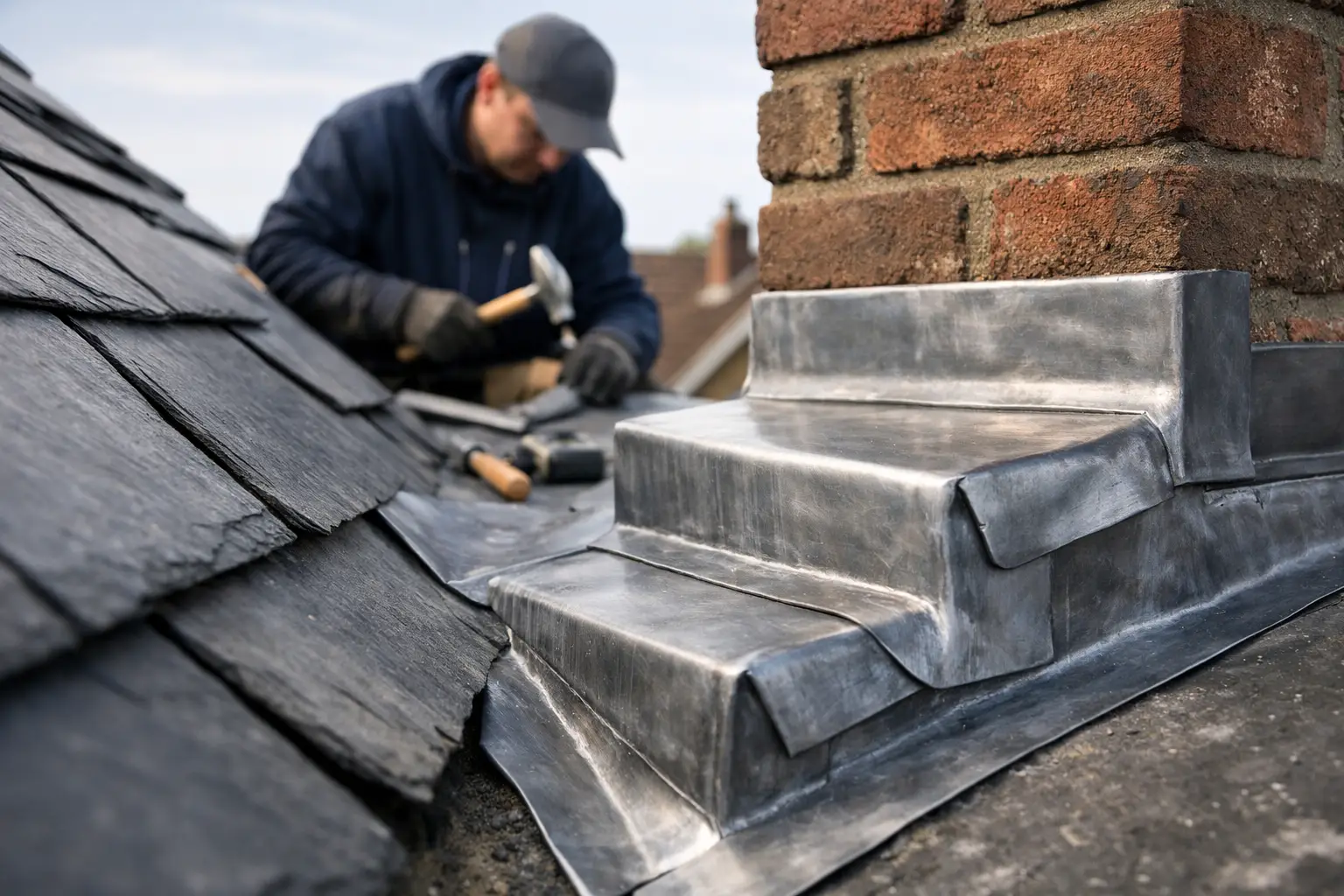
A leak around a chimney, roof valley or dormer is rarely solved by replacing a few tiles alone. These are the areas where different roof surfaces meet, water is concentrated, and careful weatherproofing matters most. So, what is roof leadwork? It is the use of shaped lead sheet to create durable, flexible waterproof details across vulnerable parts of a roof.
Leadwork is a specialist part of roofing. When it is correctly designed and fitted, it directs rainwater safely away from joints and into the drainage system. When it splits, lifts, slips or is poorly detailed, water can get beneath the roof covering and cause damage that is not always immediately visible from inside the property.
What is roof leadwork used for?
Roof leadwork is generally installed where tiles, slates, brickwork and other building materials meet. Unlike a roof tile, which overlaps its neighbours to shed water, lead can be dressed and formed to suit awkward angles, changes in level and complex junctions.
The most familiar example is chimney flashing. Lead flashing seals the point where a chimney stack meets the roof, preventing rain from running down the brickwork and into the loft space. It is normally worked into the mortar joints of the chimney and carefully lapped over the adjacent roof covering.
Lead is also commonly used in roof valleys, where two roof slopes meet and large volumes of water run towards the gutter. It may form soakers alongside a chimney or wall, with individual pieces tucked between rows of slates or tiles. Other applications include front aprons, back gutters behind chimneys, dormer window cheeks, parapet walls, roof abutments and bay roofs.
For older UK homes with slate or tile roofing, leadwork often plays a much bigger role than owners realise. A roof can look sound from ground level while worn flashings or failed valley details are allowing water into the structure.
Why lead remains a trusted roofing material
Lead has been used on British buildings for centuries because it is exceptionally long-lasting when installed properly. It is waterproof, resistant to corrosion and flexible enough to be shaped around detailed roof features. This flexibility is particularly useful on period properties, chimneys and uneven masonry, where standard components may not give a reliable fit.
It also expands and contracts as temperatures change. That movement must be allowed for during installation. A competent roofer will use correctly sized sections, suitable laps, fixing methods and expansion details, rather than pinning a large sheet too rigidly in place. Restricted movement can lead to stress, splitting and early failure.
The right lead code, or thickness, is equally important. A small flashing detail does not need the same material as a long valley or a wide back gutter. Using lead that is too light for the job can reduce its lifespan, while overly large or poorly supported sections may sag. Good leadwork is not simply about applying lead sheet - it is about matching the detail to the roof, water flow and building construction.
Lead alternatives are available, including certain lead-free flashing products. These can be suitable in specific locations, especially for straightforward repairs or where the appearance and lifespan requirements differ. However, they are not always a like-for-like replacement for traditional lead, particularly on heritage buildings or complex roof junctions. The best option depends on the roof design, condition and budget.
Where roof leadwork problems usually start
Many leadwork faults develop gradually. Weather exposure, movement in the building, ageing mortar, blocked gutters and previous poor repairs can all affect the performance of a flashing or valley.
At a chimney, the mortar holding the lead into the brickwork can crack or come loose. This may allow the flashing to pull away from the stack. On a valley, debris can build up and hold standing water against the lead, while loose tiles or slates can expose its edges. Around dormers and wall abutments, inadequate laps or failed sealants may leave a direct path for wind-driven rain.
Common warning signs include damp patches on ceilings or walls near a chimney breast, drips in the loft after heavy rain, staining around a dormer, missing or visibly lifted flashing, and moss or debris collecting in a valley. You may also notice cracked mortar around the chimney or water marks appearing only after rain blows from a particular direction.
A leak does not always sit directly below the fault. Water can travel along timber, felt or masonry before it reaches a ceiling. That is why a professional roof inspection is more reliable than trying to identify the source from the internal stain alone.
What good roof leadwork should look like
From ground level, roof leadwork should sit neatly and securely against the roof and adjoining masonry. It should not look loose, heavily rippled, torn or patched repeatedly with mastic. A small amount of surface weathering is normal, but obvious cracks, open joints and sagging valleys need attention.
The important work happens in the details. Flashings need sufficient cover over tiles or slates, and soakers must be correctly interleaved with the roof covering. Chimney lead should be securely chased into sound mortar joints, not merely stuck to the face of brickwork with sealant. Valleys require appropriate support and clear routes for water to reach the gutter without backing up beneath the tiles.
Sealant has a place in some roofing repairs, but it should not be used as a substitute for properly formed leadwork. Smearing mastic across a failed flashing can appear to stop a leak temporarily, yet the underlying movement or defective joint remains. It can also make a later permanent repair more difficult.
Repair, replacement or a wider roof repair?
The right solution depends on the extent of the defect. A local repair may be enough where a short section of flashing has lifted, a mortar joint has failed or a small area of lead has been damaged. Repointing and re-dressing sound existing lead can often restore its weatherproofing without replacing every section.
Replacement is usually the better choice when lead is split, badly worn, incorrectly installed or too damaged for a reliable local repair. If a chimney is unstable, the surrounding tiles are cracked, or the valley has deteriorated alongside the roof covering, the work may need to include chimney repairs, tile and slate replacement, or guttering improvements as well.
This joined-up approach matters. Replacing a valley without clearing blocked gutters, for example, may leave the new work dealing with the same excessive water load. Likewise, renewing chimney flashing without addressing loose brickwork can compromise the repair. A thorough assessment should identify the cause of the problem, not just the point where water became visible.
When to arrange an urgent inspection
A sudden active leak, storm damage, dislodged lead flashing or water entering around a chimney should be treated as urgent. Move belongings away from the affected area where safe to do so, contain drips with a bucket, and avoid climbing onto the roof yourself. Wet roof coverings are dangerous, and damaged leadwork can sit beside loose tiles, fragile slates or unstable chimney masonry.
For landlords and property managers, early action also helps limit disruption to tenants and reduces the chance of internal damage escalating into a larger claim. Even a small leak can affect insulation, ceiling finishes, timbers and electrical fittings if it is left through repeated periods of rain.
Armstrong Roofing & Building Limited provides roof repairs, leadwork, chimney work and wider roofing services across the UK, with free quotations, no call-out charge and 24-hour emergency response when water is getting in.
Maintaining leadwork between inspections
You do not need to walk on the roof to look after leadwork. Keep gutters and valley outlets clear, particularly after autumn leaf fall or storms, and arrange periodic roof checks for older properties, rental homes and commercial premises. From the ground, look for slipped tiles, vegetation in valleys, deteriorating chimney mortar and any visible changes around dormers or roof junctions.
If you spot a concern, arrange an inspection before the next period of heavy weather. Well-fitted roof leadwork can protect a property for decades, but it performs best when small defects are dealt with before they become an internal leak.