

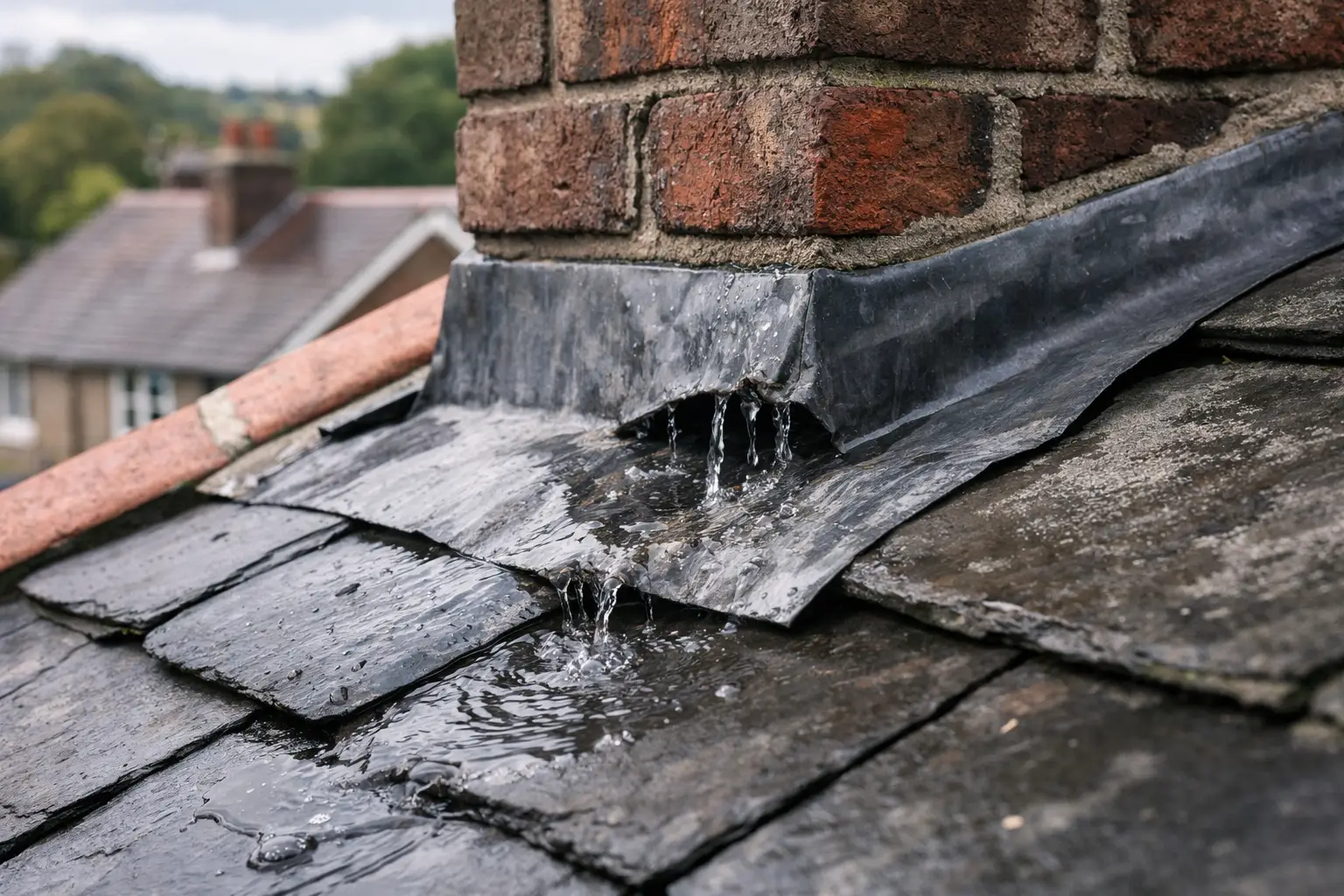
Water staining beside a chimney breast, damp patches in the loft or a drip that appears only after wind-driven rain can all point to one vulnerable area of the roof. Homeowners often ask what causes chimney flashing leaks because the problem can look minor from indoors while allowing significant water into the roof structure.
Chimney flashing is the weatherproof junction where the chimney stack meets the roof covering. It is usually formed from lead, although other materials may be used on some properties. When it is correctly detailed and maintained, flashing directs rainwater safely down the roof. When it fails, water can track behind tiles or slates, into roof timbers and eventually through ceilings or walls.
What causes chimney flashing leaks?
Most chimney flashing leaks result from movement, age, poor detailing or damage to the surrounding roof. The exact cause matters, as applying sealant over a visible gap may briefly slow the leak but rarely provides a lasting repair.
A chimney and roof move differently over time. The stack is heavy masonry, while the roof structure responds to temperature changes, wind and normal settlement. Lead flashing is designed to accommodate a degree of movement, but cracked mortar, lifted edges or failed joints can develop when that movement becomes excessive.
Water does not always enter directly where the damp patch is visible. It can travel along a rafter, felt or batten before emerging some distance away. A proper inspection of the chimney, leadwork and nearby tile or slate roofing is the reliable way to identify the entry point.
Aged, split or poorly secured leadwork
Lead is a durable traditional material, but it does not last indefinitely without care. Over many years, repeated expansion and contraction can cause fatigue, particularly where a large piece of lead has been installed without suitable expansion allowance. Splits often appear at folds, corners and points where the flashing has been fixed too tightly.
Flashings can also lift when old clips, nails or mortar fixings fail. Once an edge is loose, wind-driven rain can be forced beneath it. This is especially common on exposed properties and after periods of high winds.
Leadwork should be dressed correctly into the roof covering and built into the chimney mortar joints where required. If it has simply been surface-fixed or patched repeatedly, it is more likely to fail again. In many cases, replacing a defective section of lead is more cost-effective than adding another temporary patch.
Crumbling pointing and failed mortar joints
The top edge of stepped flashing is commonly set into the brickwork through a mortar joint, known as a chase. If the pointing around the chimney has become cracked, loose or washed out, water can enter behind the lead rather than running over it.
Older chimney stacks are particularly susceptible. Frost can open small cracks in mortar, and porous brickwork can retain moisture. The issue may then be mistaken for a roof leak, even though rain is entering through deteriorated chimney masonry and finding its way behind the flashing.
Repointing alone is not always the answer. The condition of the flashing, chimney pots, flaunching and brickwork needs to be considered together. Repairs should restore the full weatherproof detail rather than treating one visible crack in isolation.
Incorrect flashing design or installation
Chimney flashing is not a single strip of metal. A properly detailed chimney will often include an apron at the front, stepped side flashings and a back gutter or back flashing behind the stack. On tiled and slate roofs, soakers may also be fitted beneath the side flashings to channel water away at each course.
Leaks can occur when these elements overlap incorrectly, are too short, or do not suit the pitch and type of roof covering. For example, a shallow back gutter may overflow in heavy rain, while missing soakers can allow water to pass beneath tiles along the chimney side.
Poor workmanship may not show immediately. A newly repaired chimney can appear tidy from ground level but leak during the first spell of sustained rain. This is why experienced leadwork installation is essential, particularly on older roofs where tile sizes, slate courses and chimney details may not be standard.
Damaged tiles, slates or underfelt around the chimney
A leak close to a chimney is not always caused by the flashing itself. Broken, slipped or poorly seated tiles and slates around the stack can leave an open route for rainwater. The same applies to cracked mortar fillets on older repairs, damaged roof felt or decayed battens beneath the covering.
The area immediately uphill of the chimney deserves close attention. Rainwater running down the roof meets the back of the stack first, and a damaged tile or failed back gutter there can allow water to build up. During heavy downpours, even a small defect may become apparent.
On an ageing roof, the best solution may involve local tile or slate repairs alongside renewed leadwork. Treating only the flashing can leave an adjacent weakness untouched, which is frustrating for property owners and unnecessary when the roof is already being accessed.
Blocked gutters and poor rainwater drainage
Blocked guttering does not normally cause a chimney flashing leak on its own, but it can worsen the conditions around the roof edge and valleys. Overflowing gutters, blocked valleys and debris caught behind a chimney can cause water to back up where it should be flowing freely.
Moss, leaves and broken fragments of tile can gather behind wider chimney stacks. If the back gutter is obstructed, water may overflow beneath the lead or surrounding roof covering. Regular gutter clearance and roof maintenance help prevent this type of avoidable pressure on the flashing detail.
Storm damage and chimney movement
High winds can lift lead edges, dislodge tiles and weaken old mortar. Falling branches or debris may puncture leadwork or crack a chimney pot, allowing rainwater into the stack. Damage is not always dramatic, so it is sensible to arrange an inspection after severe weather if a new damp patch appears.
More serious movement in the chimney stack can affect the flashing too. Cracks that widen through brickwork, leaning masonry or loose chimney pots may indicate that repairs need to go beyond leadwork. A roofer can assess the roof junction, but unstable chimney masonry may require more extensive chimney repair before new flashing is installed.
Signs of a chimney flashing leak
Internal damp is often the first sign, but early external symptoms are useful to catch. Look for lifted lead edges, gaps where flashing meets brickwork, crumbling pointing, staining on chimney masonry, slipped tiles near the stack or visible debris trapped behind it.
Inside, there may be brown ceiling marks near the chimney breast, damp loft insulation, a musty smell or peeling wallpaper on an upstairs wall. Water may only appear after rain from a particular direction. That pattern can help identify whether the issue is on the windward side, the back gutter or the roof covering above the chimney.
Do not rely on dry weather to judge whether the roof is sound. A flashing defect can remain hidden for weeks, then leak heavily during prolonged rain or a storm. Damp timbers and insulation can deteriorate quietly before the damage becomes visible in the room below.
Why sealant is rarely a permanent chimney repair
Roof sealant has a limited place in minor, temporary emergency work, but it is not a substitute for properly installed flashing. It can crack with movement, detach from dusty or wet surfaces, and trap water where the underlying detail is already defective.
This is particularly relevant where lead has split or mortar joints have failed. A lasting repair may require the lead to be re-dressed, re-secured or replaced, with new fixings and mortar work where needed. If tiles or slates have been disturbed, they should be refitted correctly rather than sealed around their edges.
The right approach depends on the age of the roof, the chimney construction and the extent of water damage. A small split in otherwise sound leadwork may be repairable. Widespread cracking, repeated leaks or failing detail on several sides of the stack usually makes replacement the more dependable option.
What to do if your chimney is leaking
If water is actively entering the property, move belongings away from the affected area and contain drips safely. Avoid climbing onto the roof or attempting to press loose lead back into place. Wet tiles, slates and leadwork are hazardous, and an incorrect temporary repair can make subsequent work more difficult.
Arrange a professional roof inspection promptly, especially if damp is spreading or the ceiling is bulging. The inspection should cover the chimney stack, flashing, surrounding tile or slate roofing, roof valleys and guttering. A clear diagnosis prevents money being spent on repairs that do not address the true source of the leak.
Armstrong Roofing & Building Limited provides chimney repairs, leadwork, tile and slate roofing repairs, and 24-hour emergency response across the UK, with free quotations and no call-out charge. Whether the remedy is a local flashing repair or wider work to the roof and chimney, acting early gives water less opportunity to damage timbers, insulation and internal finishes.
A chimney leak rarely improves by itself. The most helpful next step is a timely inspection that identifies how water is getting in and restores the roof detail before the next spell of rain turns a manageable repair into a larger one.