

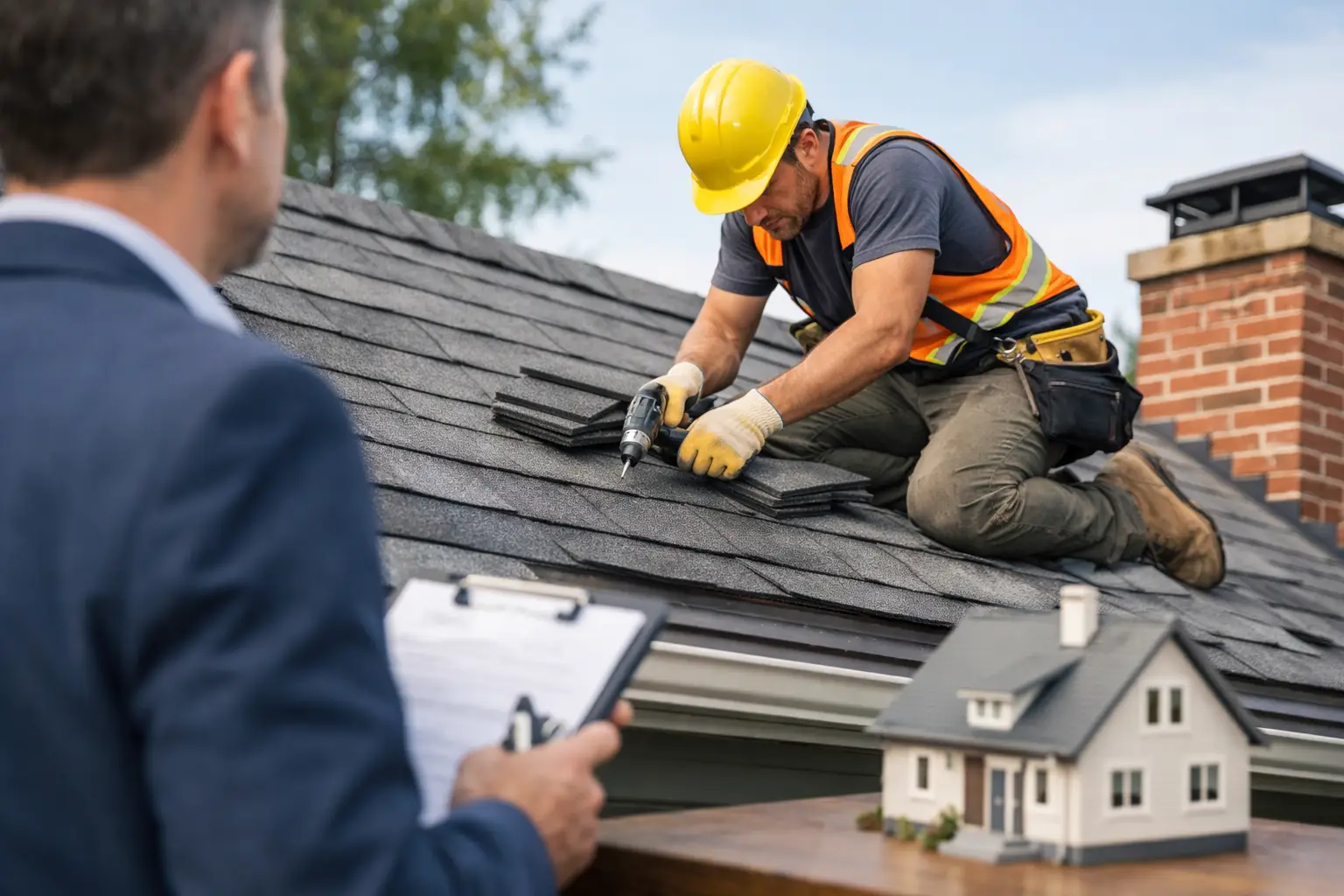
A tenant reports a brown stain spreading across the bedroom ceiling after heavy rain. It may look like a small maintenance issue, but a leaking roof can quickly damage plaster, insulation, electrics and the tenant’s belongings. For a landlord, the priority is to make the property safe, identify the source of the water and arrange an effective repair before a minor defect becomes a larger claim.
So, what are landlord roof repair responsibilities? In most rented homes across England and Wales, landlords are responsible for keeping the structure and exterior in repair. The roof is a central part of that duty. That normally includes tiles and slates, roof coverings, flashing and leadwork, valleys, chimneys where they affect weatherproofing, gutters and downpipes.
What are landlord roof repair responsibilities in the UK?
Under Section 11 of the Landlord and Tenant Act 1985, a landlord is generally responsible for keeping the structure and exterior of a rented property in repair. A roof must be kept sufficiently sound and weatherproof so the home remains safe and fit to live in.
In practical terms, responsibility often covers a slipped or broken tile, cracked slate, damaged ridge tiles, failed lead flashing, a leaking valley, storm damage, blocked or broken gutters, defective chimney pointing and water ingress around roof windows. It also covers the wider repair needed to stop water entering the building, rather than simply covering an internal stain and hoping it does not return.
This is not limited to obvious leaks. Loose materials after high winds, sagging roof sections, deteriorated flat roof coverings and unstable chimney components may all require attention before they cause an incident. A landlord should not wait for water to come through the ceiling if there is clear evidence that the roof is no longer secure.
The exact legal position can differ for properties in Scotland and Northern Ireland, and leasehold arrangements can affect who instructs and funds the work. However, the starting point remains straightforward: the party responsible for the building’s structure must ensure the roof is properly maintained and repaired.
Landlord duties begin once a problem is reported
A landlord is not expected to fix a defect they could not reasonably have known about. Once a tenant reports a leak, missing tiles or another roofing problem, however, the landlord should respond within a reasonable timeframe.
What is reasonable depends on the risk. Water dripping near electrics, a ceiling bulging with trapped water, a large active leak or loose roof materials over an entrance should be treated as urgent. These issues may need an emergency inspection and temporary protection straight away, followed by permanent repairs when conditions allow.
A small, contained issue may not require an out-of-hours attendance, but it should still be assessed promptly. Roof defects rarely improve on their own. A loose tile can allow rain beneath the covering, while a failing gutter joint can saturate brickwork and create damp problems that are more expensive to resolve later.
Good landlords keep a clear record of the tenant’s report, photographs where available, contractor attendance, the diagnosis and the works completed. This helps demonstrate that the issue was handled responsibly and gives a useful maintenance history for the property.
Repairs, maintenance and full re-roofs
Landlords are responsible for repairs, but the duty is broader than reacting to a visible failure. Regular maintenance helps prevent avoidable damage and protects the building over the long term.
For example, clearing gutters and checking downpipes can prevent overflowing water from soaking fascia boards and walls. Replacing cracked mortar around a chimney or renewing worn leadwork may stop leaks before they reach the loft space. On older tile and slate roofs, periodic checks can identify displaced coverings, failing fixings or damaged underfelt before the property becomes exposed.
There is a practical distinction between repair and improvement. A landlord is usually required to restore a roof to a sound, weatherproof condition. They are not automatically required to upgrade the roof to the newest possible specification solely because a newer product is available. Yet where the covering has reached the end of its serviceable life, repeated patch repairs may be poor value and fail to provide a lasting solution. In that situation, a planned re-roof may be the sensible course.
The right approach depends on the roof’s age, condition, construction and the source of the defect. A professional inspection should establish whether targeted tile and slate repairs, leadwork renewal, chimney repairs or wider replacement work is appropriate.
When could a tenant be responsible?
Tenants have a duty to use the property in a tenant-like manner and to report repair issues within a reasonable time. They should take sensible steps to limit further damage where safe to do so, such as moving belongings away from a leak and reporting it promptly.
A tenant may be liable where they have caused damage through negligence or misuse. Examples could include breaking roof materials while accessing the roof without permission, damaging guttering through unauthorised alterations, or failing to report a known leak until avoidable damage has become extensive.
That said, ordinary wear and tear, storm damage and deterioration caused by age are not normally tenant responsibilities. Nor should a landlord assume that condensation, damp patches or a ceiling stain are the tenant’s fault without investigating the cause. The issue could stem from defective ventilation, failed flashing, blocked gutters or a hidden roof leak.
Tenants should not normally be asked to arrange or pay for structural roof repairs themselves. They should report the problem and allow reasonable access for inspection and works. The landlord or managing agent should appoint a competent contractor and keep the tenant informed about timing, access and any temporary safety measures.
Shared buildings and leasehold properties
Roof responsibility can be less direct where a landlord owns a flat in a block. The lease may place responsibility for the main roof, external walls and communal drainage with the freeholder or managing agent, with costs recovered through service charges.
Even then, the landlord still has obligations to their tenant. They should notify the responsible party quickly, chase action where needed and take reasonable steps to protect the tenant from ongoing risk. Telling a tenant that the roof belongs to the freeholder does not remove the need to communicate and manage the problem.
For converted houses, responsibility can also depend on the lease terms and the nature of the roof area. A roof terrace, for instance, may be for one flat’s use but remain part of the building structure. Checking the lease before commissioning non-emergency works can avoid disputes, but emergency action should never be delayed where occupants or the public may be at risk.
What should happen during an urgent roof repair?
An emergency roof repair is about controlling risk first. If tiles, slates, flashing or chimney materials are loose, the affected area may need to be made safe immediately. If rainwater is entering the property, temporary weatherproofing can limit damage while a full repair is planned.
The repair should then address the cause, not just the symptom. Replacing one slipped tile may not solve a leak caused by failing underlay, cracked leadwork or a blocked valley. Equally, a contractor should not recommend a full re-roof without explaining why local repairs will not provide a reliable result.
Landlords should expect a clear explanation of the findings, recommended scope of work and quotation before planned repairs begin. For urgent situations, immediate safety work may be necessary first, followed by a separate quote for permanent reinstatement. This provides a sensible balance between quick protection and cost control.
A practical approach for landlords and property managers
The most reliable way to manage roof responsibilities is to act early and use competent specialists. Arrange periodic inspections, especially after severe weather or before winter. Treat tenant reports seriously, even where the visible damage appears minor, and ensure gutters, chimney details and roof coverings are considered together.
It is also worth checking that insurance requirements are met. Insurers may expect a property to be reasonably maintained, and a claim can become more difficult where a long-standing defect has been left unresolved. Insurance may help with certain sudden events, but it does not replace a landlord’s responsibility to maintain the roof.
For landlords managing several properties, a responsive roofing contractor can reduce disruption for tenants and prevent small defects from becoming expensive refurbishment work. Armstrong Roofing & Building Limited provides UK-wide roof repairs, tile and slate work, leadwork, chimney repairs, guttering and planned re-roofs, with free quotes, no call-out charge and 24-hour emergency support.
A dry, secure roof is not an optional extra in a rented home. When a tenant raises a concern, prompt inspection and properly scoped repairs protect the property, the tenancy and everyone’s peace of mind.