
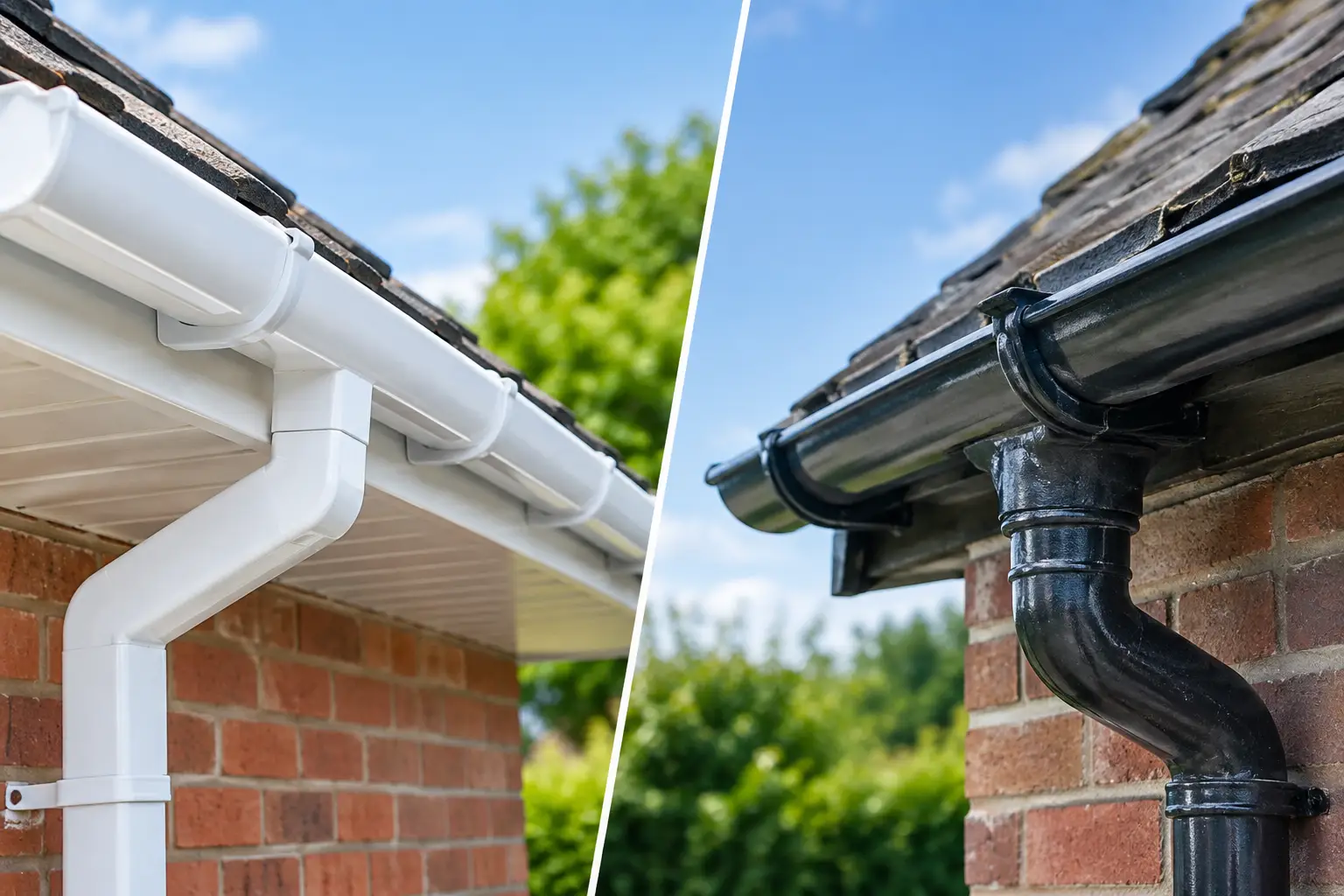
A guttering replacement is rarely just about moving rainwater away from the roof. It affects the appearance of the property, the condition of fascias and brickwork, and the risk of damp around foundations. When weighing up uPVC versus cast iron gutters, the right answer depends on the building, its exposure to weather and how long you expect the system to remain in place.
For many homes, uPVC is the sensible, cost-effective choice. For period properties and buildings where appearance matters as much as function, cast iron can be the better long-term investment. Both can perform well, but only when the gutter runs, brackets, falls and outlets are properly specified and fitted.
uPVC versus cast iron gutters: the main differences
The immediate difference is weight. uPVC is lightweight, easy to handle and quick to install. Cast iron is substantially heavier, needs secure fixings and takes more care to fit safely along the roofline. That affects labour requirements as well as the condition of the fascias, soffits and masonry supporting the system.
Appearance is the other clear distinction. uPVC is available in black, white, brown, grey and heritage-style finishes, but it is still a modern material. Cast iron has a traditional profile and a painted finish that suits Victorian, Georgian and older rural properties particularly well. It can also be required where planning restrictions, conservation-area guidance or listed-building considerations apply.
Neither material automatically prevents leaks. Most gutter failures start at joints, outlets, stop ends, sagging brackets or poor falls. A well-fitted uPVC system will outperform neglected cast iron, while high-quality cast iron installed with the correct falls can give decades of reliable service.
Cost: upfront price versus long-term value
uPVC generally costs less to buy and install. The sections are lighter, the fittings are straightforward and replacement parts are widely available. This makes it a practical option for standard houses, rental properties, commercial units and urgent replacement work where a damaged gutter is already causing overflow.
Cast iron has a higher initial cost. The material itself is more expensive, installation is more labour-intensive, and the existing roofline may need checking before heavy sections are fitted. Where a property needs scaffold access, fascia repairs or associated roof works, those factors should be included in the quotation rather than treated as separate surprises later.
However, price should not be judged only on installation day. A properly maintained cast iron system can last for many decades. uPVC has a good working lifespan, but may become brittle, fade or distort over time, particularly on exposed elevations or where dark-coloured gutters receive prolonged sun. If you are restoring a character property for the long term, cast iron may offer better value despite the higher outlay. If your priority is a tidy, reliable replacement at a controlled cost, uPVC often makes more sense.
Appearance and suitability for the property
For modern homes, uPVC usually blends in without difficulty. Black half-round or deep-flow profiles are common choices, while square-line systems can suit more contemporary elevations. The key is choosing a profile with enough capacity for the roof area and the local rainfall, not simply matching what was there before.
Cast iron is particularly well suited to properties with original architectural details, slate roofs, decorative brickwork and traditional downpipes. It gives a substantial, authentic finish that plastic alternatives can struggle to replicate. On some heritage buildings, retaining or replacing cast iron may be the most appropriate route, especially where original features are being repaired elsewhere, such as chimney work, leadwork or tile and slate roofing.
There is also a middle ground. Some property owners choose a high-quality cast-effect aluminium or uPVC system where the appearance of traditional guttering is wanted without the weight and maintenance demands of iron. That option should still be assessed carefully, particularly if conservation requirements are involved.
Lifespan and maintenance requirements
uPVC needs relatively little maintenance. Regular clearing of leaves, moss and roof debris, along with occasional checks for loose clips and leaking seals, is usually enough. The expansion and contraction of plastic in changing temperatures should be allowed for during fitting. If it is installed too tightly, joints can separate or sections can bow.
Cast iron needs more attention, but that does not make it impractical. Its main vulnerability is corrosion where paint has cracked, flaked or worn away. Periodic painting and prompt treatment of exposed metal are essential. Leaves and standing water should never be left sitting in the channel, as they speed up deterioration from the inside.
A maintained cast iron system can remain serviceable for generations. Conversely, a neglected one can rust through, stain walls and lose sections at joints or brackets. The maintenance commitment is therefore part of the decision. Landlords and property managers with planned inspection schedules may be comfortable maintaining cast iron. Homeowners who want the least demanding option may prefer uPVC.
Weather performance and common problems
Both materials cope with typical UK weather when properly installed. The more relevant questions are whether the gutter is large enough, whether the falls are correct and whether downpipes can clear water quickly during heavy rain.
Cast iron is exceptionally rigid and is less likely to flex under snow loads or heavy debris. Its weight can be an advantage on exposed properties, although that same weight means the supporting timbers and fixings must be sound. Rusted brackets, decayed fascias and loose fixings need addressing before a replacement system is installed.
uPVC is resistant to rust and is unaffected by ordinary moisture. It can be an excellent choice in coastal locations because it will not corrode in salty air. Yet it may crack after impact in very cold conditions, and older sections can become less flexible with age. Overflowing gutters also put strain on plastic brackets, so repeated blockages should be dealt with rather than ignored.
If water is spilling over the front edge of the gutter, the cause may be blocked outlets, an undersized profile, a slipped joint, a poorly positioned downpipe or water running too fast from the roof covering. Replacing material alone will not solve a design or drainage problem.
Installation matters as much as the material
Guttering should be fitted to a consistent fall towards the outlet, with bracket spacing suited to the material and profile. It must be connected to secure downpipes and drains, and it should sit correctly beneath the roof edge so rainwater enters the channel rather than tracking behind it onto the fascia.
Before fitting either uPVC or cast iron, it is worth checking the roofline thoroughly. Rotten fascia boards, damaged soffits, loose tiles, failed mortar around verges and defective flashing can all contribute to water damage. Treating connected issues during the same visit is often more efficient than returning once staining, damp or timber decay has developed.
For commercial premises, the calculation is often more technical. Larger roof areas may need deep-flow gutters, additional outlets, hopper heads or more substantial rainwater systems. A standard domestic profile may look adequate until the first intense downpour sends water over entrances, walkways or loading areas.
Which guttering material should you choose?
Choose uPVC when you need an economical, low-maintenance system for a modern property, rental home or straightforward replacement. It is also a strong choice where corrosion resistance and speedy installation are priorities.
Choose cast iron when the property has heritage value, traditional details or planning requirements that favour an authentic finish. It is also worth considering when you are investing in a long-term restoration and are prepared to maintain the painted surface.
The condition of the existing roofline should influence the decision. Replacing damaged gutters without addressing loose fixings, worn fascias or failing roof details can leave the underlying water problem unresolved. A professional inspection can establish whether a repair, partial renewal or complete guttering replacement is the most sensible route.
When a gutter is overflowing, detached or causing damp, acting early protects more than the roof edge. It helps preserve brickwork, timber, paths and the inside of the property too. Armstrong Roofing & Building can assess the cause, provide a free quotation and carry out the associated roofing or guttering work without a call-out charge.