

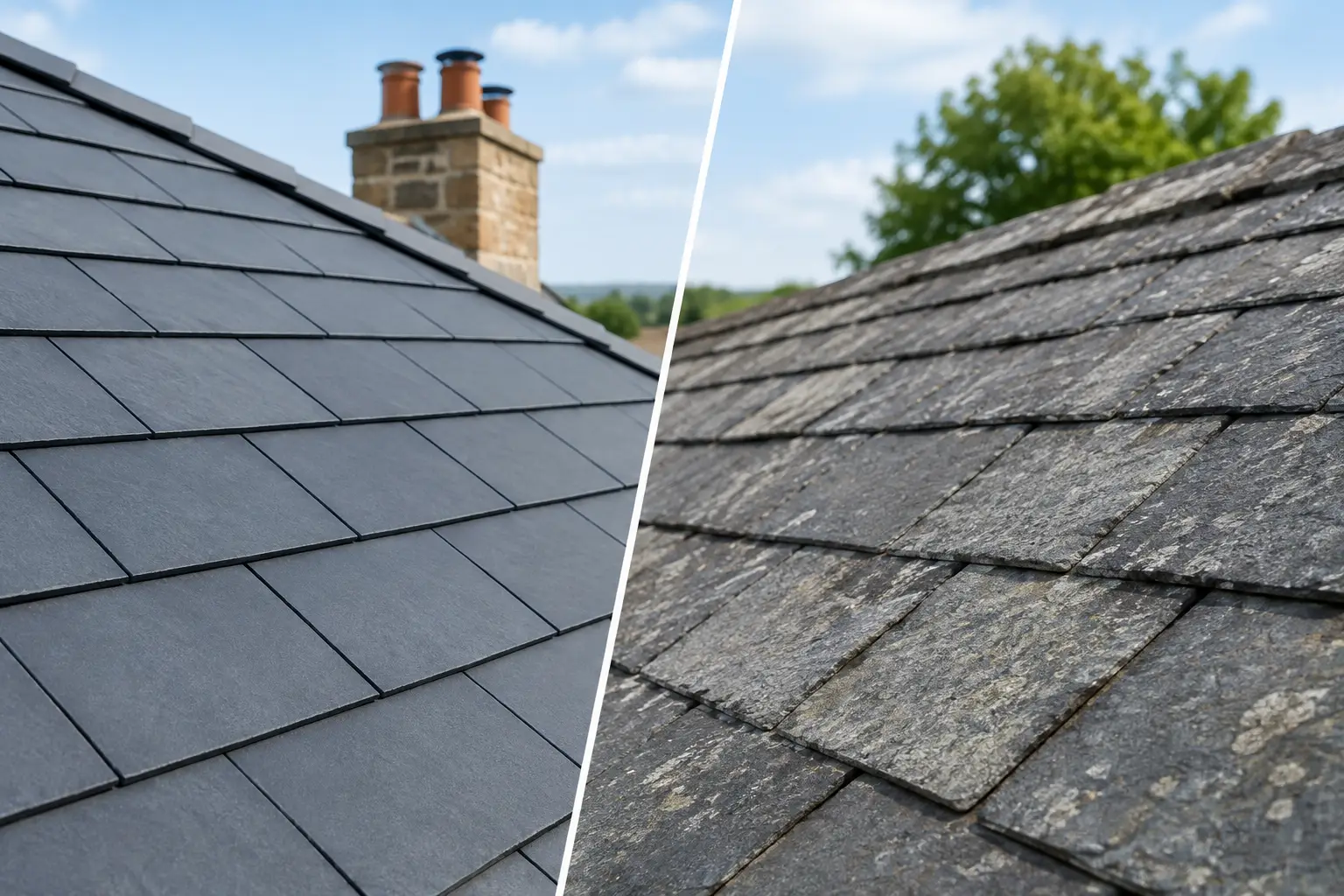
A roof can look sound from the ground yet be approaching the point where patch repairs no longer make financial sense. When a re-roof is being considered, the choice between synthetic slate versus natural slate affects not only the finished appearance, but also the structure, budget, programme and long-term maintenance of the property.
For period homes, listed buildings and traditional streetscapes, natural slate is often the expected material. For newer homes, extensions and roofs where weight or cost is a concern, synthetic slate can be a practical alternative. The right answer depends on the building, local planning requirements and the condition of the roof beneath the existing covering.
Synthetic slate versus natural slate: the main difference
Natural slate is a stone roofing material split from quarried rock into thin, durable slates. Its appearance is shaped by the quarry, mineral content and natural variation in each piece. Welsh slate remains especially well regarded on UK properties, while Spanish and other imported slates are also widely used.
Synthetic slate is a manufactured roofing product, usually made from recycled polymers, composite materials or a mix designed to replicate the shape, texture and colour of natural slate. It is moulded to a consistent profile and supplied in uniform sizes.
Both can provide a weatherproof, attractive roof when correctly specified and fitted. However, they do not perform or age in precisely the same way. A decision based only on the price of the slates can lead to disappointment later, particularly where a property has heritage requirements or an ageing roof structure.
Appearance and suitability for the property
Natural slate has depth, texture and tonal variation that is difficult to reproduce exactly. It develops character over time and suits Victorian terraces, cottages, rural properties and buildings in conservation areas. A well-laid natural slate roof also has the irregular but controlled appearance that many owners expect from traditional roofing.
High-quality synthetic slate has improved considerably and can look convincing from street level. It is available in a range of colours and profiles, with a more consistent finish than quarried material. That consistency can be useful on contemporary homes, new-build developments, garden rooms and extensions where a clean, uniform roofline is preferred.
The key consideration is whether the roof needs to match an existing building or neighbouring properties. Planning conditions, conservation area rules and listed-building consent may limit the materials that can be used. Even where permission is not required, a synthetic product that looks out of place can affect the character and perceived value of a period property.
Weight can change the scope of a re-roof
One of synthetic slate's strongest advantages is its low weight. Composite slates are typically much lighter than natural stone, reducing the load placed on rafters, trusses and supporting walls. This may be valuable on an extension, a lightweight roof structure or a property where structural alterations would otherwise be needed.
Natural slate is heavier, although its exact weight varies by thickness and source. Before fitting it to a replacement roof, the roof structure should be assessed. On an older property, this may reveal timbers affected by historic leaks, woodworm, movement or inadequate support. Those issues need resolving before a new covering is installed.
A lighter material is not automatically the best option. If the structure is sound and the property is suited to natural slate, the additional weight may be entirely appropriate. What matters is that the roof is designed as a complete system, including battens, breathable membrane, fixings, valleys, leadwork and ventilation.
Cost: look beyond the initial quote
Synthetic slate is usually less expensive to purchase and can be quicker to install because the slates are uniform, light and easier to cut. Lower labour time and reduced structural requirements may make it an attractive option where a budget needs careful control.
Natural slate has a higher upfront cost, particularly for premium Welsh material or roofs requiring carefully graded, sized and detailed slates. Installation requires experienced slate roofers who understand headlap, gauge, fixing methods, verge details and the handling of fragile stone. Complex roof shapes, dormers, chimneys and valleys also increase the time involved.
However, the cheapest installation is not always the lowest-cost roof over its lifetime. A good-quality natural slate roof can last for many decades and, in some cases, well over a century. Individual slates can often be replaced without stripping the entire roof, provided the surrounding roof covering remains in serviceable condition.
Synthetic products have manufacturer warranties that vary significantly, commonly covering several decades. Their actual service life depends on product quality, exposure, installation standards and maintenance. UV exposure, temperature changes and storm conditions can affect manufactured materials differently from natural stone. It is sensible to compare the product warranty, what it excludes and the expected life of the full roofing system rather than relying on a headline figure.
Durability in UK weather
Natural slate has a long record of performing in British weather. Quality slate is naturally water-resistant, frost-resistant and non-combustible. It copes well with rain, wind and changing temperatures when securely fixed and supported by sound roof detailing.
Not all natural slate is equal. Lower-grade or poorly selected slate may contain mineral inclusions or weaknesses that make it more prone to delamination and breakage. The source, grading and thickness of the slate matter, as does proper storage and careful installation.
Synthetic slate does not absorb water in the same way as natural stone and is often resistant to cracking in freezing conditions. It is also less likely to shatter if handled or walked on carefully during installation. Yet it can be vulnerable to impact, strong wind uplift or distortion if the wrong fixings, spacing or installation method is used. Roofs in exposed coastal or upland locations need particular attention to fixing specification.
Neither material can compensate for failed flashings, blocked gutters or defective valleys. Many roof leaks arise at chimneys, abutments, ridge details and roof penetrations rather than through the slates themselves. A re-roof is a valuable opportunity to renew worn leadwork and address these recurring weak points properly.
Installation quality matters as much as material
A natural slate roof requires skilled setting out. Slates must be correctly sorted, laid to the right gauge and fixed using suitable nails or hooks. The headlap has to match the roof pitch and exposure level so wind-driven rain cannot reach the roof underlay. Details around chimneys and valleys need equally careful workmanship.
Synthetic slate is generally more straightforward to handle, but it should not be treated as a simple DIY substitute for traditional slate. The roof pitch, manufacturer guidance, batten spacing, ventilation and fixing pattern must all be correct. Using incompatible accessories or cutting corners around flashings can shorten the life of an otherwise good product.
For either choice, a detailed quotation should explain what is included. Ask whether the work covers stripping the existing roof, disposal, replacement membrane and battens, scaffolding, leadwork, ridge and verge details, guttering adjustments and repairs to rotten timbers found during the work. This avoids comparing incomplete quotes that appear cheaper at first glance.
Maintenance and repair considerations
Both slate types benefit from regular visual checks, especially after severe weather. Slipped or cracked slates, loose ridge components, damaged flashing and overflowing gutters should be dealt with promptly before water reaches battens or roof timbers.
Natural slate can be repaired one slate at a time by a competent roofer, although matching older slates may require care. Synthetic slates are generally easy to replace where the system remains available, but colour and finish can change slightly between product batches or after years of weathering.
If a roof has a sudden leak, missing slates after high winds or visible storm damage, temporary protection and a professional inspection should take priority over deciding on a full replacement. The immediate aim is to stop further water damage, then establish whether a targeted repair or planned re-roof is the sensible route.
Which slate is right for your roof?
Choose natural slate when the property calls for authentic character, long-term performance and a traditional finish, and when the structure and budget support it. It is often the strongest choice for heritage homes and high-quality refurbishments where appearance and lifespan carry real weight.
Choose synthetic slate when reducing roof load, controlling upfront costs or achieving a consistent modern finish is the priority. It can be particularly effective for extensions, outbuildings and suitable residential or commercial roofs where planning requirements permit it.
Before committing, have the roof surveyed rather than selecting a material from photographs alone. A professional assessment can identify hidden timber decay, defective leadwork, poor drainage and ventilation issues that will influence the specification. Armstrong Roofing & Building can provide a free quotation, with no call-out charge, and advise on the most practical option for the condition and character of your property.
A roof covering should suit the building for decades, not merely look acceptable on the day it is fitted. The best next step is a clear survey and specification that gives you confidence in every part of the roof, from the slates down to the details that keep the rain out.