
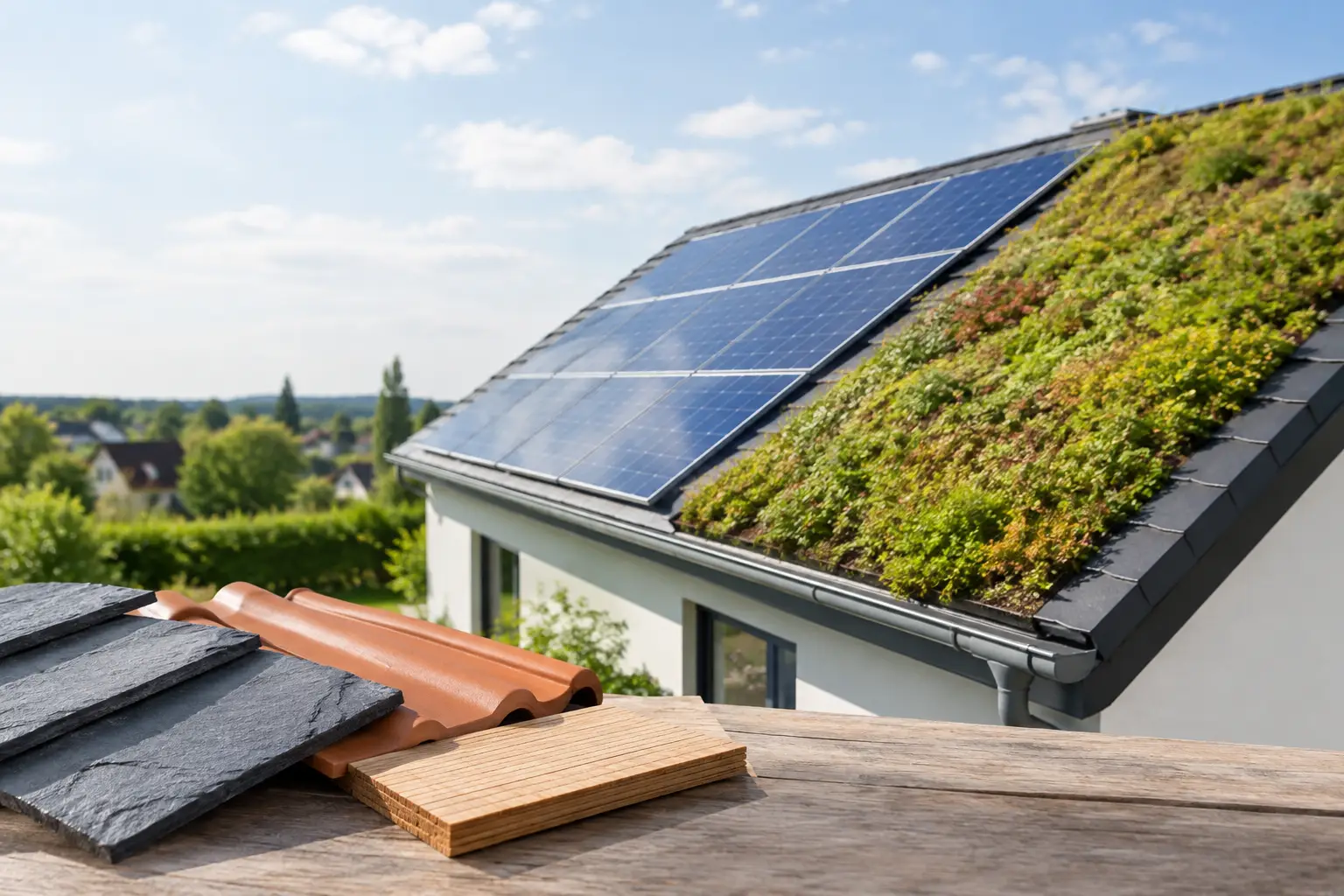
A roof can account for a significant share of a building’s embodied carbon, but replacing it with the lowest-carbon product is not always the most sustainable decision. Sustainable roofing materials need to suit the property, withstand the British climate and be fitted correctly enough to deliver a long service life. For homeowners, landlords and commercial property managers, the right answer usually balances durability, repairability, insulation and responsible sourcing.
What Makes a Roofing Material Sustainable?
Sustainability is more than whether a material is natural or recycled. A useful assessment looks at how long the roof will last, the energy used to manufacture and transport it, whether it can be repaired rather than replaced, and what happens to it at the end of its life.
A local slate roof that lasts for generations may have a lower lifetime impact than a lightweight product that needs replacing several times. Equally, reclaimed materials can reduce demand for new production, provided they are sound, compatible with the roof structure and installed to a proper standard.
The existing building matters too. A period property in a conservation area may require natural slate or clay tiles to preserve its character. A large commercial flat roof may be better suited to a high-performance membrane, improved insulation or a carefully designed green roof. There is no single material that is right for every re-roof.
Sustainable Roofing Materials to Consider
Natural and Reclaimed Slate
Natural slate is one of the strongest long-term choices for pitched roofs. It is exceptionally durable, non-combustible and can often remain serviceable for a century or more when the fixings, flashings and supporting structure are maintained. Its traditional appearance also makes it well suited to many UK homes, heritage buildings and rural properties.
Reclaimed slate can be particularly attractive where matching an existing roof is important. It keeps usable material in circulation and may offer a closer visual match than new slate. However, reclaimed slates must be sorted and checked carefully for thickness, damage and weathering. Poor-quality salvage can create unnecessary breakages and future repair costs.
Slate is heavy, and its installation is specialist work. Roof timbers, battens, fixings, leadwork and detailing around chimneys and valleys all need to be assessed before work begins. The initial cost is often higher than concrete tiles, but the long lifespan can make it a sensible value decision over time.
Clay Tiles
Clay tiles are another established option with a long service life. They are made from natural raw materials and, when properly maintained, can remain in place for many decades. Their colour is baked through the tile rather than simply applied as a surface finish, which helps them retain their appearance as they weather.
They suit traditional and modern homes alike, with a broad choice of profiles and colours. Clay tiles can be reused where they remain sound, making selective repairs possible after storm damage or when work is needed around a chimney.
As with slate, weight and roof pitch are key considerations. Clay can also be more expensive than standard concrete tile systems, while some profiles require careful matching during repairs. A survey should establish whether a full re-roof is necessary or whether targeted tile, ridge and leadwork repairs will extend the roof’s working life.
Metal Roofing
Metal roofing, including steel, aluminium and zinc systems, can offer a long-lasting, recyclable solution. Many metal products contain recycled content, and the material can usually be recycled again at the end of its service life. Standing seam profiles are popular on contemporary homes, extensions and commercial buildings because they are lightweight, clean-lined and effective at shedding water.
A properly specified metal roof can last for decades, but the details matter. Fixings must allow for movement as the metal expands and contracts with changing temperatures. Insulation and ventilation must also be designed properly to reduce condensation risk and limit rain noise inside the building.
Metal can be a practical option where weight is a concern, although it is not automatically the lowest-impact choice. Manufacturing energy, protective coatings and transport distances all vary between products. It should be selected for its suitability and expected life, not simply because it is marketed as recyclable.
Green Roofs
A green roof adds a planted layer over a waterproofed flat or low-pitched roof. On suitable commercial premises, blocks of flats, garages and extensions, it can slow rainwater run-off, support biodiversity and help protect the waterproof layer from ultraviolet exposure and temperature changes.
There are two main approaches. Extensive green roofs use shallow growing media and hardy planting such as sedum, making them relatively low-maintenance. Intensive systems are deeper and can support more varied planting, but they are heavier and demand ongoing care.
The trade-off is structural loading. Saturated growing media, retained water, people accessing the roof and maintenance equipment all need to be included in the design. Drainage outlets must remain accessible, and the waterproofing system needs to be installed and tested before the growing layers are added. A green roof is a specialist project, not a covering to place over an ageing or leaking flat roof.
Recycled and Composite Tiles
Some roofing tiles are manufactured using recycled plastics, rubber or other recovered materials. Their low weight can be useful for certain structures, and they may imitate slate or shake finishes where natural materials are impractical.
Performance varies widely between products. Check the manufacturer’s expected lifespan, fire rating, wind resistance, warranty terms and end-of-life recycling arrangements. A recycled-content tile is only a sustainable choice if it remains durable in service and can be repaired without creating a difficult disposal problem later.
The Roof Build-Up Matters as Much as the Covering
A sustainable roof is a system, not just a visible finish. Heat loss through the roof can be substantial, so a planned re-roof is often the right time to review insulation, ventilation and airtightness. Better thermal performance can lower heating demand for years, but insulation must be designed to avoid trapping moisture within the roof structure.
Ventilation gaps, vapour control layers and breathable membranes all have specific roles. Getting these details wrong can lead to condensation, timber decay and mould, undermining the value of otherwise sustainable materials. This is especially important when upgrading older properties, where roof timbers may have relied on natural airflow for decades.
Leadwork is another important consideration. Correctly formed flashings at chimneys, abutments, valleys and roof junctions prevent water ingress and protect the wider building fabric. Replacing a few tiles while leaving failed flashing in place rarely offers a lasting solution.
Repair First Where It Is Sensible
The most sustainable roof replacement is often the one that can be delayed safely through professional repair and maintenance. A slipped slate, cracked tile, blocked gutter or damaged mortar verge does not automatically mean the whole roof has failed. Early intervention can prevent water reaching battens, insulation and internal finishes.
Regular inspections are particularly worthwhile after high winds, prolonged rain or storm damage. Property managers should also schedule routine checks to gutters, valleys, flat roof outlets and chimney stacks. Keeping drainage clear prevents standing water and reduces pressure on roof coverings and flashings.
That said, repeated patch repairs on a roof near the end of its life can become poor value. If widespread deterioration, recurring leaks or failing underlay are present, a planned re-roof may reduce disruption and material waste compared with a cycle of emergency call-outs.
How to Choose the Right Option
Before selecting a material, establish the roof’s condition, pitch, structure, location and planning constraints. For a straightforward decision, consider four practical questions:
- How long do you expect to retain the property, and does a longer-life material justify the initial cost?
- Does the roof structure safely support the proposed covering, insulation and any green roof system?
- Can the material be repaired locally and matched in future if damage occurs?
- Are there conservation area, listed-building or leasehold requirements that limit the available options?
A clear survey should identify defects in the roof covering, chimney work, leadwork, gutters and underlying structure before a specification is agreed. This avoids choosing a material based on appearance alone, only to uncover costly supporting repairs once work has started.
For urgent leaks or storm damage, the immediate priority is to make the roof watertight. Once the property is protected, there is time to decide whether a targeted repair, partial renewal or complete re-roof is the more responsible long-term route.
Armstrong Roofing & Building can assess tile and slate roofs, flat roofs, chimney details, leadwork and guttering across the UK, with free quotations and no call-out charge. A well-planned roof should protect the building now while giving you a practical route to lower maintenance, reduced waste and a longer service life.