

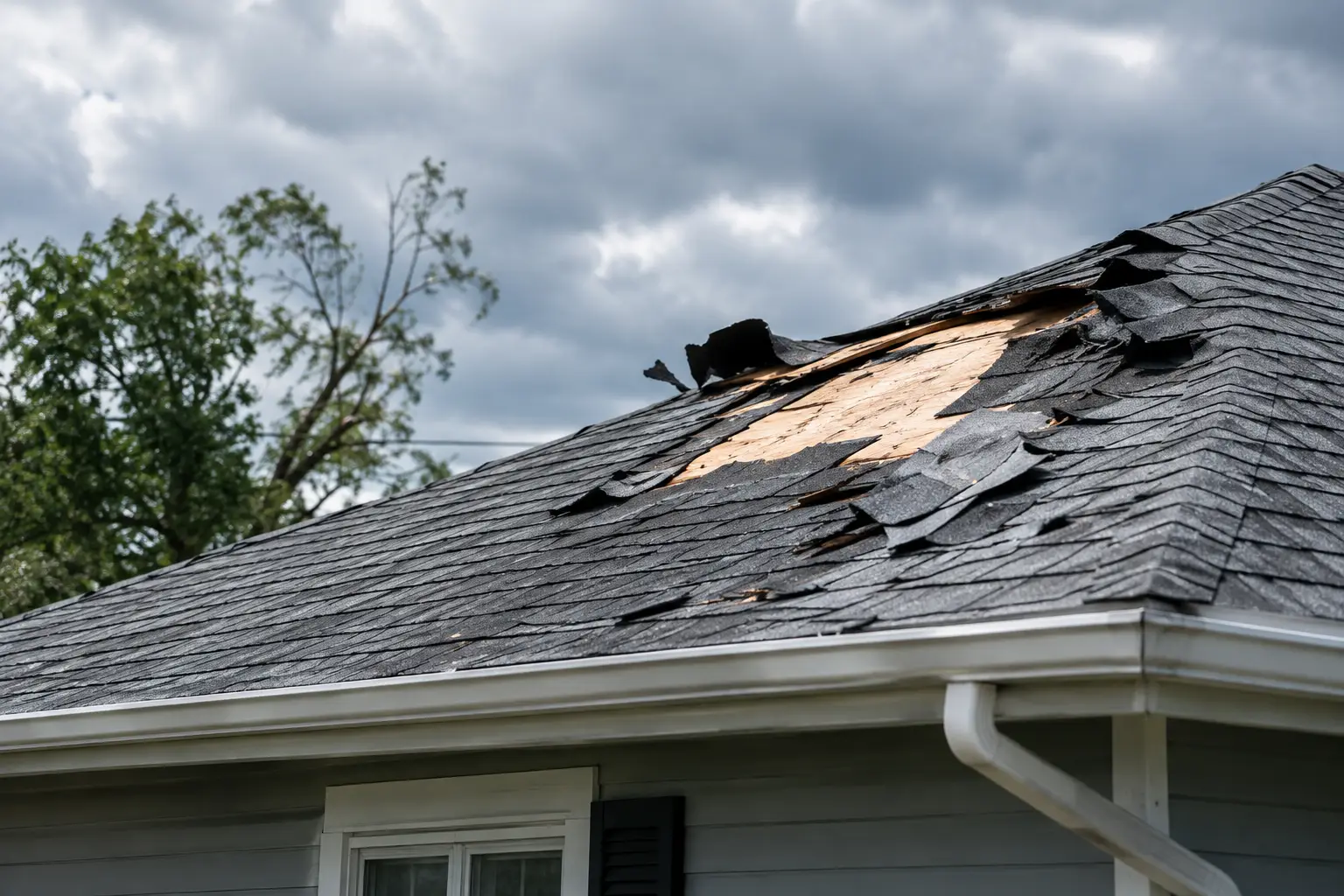
A storm damaged roof example can look deceptively minor from ground level: one slipped tile, a small patch of missing ridge mortar or a gutter hanging slightly away from the eaves. After heavy wind and rain, however, those visible faults can be signs that water has already found a route into the roof structure. Acting promptly protects the property, limits disruption and can prevent a manageable repair becoming a larger re-roofing project.
For homeowners, landlords and property managers, the first priority is not to diagnose the roof from a ladder. It is to make the building safe, record what has happened and arrange a professional inspection. High winds can leave tiles, slates, leadwork, chimneys and gutters unstable long after the weather has cleared.
Storm damaged roof example: a typical UK property
Consider a typical older semi-detached house with a pitched tiled roof. During an overnight storm, strong gusts lift several tiles along the verge and dislodge a section of ridge tile. Rain is then driven beneath the remaining tiles, soaking the underlay and running down towards the loft insulation. By morning, the owner notices a damp mark on an upstairs ceiling and a small amount of water near a light fitting.
The obvious damage is the missing tile. The more urgent concern is what cannot be seen from below: loosened neighbouring tiles, disturbed battens, wet timber, damaged flashing around the chimney and water collecting in insulation. If the roof is left exposed through further rainfall, the ceiling plaster may fail, timber can remain damp and internal repairs become more expensive.
A roofing contractor would normally inspect the roof covering, ridges, verges, valleys, chimney stack, flashing, gutters and downpipes. The aim is to establish whether the problem is isolated storm damage or whether the storm has exposed a roof that was already reaching the end of its serviceable life.
What storm damage commonly looks like
Storm damage is not always a dramatic hole in the roof. On tiled and slate roofs, wind may crack, lift or remove individual units. It can also loosen ridge and hip tiles, especially where mortar has deteriorated over time. A single displaced slate can allow wind-driven rain into the roof, even when the rest of the covering appears intact.
Leadwork is another common weak point. Flashing around chimneys, dormers, valleys and abutments may split, lift or pull away from the brickwork. Because leadwork is designed to direct water at junctions, even a small opening can cause a persistent leak.
Chimneys need particular care following severe weather. Cracked mortar joints, damaged pointing, loose pots and failing flashing can all create a risk to people below as well as the roof itself. Do not attempt to remove loose materials from height. Keep clear of the area and arrange an urgent assessment.
Guttering is often affected too. A blocked gutter can overflow during a downpour, while strong winds may dislodge brackets, crack joints or pull lengths of guttering away from the fascia. Although this may seem separate from the roof, uncontrolled water can saturate walls, affect soffits and fascias, and worsen damp problems around the property.
When roof damage is an emergency
Not every storm repair needs the same-day response. A cracked tile with no sign of water ingress may be scheduled for repair once the roof has been checked safely. It becomes an emergency when the defect is allowing water into the building, creating a danger to occupants or leaving part of the roof unstable.
Arrange emergency help if water is entering rooms, a ceiling is bulging, electrical fittings are affected, tiles or slates have fallen, or a chimney, ridge or guttering section appears loose. Move people and valuables away from the affected area where it is safe to do so. If water is close to electrics, do not touch switches, fittings or exposed wiring. Seek appropriate emergency electrical advice as well as roofing support.
Inside the loft, use a torch rather than a naked flame and avoid stepping on insulation or unsupported ceiling areas. It may be possible to place a container beneath an active drip, but do not try to patch the roof from the inside. A temporary internal measure does not stop wind and rain damaging the roof covering above.
What to do before the roofer arrives
Start by taking clear photographs from a safe position. Images of missing tiles, fallen debris, visible water staining and damage to gutters or chimneys may help with insurance discussions and give the contractor useful initial information. Note when the damage was first noticed and whether water is still entering the property.
Do not climb onto the roof, use a ladder in poor conditions or try to push tiles back into place. Roof surfaces can remain wet and slippery, while storm damage may have weakened areas that look sound. The risk of injury is not worth taking.
If the property can be secured safely from ground level, keep doors and windows closed near the affected side to reduce wind-driven rain. Move furniture, rugs and electrical items away from leaks. For commercial premises, isolate the affected area where necessary and notify occupants or tenants so that access can be managed safely.
A professional may install a temporary weatherproof covering where needed, then return to complete permanent repairs once conditions allow. Temporary protection is useful for stopping further ingress, but it should not be treated as a long-term substitute for replacing damaged tiles, repairing leadwork or rebuilding unstable sections.
Repair or re-roof: how the decision is made
The right solution depends on the scale of damage and the condition of the roof before the storm. A small number of lost tiles on an otherwise sound roof can often be repaired quickly, with matching materials used where available. Damaged ridge tiles may be rebedded or replaced, while failed flashing can be renewed with correctly formed leadwork.
A larger repair may be more sensible where many tiles have become loose, the underlay is badly degraded, battens have failed or repeated leaks have affected several areas. If a roof is already old and showing widespread wear, storm damage can be the point at which a planned re-roof offers better value than repeated call-outs.
For landlords and commercial property managers, the decision also includes the cost of disruption. A targeted repair may be appropriate for an isolated defect, but a roof with recurring failures can lead to tenant complaints, internal damage and unplanned maintenance costs. A clear inspection and written quotation help to compare immediate repair work with longer-term renewal.
Why a full inspection matters after high winds
Storms do not always damage only the area where a leak appears. Wind pressure can loosen fixings across a roof slope, disturb mortar at the ridge or expose weaknesses around valleys and chimneys. Water may then travel along timbers or membranes before appearing on a ceiling some distance from the original entry point.
A proper inspection also identifies connected work. For example, replacing slipped tiles without addressing split lead flashing may not stop the leak. Repairing guttering without clearing the valley above it may leave the cause of overflowing water unresolved. One contractor able to assess tile and slate roofing, chimney work, leadwork and guttering can give property owners a more complete picture of what is required.
Getting clear help after a storm
When requesting a quotation, explain the type of property, the roof material, the visible damage and whether water is entering the building. Mention any chimney, guttering or internal ceiling issues. This helps the roofer prioritise the visit and arrive prepared for the likely work.
Armstrong Roofing & Building Limited provides UK-wide roofing support for urgent repairs and planned works, including tile and slate repairs, leadwork, chimney repairs, guttering and complete re-roofs. With a 24-hour emergency response service, free quotations and no call-out charge, the focus is on making the roof safe and setting out the right repair clearly.
After a storm, a prompt inspection is usually the most cost-effective next step. A loose tile or small leak may be straightforward to resolve today, but leaving it through the next spell of wind and rain can give water far more opportunity to cause damage.