

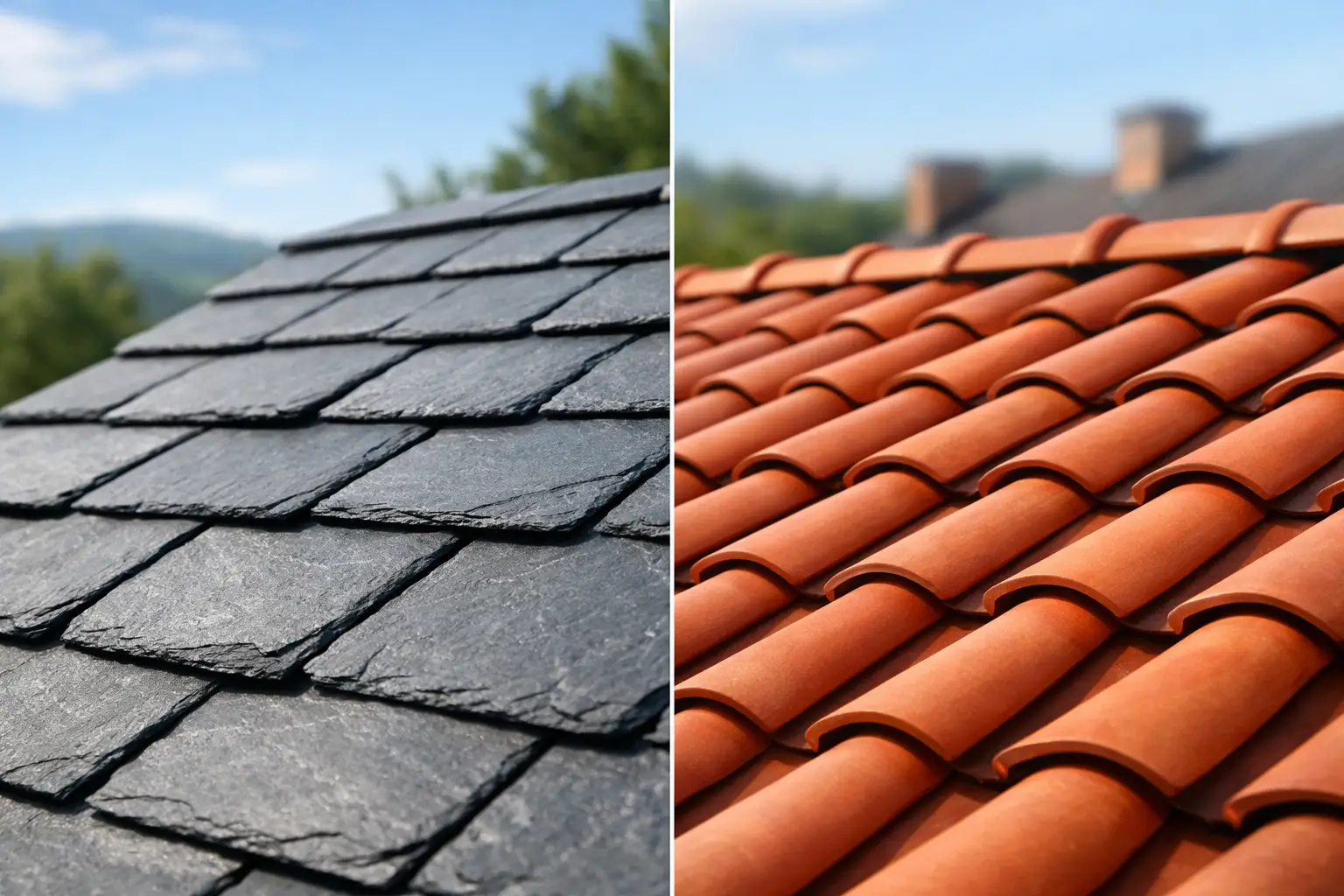
A roof covering is not simply a cosmetic choice. It affects the weight carried by the structure, the look of the property, the likely maintenance requirement and the cost of future repairs. When considering slate versus tile roofing, the right answer depends on the building, its location, its existing roof structure and whether you need a targeted repair or a complete re-roof.
For many UK properties, matching the original material is the safest starting point. A Victorian terrace with natural slate, for example, may lose both character and value if it is replaced without considering the wider roofscape. Equally, a modern home with concrete tiles may not need the cost or structural work involved in changing to slate. A professional roof inspection should identify what is practical before work is specified.
Slate versus tile roofing: the main differences
Slate is a natural stone product, split into thin, durable sheets. It has been used on British roofs for centuries and remains a common sight on period homes, rural properties and buildings in conservation areas. Natural slate gives a refined, traditional finish, with subtle variation in colour and texture from one slate to the next.
Roof tiles are manufactured products, most commonly concrete or clay. Concrete tiles are widely used because they are readily available, economical and suited to many types of residential roof. Clay tiles offer a more traditional appearance, usually in warm red, brown or mixed tones, and are frequently seen on older cottages and heritage-style developments.
The visible difference matters, but performance and suitability matter more. Slate is generally thinner and can provide a lighter covering than many concrete tile systems. However, individual slates can be brittle if handled incorrectly, while some tile types are particularly heavy and may demand more from the roof structure. The pitch of the roof, exposure to wind and condition of the battens and rafters all need to be assessed.
Lifespan and long-term performance
High-quality natural slate can last for a very long time when properly installed and maintained. In some cases, a slate roof may outlast the fixings, underlay and associated leadwork beneath it. This does not mean a slate roof is maintenance-free. Slipped slates, failed nails, damaged flashings and ageing valleys can still allow water into the roof space.
Clay tiles also have an excellent lifespan and often suit traditional properties well. Concrete tiles are durable and practical, though their appearance can weather over time and their service life is usually shorter than premium natural slate or good-quality clay. The actual lifespan of any roof depends heavily on workmanship, ventilation, detailing and regular maintenance rather than the covering alone.
A roof can look sound from ground level while hiding problems around chimneys, ridge lines, valleys and roof junctions. Water rarely enters at random. It usually finds a weakness in a broken tile or slate, cracked mortar, worn lead flashing or blocked guttering. Addressing those faults early can prevent a small repair becoming a larger re-roofing project.
Cost: look beyond the price per slate or tile
Tile roofing is often the lower-cost option at the outset, especially where concrete tiles are suitable for the property. Materials are generally easier to source, and replacement tiles may be straightforward to obtain for common profiles. That can make repairs and full re-roofs more affordable where budget is the main concern.
Natural slate usually has a higher initial material and installation cost. It requires careful setting out, appropriate fixings and experienced handling. Yet it can represent good long-term value where the roof is structurally suited to it, the property benefits from a traditional finish and the expected lifespan justifies the investment.
The price of a roofing project is never only about the roof covering. A reliable quotation should account for access, scaffolding, removal of existing materials, timber repairs, breathable membrane, battens, ridges, valleys, leadwork, chimney work and guttering where required. A low headline figure can become costly if these connected elements have been overlooked.
For landlords and property managers, planned maintenance can be especially cost-effective. Replacing a number of failing slates or tiles, renewing a valley and clearing gutters during one visit may reduce disruption and avoid repeated reactive repairs across a portfolio.
Weight, roof pitch and the existing structure
The roof structure should guide the choice between slate and tile. Concrete tiles can place considerable weight on rafters and supporting walls, particularly if a property was originally designed for a lighter roof covering. Changing from slate to concrete tile may therefore require structural consideration rather than a simple like-for-like replacement.
Natural slate is often lighter than concrete tile, but slate sizes, thicknesses and overlap requirements vary. Clay tiles also vary widely in weight and fixing method. The roof pitch is equally important. Some materials need a steeper pitch to shed rain safely, while lower-pitch systems require products designed and installed for that specific application.
Before recommending a material, a competent roofer should check the condition of the following:
- rafters, purlins and supporting timbers;
- roof pitch and drainage arrangements;
- battens, membrane and existing fixings;
- chimneys, valleys, abutments and lead flashings;
- exposure to driving rain, wind and nearby trees.
These details determine whether repair, partial renewal or a complete re-roof is the sensible route. They also help avoid putting a new covering over problems that are already developing beneath it.
Appearance, planning and local character
Slate often suits properties where the roof is a defining architectural feature. It is particularly appropriate for many Victorian and Edwardian homes, traditional cottages, stone-built properties and buildings in conservation areas. Matching the size, colour and course of existing slates can make a substantial difference to the finished result.
Clay tile can be the natural choice for properties with an established tiled roofscape, while concrete tile offers a practical finish for many newer homes. There are modern tile profiles designed to resemble slate, but they do not always provide the same appearance on close inspection. If your home is listed or located in a conservation area, planning restrictions or local requirements may affect the material, colour and profile you can use.
For commercial premises and larger residential blocks, appearance still matters, but durability, safe access and ease of ongoing maintenance may be the deciding factors. The correct specification should balance the building's use with its visual setting.
Repairs: slate and tile roofs need different handling
Both roof types can often be repaired without replacing the entire roof. A slipped slate may need re-fixing or replacing with a carefully matched slate. A cracked or displaced tile can often be changed individually, provided the surrounding battens and membrane remain sound.
Slate repairs require particular care. Walking directly across a slate roof can crack otherwise sound slates, and incorrect nails or fixings can lead to repeat failures. Tile repairs also need proper fixing, especially in exposed locations where wind uplift is a concern. Simply bedding a loose tile in mortar may not address the reason it moved in the first place.
If several repairs have been carried out over a short period, it may be time to assess the wider roof. Repeated slipped slates can point to nail fatigue. Widespread broken tiles may indicate weathering, impact damage or a failing support system. A clear inspection report helps you decide whether ongoing repair remains good value.
When to act quickly
After high winds or heavy rain, check for visible gaps, loose materials, blocked gutters and water marks in loft spaces or on ceilings. Do not climb onto the roof yourself. A loose slate or tile can create a safety risk as well as a leak, particularly above entrances, paths or neighbouring property.
Where water is entering, prompt action protects insulation, plaster, electrical installations and roof timbers. Emergency repairs may involve making the roof safe, securing loose materials and providing temporary weather protection before permanent works can be arranged. Armstrong Roofing & Building Limited provides free quotations, no call-out charge and 24-hour emergency support for urgent roofing issues across the UK.
The best choice is the one that respects your property's structure, appearance and budget while providing a properly detailed, weatherproof roof. If you are unsure whether a repair will be enough, arrange an inspection before the next spell of poor weather turns a manageable fault into internal damage.