

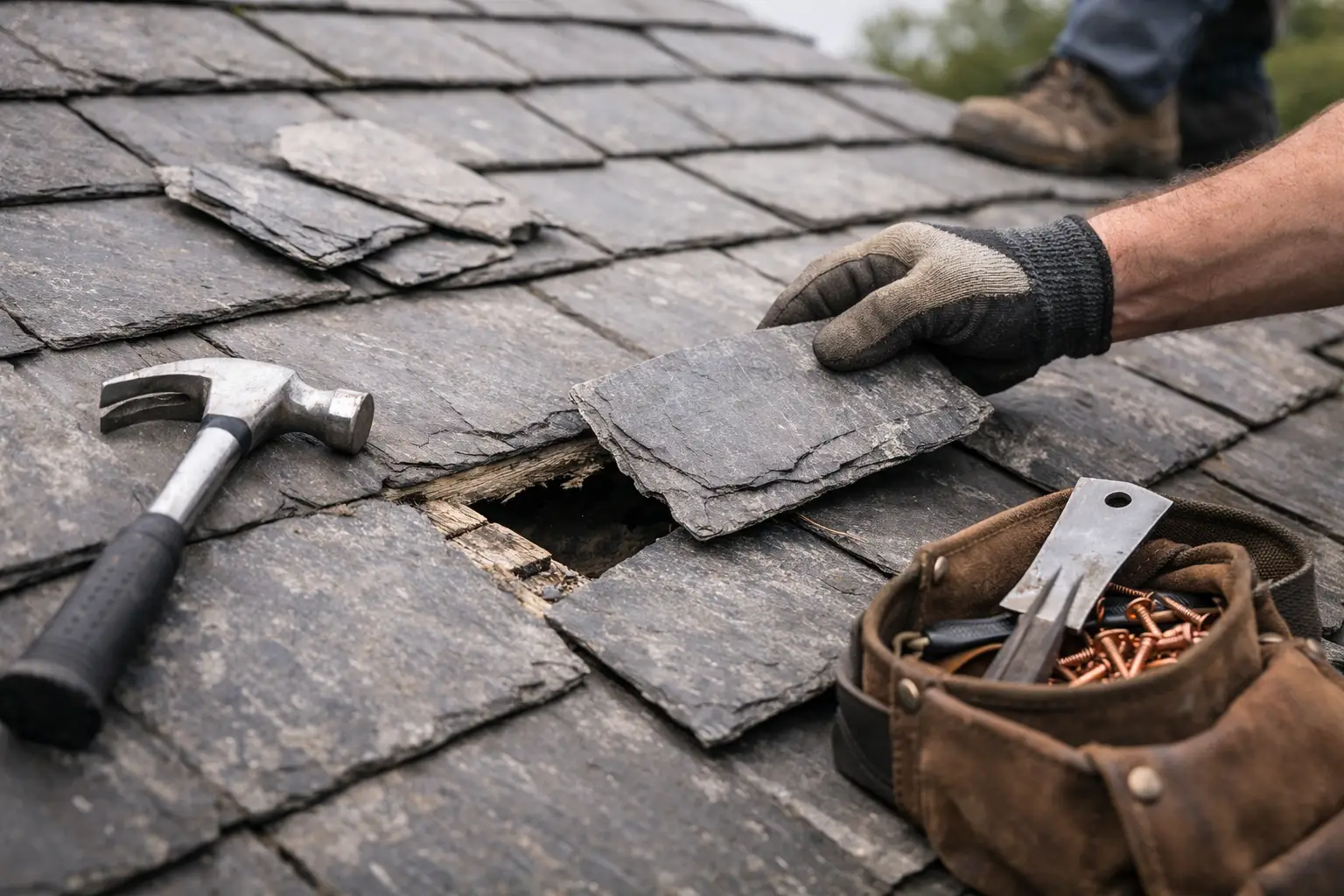
A single slipped slate can look like a minor defect from the ground. In wet or windy weather, however, it can become the route through which water reaches battens, felt, insulation and ceilings. Prompt slate roof repairs are about more than putting a tile back in place - they protect the wider roof structure and help prevent a manageable repair becoming a costly re-roof.
Slate is a durable, traditional roofing material found on properties across the UK. When it is correctly installed and maintained, a slate roof can last for decades. Yet individual slates, fixings, flashings and surrounding roof details still need attention over time, particularly after storms, prolonged rainfall or periods of frost.
Signs Your Slate Roof Needs Attention
A leak is the clearest warning sign, but it is not the first one. By the time water marks appear on an internal ceiling, moisture may already have travelled beneath the roof covering. Look out for missing, cracked or displaced slates, especially around roof edges, valleys, chimneys and dormers. A slate that has slipped out of line may indicate a failed nail or fixing rather than damage to the slate itself.
From inside the loft, check for daylight showing through the roof, damp insulation, staining on timbers or a musty smell. Outside, debris in gutters can also point to deterioration around the roofline. This is particularly relevant where leadwork, mortar, ridge details or guttering are ageing alongside the slate covering.
Not every issue is visible safely from ground level. Avoid climbing onto a slate roof to investigate. Slate can be fragile under foot, and an incorrect step can cause further breakages or create a serious fall risk. A professional inspection identifies the source of the problem without putting you or the roof at unnecessary risk.
When Are Slate Roof Repairs Urgent?
Some defects can be scheduled as planned maintenance. Others need immediate action. If water is entering the property, slates have fallen to the ground, storm damage has opened part of the roof, or loose material could endanger people below, treat the matter as urgent.
Temporary protection may be needed before a permanent repair can be completed, particularly during severe weather or where access equipment is required. The aim is to stop water ingress and make the roof safe, then assess the surrounding area for damage that may not be obvious from below.
Commercial properties and rented homes need particular care. A small defect can affect stock, electrical systems, tenants or business operations. Landlords and property managers should record reports of leaks or loose slates and arrange an inspection promptly, rather than waiting for the next routine visit.
What a Proper Slate Repair Should Address
Good slate roof repairs begin with diagnosis. The visible missing slate is sometimes the full issue, but it may also be a symptom of failing fixings, rotten battens, deteriorated underlay or movement around a chimney. Replacing slate without checking the reason it failed can lead to repeat problems in the same area.
A roofer will assess the condition of the surrounding slates and determine whether they can be carefully lifted and reinstated, whether matching replacement slates are required, and whether the fixings remain sound. Replacement material should suit the existing roof as closely as possible in size, thickness and appearance. On older roofs, this matters for weather performance as well as visual consistency.
The repair may also involve associated work. Damaged lead flashing around chimneys, valleys or abutments can allow water beneath an otherwise sound slate roof. Defective ridge mortar, cracked chimney pointing, blocked gutters and worn verge details can create similar symptoms. Addressing these connected elements at the same time is often more practical than arranging separate visits for each trade.
Nail Failure and Slipped Slates
Traditional slate roofs often rely on nails or hooks. Over many years, nails can corrode and lose their hold, causing slates to slip even when the slate itself remains in good condition. This is sometimes described as nail sickness. It does not automatically mean the entire roof needs replacing, but widespread slipping can indicate that the roof is approaching a point where broader renewal should be considered.
A localised failure may be repaired effectively. If slates are slipping across several elevations or large areas show failing fixings, a thorough condition survey provides a clearer basis for deciding between ongoing repairs and a planned re-roof.
Cracked or Delaminating Slate
Natural slate is hard-wearing, but it can crack after impact or through repeated freeze-thaw cycles. Some slates may also begin to split into layers, known as delamination. A cracked slate should be dealt with before it allows water through the roof covering.
The right approach depends on the roof’s overall condition. Replacing isolated damaged slates is usually sensible. Where deterioration is widespread, repeated small repairs can become poor value compared with renewing the affected slope or planning a complete replacement.
Repairs, Maintenance or a Re-Roof?
Property owners are often concerned that a repair visit will immediately lead to a recommendation for a new roof. In reality, the appropriate solution depends on the evidence. A roof with one or two slipped slates, sound battens and effective flashings may only need straightforward repair work. Regular maintenance can then help keep it performing well.
A re-roof becomes more likely where there is extensive slate failure, widespread nail corrosion, decayed roof timbers, repeated leaks from several areas or an underlay that has reached the end of its useful life. It can also be the better long-term choice where access and scaffolding costs would otherwise be incurred repeatedly for temporary fixes.
A clear quotation should explain what has been found, the work proposed and whether the repair is intended as a lasting solution or a temporary measure pending larger works. This gives homeowners, landlords and facilities managers the information needed to make a practical decision for their property and budget.
Protecting a Slate Roof Between Inspections
You do not need to inspect a roof closely to look after it well. Keep gutters and downpipes clear so water can drain freely away from the roofline. Cut back overhanging branches that may rub against slates or drop debris into valleys and gutters. After high winds, check from the ground for visible gaps, displaced slates or fallen material.
It is also wise to arrange periodic professional checks for older roofs, properties in exposed locations and buildings with chimneys, complex valleys or previous leak history. Preventative maintenance often identifies loose flashings, deteriorating pointing or minor slate movement before water enters the building.
Avoid pressure washing, coating or painting a slate roof unless a suitably qualified professional has recommended a specific treatment. These methods can damage slate, disturb fixings and force water into vulnerable areas. A slate roof usually benefits more from careful repair and maintenance than from cosmetic intervention.
Choosing a Contractor for Slate Roof Repairs
Slate work requires care, safe access and knowledge of how traditional roof coverings are constructed. Ask whether the contractor will inspect associated leadwork, chimney details and guttering rather than focusing only on the most obvious missing slate. This joined-up approach is valuable because roofing defects often overlap.
For urgent problems, response time matters just as much as workmanship. A contractor that can attend promptly, provide clear advice and arrange emergency protection gives you a route forward when the weather is working against you. For planned work, a free quotation and a straightforward explanation of the options make it easier to budget with confidence.
Armstrong Roofing & Building Limited provides UK-wide roofing support for emergency call-outs, slate and tile repairs, leadwork, chimney work, guttering and larger re-roofs. With no call-out charge, free quotations and 24-hour emergency response, the focus is on making the roof safe and setting out the right next step clearly.
If a slate has slipped, a ceiling has started to stain or a storm has left a section of roof exposed, acting early is usually the most cost-effective decision. A timely inspection can protect the structure beneath, preserve the character of the property and give you clarity before a small fault has the chance to spread.