

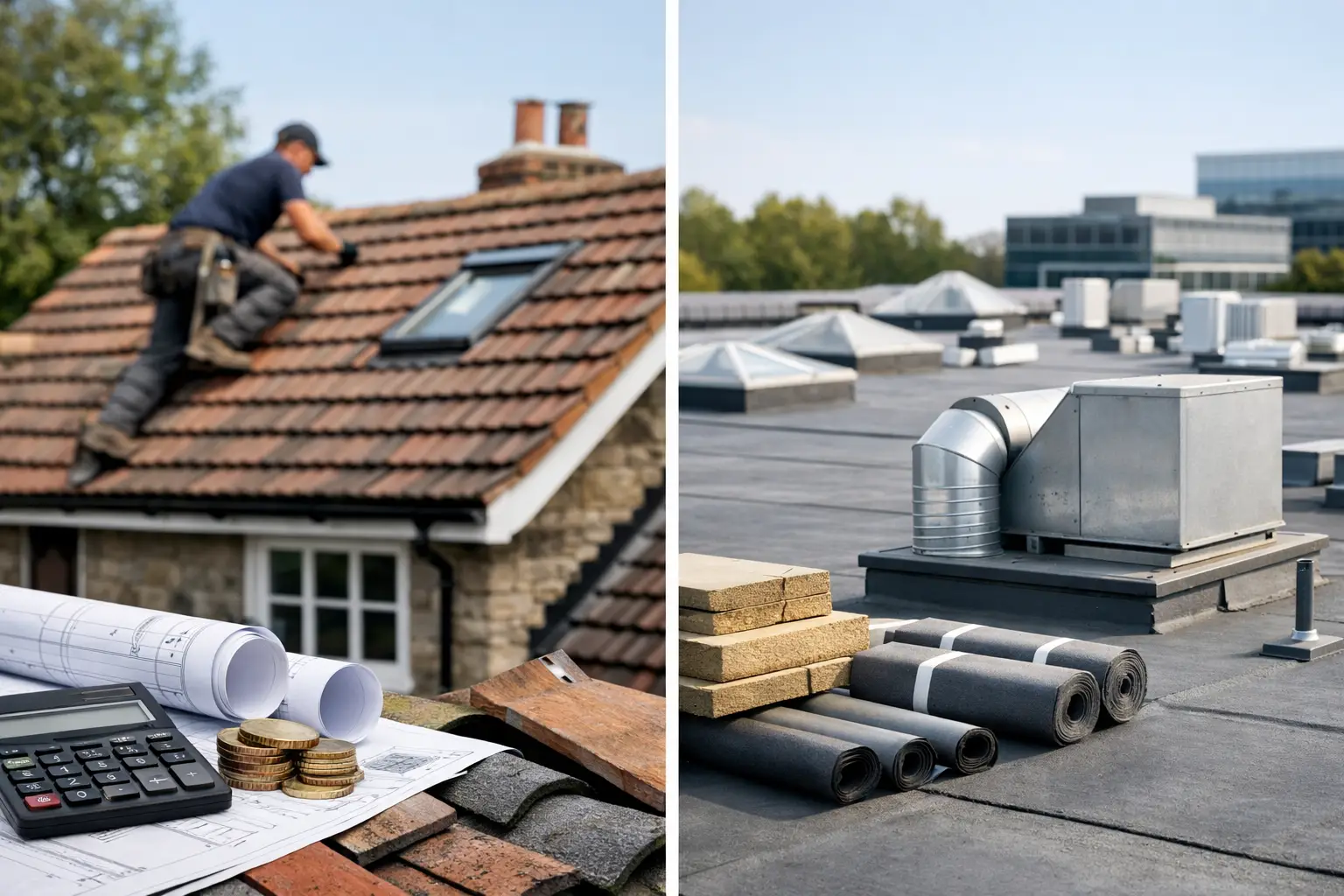
A roof leak rarely arrives at a convenient time. One loose tile after high winds can look minor from the ground, yet water may already be tracking beneath the covering, damaging battens, insulation or ceilings. Understanding roofing costs helps property owners act early, compare quotations properly and avoid turning a contained repair into a larger re-roof.
The right price depends on the condition of the roof, safe access, materials and the amount of work hidden below the surface. A credible quotation should make those factors clear, rather than offering a tempting headline figure with unexpected additions later.
What affects roofing costs?
Roofing work is not priced by the visible fault alone. A slipped tile may take minutes to replace once a roofer can reach it safely, but access equipment, roof height and the condition of the surrounding area can change the overall cost considerably.
The type of roof covering is another major factor. Concrete tiles are generally more readily available and quicker to replace than natural slate, while clay tiles, handmade tiles and heritage slates may need carefully matched materials. Flat roofs have different requirements again, with costs influenced by the existing system, insulation, drainage falls and whether the deck below is sound.
The scale of the affected area matters as much as the material. Localised damage may only require replacement tiles, new mortar or a small section of leadwork. If moisture has reached the timber structure, however, the work can involve stripping back the covering, replacing rotten battens or rafters and rebuilding the roof in layers.
Access should never be treated as an optional extra. Scaffolding, edge protection and safe working arrangements protect occupants, passers-by and the roofing team. On a two-storey property, a small repair can cost more than expected where full scaffolding is required. For commercial premises, restricted access, public footpaths, working hours and larger roof areas can also affect the programme and price.
Typical roofing repair costs in the UK
Every property needs an individual inspection and quotation, but broad guide prices can help set realistic expectations. A straightforward repair to a few tiles or slates may often fall between £150 and £500 where access is simple. Repairs to a wider area of pitched roofing, including replacement battens and felt, commonly cost from £500 to £2,000 or more depending on the extent of damage.
Leadwork is a specialist part of the roof. Flashings around chimneys, valleys, dormers and abutments need to be correctly formed and fitted to keep water out while allowing for movement. Small repairs may cost a few hundred pounds, while renewing extensive lead flashings or valleys can run into the low thousands.
Chimney work varies widely too. Repointing, replacing damaged flashing or securing a few loose bricks is very different from rebuilding a stack above roof level. Budget from several hundred pounds for minor chimney repairs, with larger rebuilds often costing £1,500 to £4,000 or more once scaffold access, brickwork, leadwork and removal of waste are included.
Guttering is usually less costly than major roof works, but it should not be ignored. A leaking joint or blocked outlet can send water down external walls and towards foundations. Repairs may be modest, while replacing gutters, downpipes and associated fittings around a whole property can range from roughly £400 to £1,500, depending on size, height and material.
These are guides, not fixed prices. A roof can look sound from the pavement but reveal cracked underlay, failed valley lining or decayed timber once work begins. An experienced contractor will explain the likely scope before starting and discuss any genuinely unforeseen issues with you.
Emergency repairs and storm damage
Emergency roofing costs reflect urgency, weather conditions and the steps needed to make a building safe. The immediate aim is often to stop further water ingress or secure loose materials, using temporary coverings or emergency repairs where appropriate. Permanent repairs can then be completed once the roof is dry, access is in place and the full damage has been assessed.
It is sensible to be cautious of anyone who pressures you into agreeing major work during an emergency visit. Ask what has failed, what temporary protection is needed and what permanent repair is recommended. Clear photographs and an itemised quotation are useful for owners, landlords and property managers alike.
Armstrong Roofing & Building provides free quotations, no call-out charge and 24-hour emergency response across the UK, helping customers deal with urgent defects without delay.
Roofing costs for a complete re-roof
A re-roof is a substantial investment because it involves much more than new tiles or slates. The existing covering is removed, the roof structure is inspected, defective timbers are addressed, and new breathable membrane, battens, coverings, flashings and ridge details are installed. Waste removal, scaffold and finishing work should all be accounted for.
For a typical UK terraced or semi-detached home, a basic tiled re-roof may broadly range from £5,000 to £15,000. Larger detached homes, complex roof shapes, premium clay tiles and substantial timber repairs can push the cost well beyond this range. Natural slate re-roofs often start higher because of material cost and skilled labour, with many projects falling between £12,000 and £30,000 or more.
A figure that appears much lower than competing quotations deserves careful scrutiny. It may exclude scaffold, lead flashings, disposal, ventilation upgrades, replacement timber or VAT. Equally, the highest quote is not automatically the best. The value lies in a clear scope, suitable materials, competent workmanship and a contractor who can deal with connected issues such as chimneys, guttering and leadwork without passing responsibility between trades.
When repair is better value than replacement
Not every ageing roof needs replacing. If the roof is generally sound and the fault is limited to a valley, chimney flashing, slipped tiles or local storm damage, targeted repairs can provide excellent value and extend the roof's serviceable life.
A re-roof becomes more sensible when repairs are frequent, the covering has reached the end of its lifespan, widespread water ingress is affecting the structure or the underlying membrane and battens are failing across large areas. Landlords and commercial property managers should also consider planned work where repeated reactive call-outs are disrupting tenants or operations.
The practical question is not simply, “What is the cheapest option today?” It is whether the proposed work addresses the cause of the problem and offers a reasonable period of reliable performance afterwards.
How to compare a roofing quotation
A useful quote should identify the roof area or specific defect, the proposed repair method and the materials to be used. It should state whether scaffold, waste removal and making good are included. For re-roofs, look for details on membrane, battens, tiles or slates, ridge and hip systems, leadwork, ventilation and treatment of chimneys or gutters where relevant.
Ask whether the price is fixed for the listed scope and how unforeseen defects will be handled. No contractor can always confirm the condition of concealed timber before a roof is opened, but you should know how additional work will be evidenced, priced and approved.
For commercial sites, clarify site access, working hours, protection of customers and staff, and how the contractor will manage weather exposure during the works. A realistic programme and proper safety arrangements are part of a professional price, not unnecessary extras.
Reducing avoidable roof costs
Regular visual checks from ground level can catch obvious problems before they worsen. Look for missing or displaced tiles, sagging gutters, overflowing rainwater goods, vegetation around valleys, deteriorating chimney mortar and damp patches in loft spaces or upper rooms. Never climb onto a roof yourself, particularly after wind or rain.
Clearing gutters, addressing minor defects promptly and arranging periodic maintenance are usually more cost-effective than waiting for water to enter the building. Older slate and tile roofs often need local attention long before they need a full replacement.
If you are facing a leak, storm damage or a planned re-roof, seek a clear inspection and written quotation before deciding. The best roofing cost is not the lowest number on the page - it is a properly scoped solution that keeps your property protected when the weather turns.