

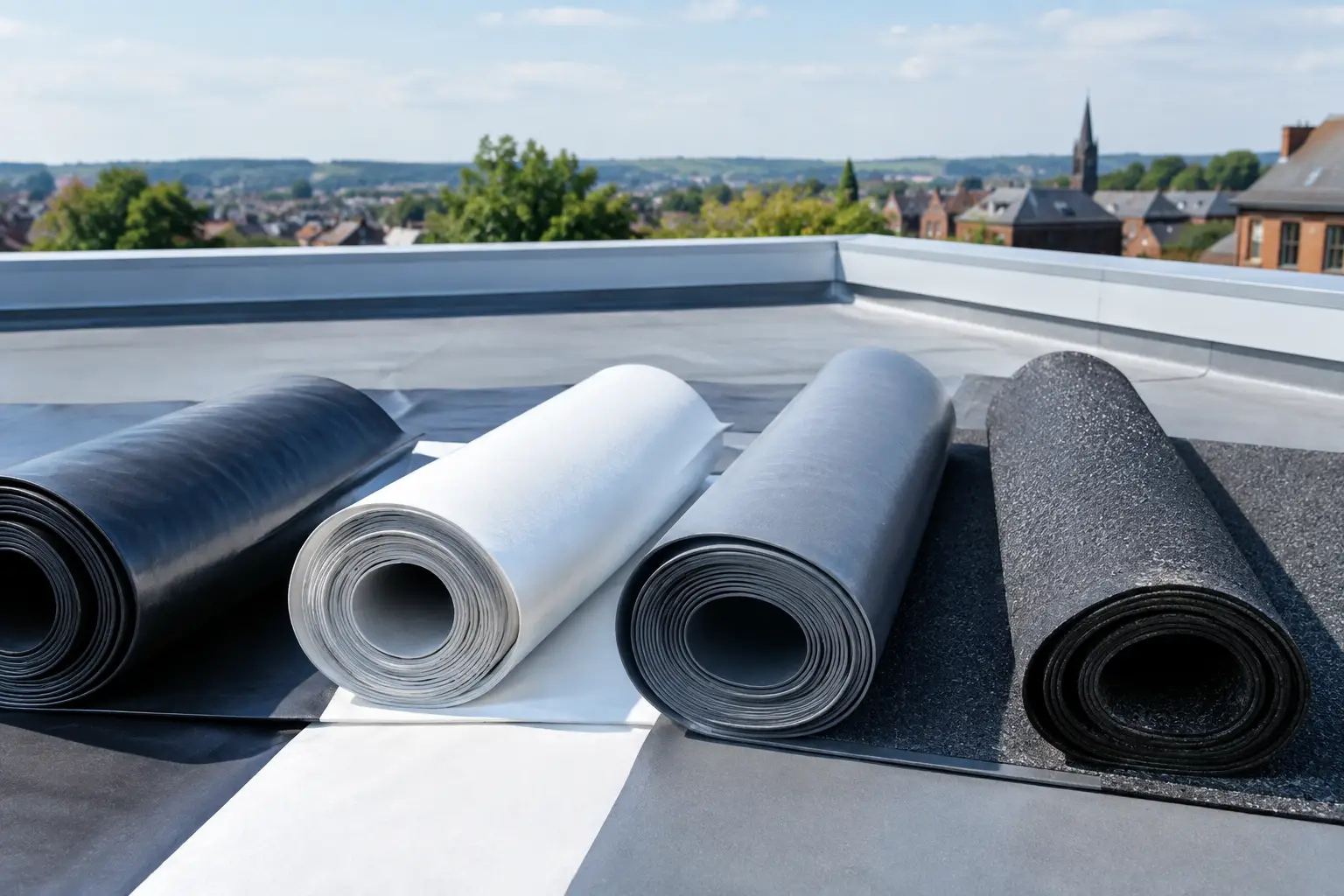
A roof membrane comparison is most useful when a flat or low-pitched roof has started leaking, ponding water after rain, or reached the point where repeated patch repairs no longer make sense. The right material depends on the roof’s size, condition, detailing and how it will be used. There is no single best membrane for every home, extension, garage, block or commercial premises.
This guide compares the main waterproofing systems used on UK flat roofs: felt, EPDM rubber, GRP fibreglass, liquid-applied coverings and single-ply membranes. It focuses on the practical questions property owners and managers need answered before arranging repairs or a replacement.
What does a roof membrane do?
A roof membrane is the waterproof layer that prevents rainwater entering the roof structure. On a flat roof, it is the primary weatherproofing surface. It must cope with standing water, temperature changes, UV exposure, movement in the building and foot traffic where maintenance access is required.
The word “membrane” can also refer to breathable underlay beneath tiles or slates on pitched roofs. That is a different product with a different purpose. This roof membrane comparison concerns the external waterproof coverings generally used on flat and low-slope roofs.
A sound installation matters as much as the material itself. Weak points are usually found at roof edges, upstands, skylights, pipe penetrations, outlets and joins to walls. A high-quality membrane will not compensate for poor falls, damaged decking or unsuitable detailing around these areas.
Roof membrane comparison: the main options
Built-up felt roofing
Modern felt roofing is a long way from the thin, short-lived coverings many people associate with older sheds and garages. Professional systems are usually installed in multiple layers, often with a durable mineral-finished cap sheet, and are heat-bonded to create a continuous waterproof surface.
Felt is a familiar and versatile choice for domestic flat roofs, garages, porches and some commercial applications. It can be particularly practical where a roof has awkward shapes or numerous details, because an experienced roofer can form it neatly around outlets, flashings and upstands.
Its main strengths are proven performance, straightforward repair options and a comparatively accessible installation cost. The trade-off is that torch-on work requires proper fire safety controls, and the finished system has seams that must be installed correctly. Its lifespan varies by specification, drainage and maintenance, but a properly fitted modern felt system can provide many years of service.
EPDM rubber roofing
EPDM is a synthetic rubber membrane, usually supplied in large sheets. On a smaller roof, it may be possible to cover most or all of the area with a single piece, reducing the number of seams exposed to weather.
It is popular for domestic extensions, garages and outbuildings because it is flexible, durable and well suited to the UK’s changing weather. EPDM is normally cold-applied with adhesives or mechanical fixings, avoiding the open flame associated with torch-on felt. It also remains flexible in lower temperatures, which can help where a roof experiences minor movement.
The material is commonly black and has a neat, understated finish. It is not normally the first choice where a highly decorative appearance is wanted, and repairs or alterations should use compatible products and careful preparation. The edge trims and junction details are critical, so this is not simply a case of laying rubber over an existing surface and hoping for the best.
GRP fibreglass roofing
GRP, often called fibreglass roofing, is a liquid resin system reinforced with glass fibre matting. Once cured, it forms a hard, joint-free surface. It is frequently chosen for domestic flat roofs where a clean appearance and strong finish are priorities.
A properly installed GRP roof can be hard-wearing, waterproof and suitable for complex details. It is often used on garages, extensions, dormers, balconies and roofs with parapet walls. Because it creates a continuous finish, there are no sheet seams across the main roof area.
However, GRP installation is highly dependent on dry conditions, correct preparation and controlled application. The roof deck must be suitable, and the resin must cure properly. It can also be less forgiving of significant structural movement than flexible rubber systems. Where a roof deck is unstable or the substrate has deteriorated, the underlying issue should be addressed before a fibreglass covering is considered.
Liquid-applied roof membranes
Liquid systems are applied directly to a prepared roof surface, then cure to form a waterproof coating. They can be useful for roofs with complicated shapes, multiple penetrations, plant bases or hard-to-reach details where sheet materials would create many joins.
For certain repair projects, a liquid membrane can avoid the disruption of removing every existing layer, provided the roof is dry, stable and suitable for overlay. It is also valuable for detailing around rooflights, vents and awkward junctions.
The key question is whether the existing roof is genuinely fit to receive a coating. Covering trapped moisture, rotten decking or a roof with failed drainage simply delays the problem. Liquid systems also require the right primer, thickness and curing conditions. A professional survey should establish whether a targeted liquid repair is appropriate or whether a full re-roof represents better value.
PVC and TPO single-ply membranes
PVC and TPO are synthetic single-ply systems more commonly specified for larger commercial roofs, schools, industrial units and multi-property sites. They are available in lighter colours, which can reduce surface heat absorption, and their seams are typically hot-air welded.
These systems can offer excellent performance across broad roof areas when designed and installed as part of a complete specification. They are often used where insulation upgrades, drainage design, maintenance access and warranty requirements need to be considered together.
For a small domestic garage, they may not always be the most economical route. For a large commercial roof, though, their low weight, welded seams and suitability for planned maintenance can make them a strong option.
Choosing the right system for the roof, not just the budget
The lowest initial quotation is not automatically the lowest-cost outcome. A membrane should be selected alongside the roof’s drainage, insulation, deck condition and expected use. If water regularly pools near an outlet, a new covering alone may not solve the leak risk. The fall of the roof may need correcting, outlets may need attention, or the guttering and surrounding leadwork may be contributing to the issue.
For a straightforward domestic extension with a stable deck, EPDM or GRP may both be suitable. EPDM offers flexibility and fewer seams; GRP provides a harder, seamless finish. For an older garage roof with multiple edges and a limited budget, a modern felt system can be a sensible, repairable option. For complex commercial detailing, liquid or single-ply systems may be more practical.
A roof used for regular access needs further thought. A membrane can be punctured by careless foot traffic, equipment or sharp objects. Walkway pads, protection zones and planned access routes may be needed around air-conditioning units, solar equipment or roof-mounted services.
Repair, overlay or complete re-roof?
A local repair can be the right answer when damage is confined to one area and the rest of the membrane remains secure. Split seams, lifted flashings, isolated punctures and failed outlet details can often be addressed without replacing the entire roof.
An overlay may be possible where the existing covering is dry, firmly attached and structurally sound. It can reduce labour and disposal costs, but it is not appropriate if water has entered the insulation or timber deck. Adding another layer over hidden deterioration makes future repairs more difficult and can add unnecessary weight.
A complete re-roof is usually the safer long-term approach when a membrane has widespread cracking, blistering, repeated leaks or saturated insulation. It allows the roofing contractor to inspect and renew the deck where required, improve insulation, form proper falls and install new perimeter details. This is also the best opportunity to deal with connected issues such as defective guttering, chimney flashings or leadwork.
Questions to ask before approving a roof membrane
Ask what is causing the failure, rather than only which product will be used. A clear quotation should explain whether the work includes removal of existing coverings, deck repairs, insulation, outlets, edge trims, flashings and waste disposal. It should also state how the roof will be protected while work is underway.
For commercial properties and managed buildings, ask about access, disruption, safe working arrangements and future maintenance. A roof membrane is part of a wider roof system, and planned inspections can catch blocked outlets, damaged flashings and small defects before they become internal water damage.
Armstrong Roofing & Building can assess leaking, ageing and storm-damaged roofs across the UK, providing free quotations with no call-out charge. Where water is entering the building, a 24-hour emergency response can help protect the property while the right repair or replacement is planned.
The most reliable choice is the membrane that suits the roof’s condition, drainage and future use, installed with care at every edge and junction. If a roof has already leaked more than once, arrange an inspection before the next spell of heavy rain turns a manageable roofing job into a larger repair inside the property.