
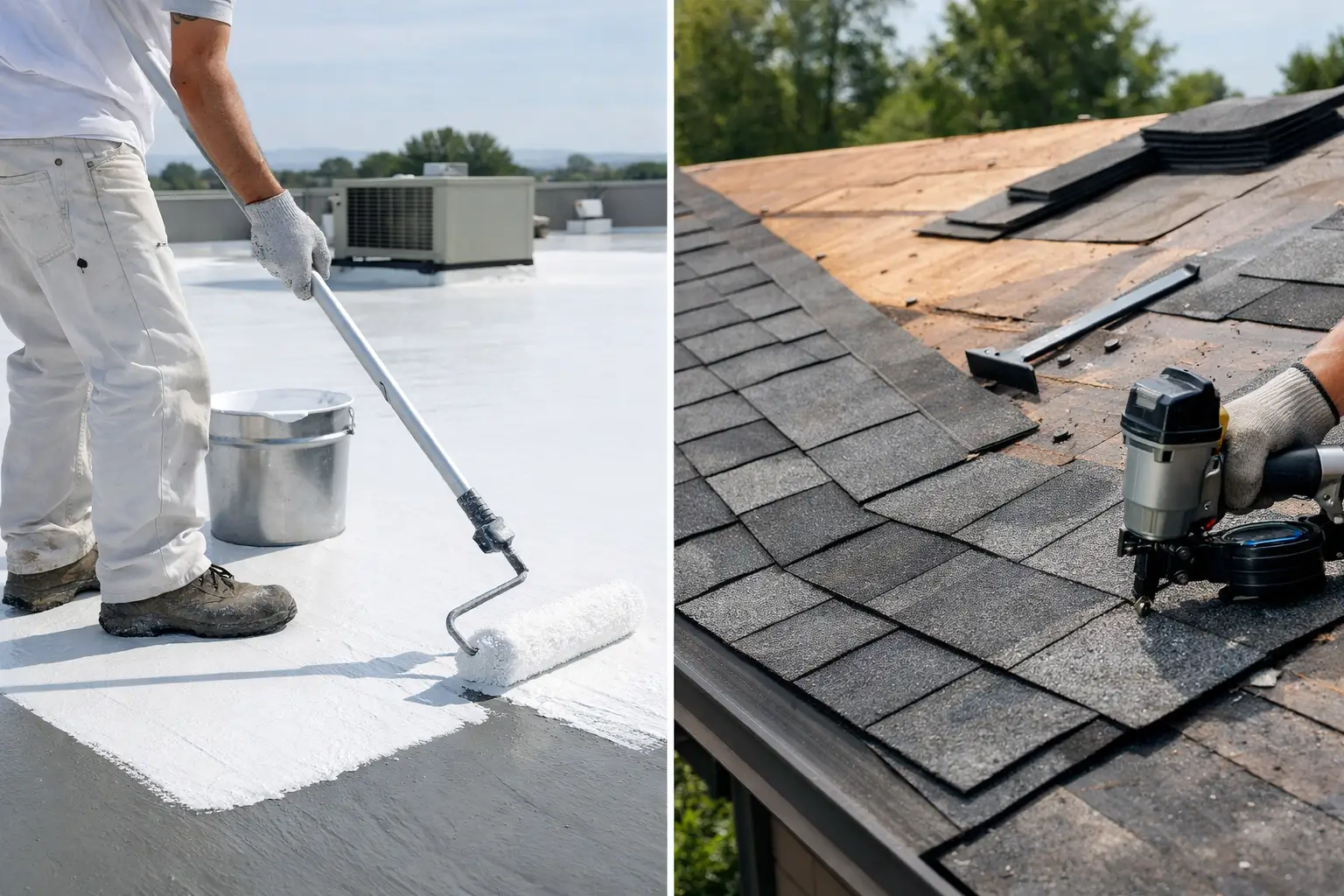
A roof that is starting to leak, becoming badly weathered or looking tired does not automatically need to be stripped and replaced. The decision around roof coating versus replacement depends on what is happening beneath the visible surface. A coating can be a cost-effective maintenance measure on the right roof. It cannot cure rotten timbers, widespread failed tiles or a roof that has reached the end of its working life.
For homeowners, landlords and commercial property managers, the best route starts with a proper roof inspection. The aim is not simply to choose the lower initial price. It is to stop water ingress, protect the building and avoid paying twice for work that does not address the real fault.
What a Roof Coating Can Do
A roof coating is a protective liquid system applied over a suitable existing roof covering. Once cured, it forms a weather-resistant layer intended to help repel water, reduce surface deterioration and extend the useful life of the roof.
Coatings are most commonly considered for flat roofs and certain commercial roof systems, although products and preparation requirements vary widely. On an appropriate substrate, a coating may help renew a worn waterproof surface without the disruption of a full strip-out. It can also be useful as part of planned maintenance where the roof remains fundamentally sound.
The key word is suitable. The existing surface must be stable, clean, dry and well prepared. Cracked areas, failed joints, damaged flashings and local defects need attention before any coating is applied. If the roof has trapped moisture, extensive blistering or movement in the structure below, sealing over it can conceal a bigger problem rather than resolve it.
A coating is generally a maintenance or restoration option. It is not a universal repair product and should not be treated as one.
When coating may be the sensible option
Coating may be worth considering where an inspection finds a roof deck and structure in good condition, with only surface weathering or minor, localised waterproofing wear. It can suit property owners looking to extend serviceable roof life while budgeting for future works.
It may also reduce downtime for some commercial premises compared with a full replacement. That said, access, weather conditions, the roof’s existing material and the level of preparation required all affect the programme and cost.
For pitched tile and slate roofs, the conversation is often different. Water problems are frequently caused by slipped, cracked or missing tiles, damaged valleys, worn leadwork, failed mortar or guttering issues. These faults usually need targeted roofing repairs, not a surface coating.
When Roof Replacement Is the Better Investment
A full replacement, often called a re-roof, involves removing and renewing all or part of the roof covering. Depending on the property, this can include tiles or slates, battens, membrane, insulation, flashings, valleys and associated leadwork. It gives the contractor access to inspect and correct issues hidden below the surface.
Replacement is the more substantial option, but it is often the right one where repeated repairs are no longer holding, water damage has spread or the roof covering is broadly worn out. A good re-roof addresses the roof as a system rather than treating isolated symptoms.
Warning signs that point towards replacement include widespread cracked, loose or missing tiles; recurring leaks in more than one area; sagging roof lines; deteriorated felt or underlay; signs of timber decay; and water damage appearing in loft spaces or upper rooms. A flat roof with numerous patches, splits, ponding water or failed seams may also be beyond a coating-only solution.
Age matters, but it is not the deciding factor on its own. Some older slate roofs can be repaired and maintained for many years because the slates remain sound. Conversely, a newer roof installed poorly or damaged in severe weather may require significant remedial work much sooner.
Replacement creates the chance to correct hidden faults
The major advantage of replacement is certainty. Once the covering is lifted, problems with decking, battens, underlay, ventilation, insulation or roof timbers can be identified and dealt with properly.
This is particularly valuable for landlords and property managers responsible for long-term maintenance planning. A short-term coating may appear less expensive, but a failed roof structure or persistent water ingress can lead to internal damage, mould, disrupted tenancies and higher eventual costs.
Replacement also allows the roof to be brought up to the appropriate current standards for the scope of work, particularly where insulation or ventilation improvements are needed. The exact requirements depend on the building and the work being carried out, so advice should be based on a site survey rather than assumptions.
Roof Coating Versus Replacement: Comparing Cost Properly
Initial cost is usually the first concern, and coating can often be cheaper than a full re-roof. There is less material removal, less labour and potentially less disruption. But a lower quote only represents value if the coating has a realistic chance of performing for the roof’s condition.
A replacement costs more because it involves more work and materials. It may require scaffolding, removal and disposal of existing coverings, replacement of damaged components and careful installation of new roof layers. On a pitched roof, the type of tile or slate, roof size, pitch, access, chimneys, valleys and leadwork can all influence the price.
Rather than comparing one figure against another, ask what each proposal includes. Is preparation included before coating? Are existing leaks and defective details being repaired? Does the re-roof include new membrane, battens and flashing work where necessary? Has allowance been made for defects found once the roof is opened up?
A clear written quotation should set out the recommended scope, materials and any known limitations. It should also distinguish between a repair intended to extend roof life and a replacement designed to provide a new roofing system.
Do Not Ignore the Cause of the Leak
Water rarely enters exactly where it becomes visible indoors. It can travel along timbers, membrane or masonry before appearing as a stain on a bedroom ceiling or a damp patch near a chimney breast.
That is why a roof inspection should cover more than the obvious damaged area. Tile and slate condition, ridge and verge mortar, chimney flashing, valleys, roof junctions, gutters and downpipes can all contribute to a leak. On flat roofs, the condition of joints, upstands, outlets and drainage is equally important.
After heavy rain or storm damage, a prompt temporary repair may be needed to limit further water ingress. The longer-term solution can then be planned once the roof is dry enough to inspect safely and thoroughly. Emergency work and permanent renewal do not have to be the same job, but both should be based on the actual source of the problem.
Questions to Ask Before Approving Work
A reputable contractor should be able to explain why coating, repair or replacement is being recommended in plain terms. Ask how much of the roof is affected, whether moisture or structural defects have been found, what preparation is required and how the work will deal with flashings, edges, drainage and penetrations.
It is also reasonable to ask what happens if hidden damage is uncovered. Roofing work can reveal issues that cannot be seen from ground level, especially on older properties. Knowing the likely options and costs before work begins helps avoid surprises.
For commercial sites, ask how the contractor will manage access, protect operations below and schedule weather-sensitive stages. For occupied homes, establish scaffolding requirements, expected duration and whether chimney, guttering or exterior repairs can be completed at the same time.
Make the Decision From Evidence, Not Appearance
A newly coated roof can look reassuringly uniform, while a roof with a few visible repairs may still be structurally sound. Appearance alone is not a reliable guide. The condition of the roof build-up, drainage details and supporting structure matters far more than surface colour or age.
If the roof is sound and the waterproof layer is nearing the end of its serviceable condition, a correctly specified coating may provide useful additional life. If water has already compromised several layers, the roof is repeatedly failing or key materials are extensively deteriorated, replacement is usually the more dependable route.
Armstrong Roofing & Building can assess urgent leaks, planned maintenance and full re-roofs across the UK, with free quotations and no call-out charge. A clear inspection gives you a practical basis for deciding what your roof needs now, and what will protect the property for the years ahead.