

A loose tile in September can become a ceiling stain in December. To prepare roof for winter properly, deal with small defects while access is safer, weather is drier and repairs are less likely to become an emergency. For homeowners, landlords and property managers, an early inspection is one of the most practical ways to reduce the risk of leaks, damaged insulation and disruption during the colder months.
UK winters put every part of a roof under pressure. Persistent rain finds weak points in flashing and mortar. High winds lift cracked tiles and slates. Frost expands trapped water in porous materials, while blocked gutters can force rainwater back towards the roofline. A sound roof does not need unnecessary work, but it does need a clear, professional assessment when warning signs are present.
Why you should prepare your roof for winter
Roofing problems rarely stay in one place. A slipped slate, split lead flashing or blocked valley may allow water into the roof space long before a visible damp patch appears indoors. By the time water reaches a bedroom ceiling, timber, insulation and plasterboard may already have been affected.
Winter work can also be more difficult to schedule around wet or windy conditions. Some urgent repairs can and should be completed quickly with suitable safety measures, but planned maintenance is generally more straightforward before prolonged bad weather arrives. Acting early gives you time to compare a clear scope of work, arrange access and address related issues such as chimney repairs or guttering at the same time.
For commercial premises and managed properties, the benefit is also operational. A roof inspection before winter helps identify risks that could affect tenants, stock, equipment or business continuity. Recording the condition of the roof and completing sensible repairs can support a more controlled maintenance plan rather than a costly reactive one.
Start with a safe visual check from ground level
You do not need to climb onto a roof to spot every concern. In fact, walking on tiles or slates without the right equipment can cause damage and creates an unnecessary fall risk. Begin from ground level, using binoculars if helpful, and look at the roof from more than one angle.
Pay attention to uneven tile lines, missing or visibly cracked tiles, slipped slates and broken ridge or hip tiles. Check whether chimney stacks appear sound and whether flashing around chimneys, roof windows, valleys and abutments looks lifted, torn or displaced. On flat roofs, look for standing water after rainfall, blistering, cracking or obvious damage around edges and outlets.
Inside the property, inspect the loft or roof space in daylight. Look for wet insulation, dark staining on timbers, mould, a musty smell or daylight visible through the roof covering. Condensation can sometimes be mistaken for a leak, particularly in poorly ventilated lofts, so the source needs to be diagnosed rather than assumed. A roofing contractor can distinguish between rainwater ingress, failed flashing, ventilation issues and other defects.
Clear gutters, downpipes and roof valleys
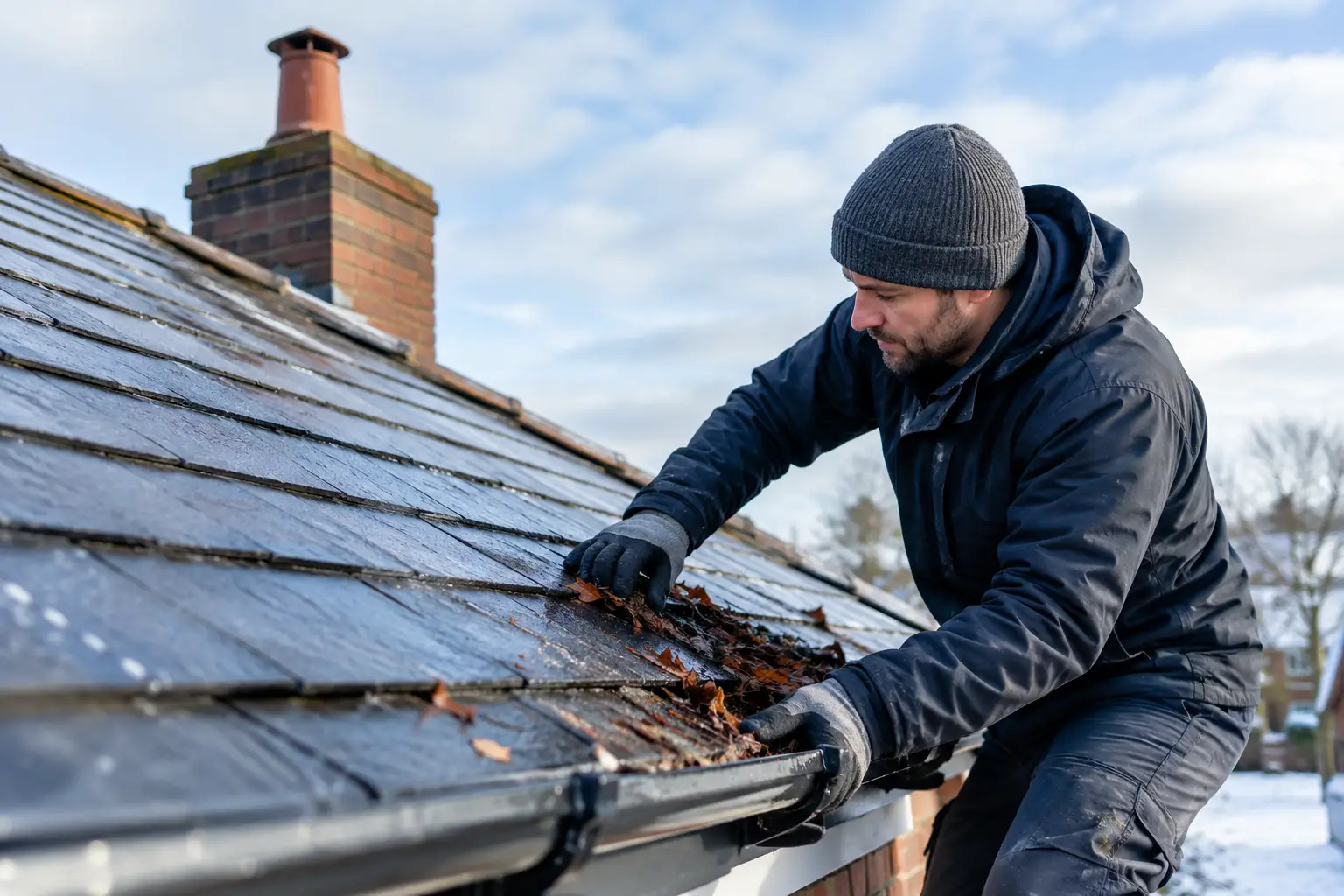
Guttering is a small part of the roof system with a major job. When leaves, moss and debris block gutters or downpipes, water can overflow onto fascias, brickwork and paths. In freezing conditions, standing water may expand and place extra strain on joints and brackets.
Have gutters and downpipes cleared before leaf fall is at its worst, then check them again later in autumn if there are mature trees nearby. Water should run freely to the drain, not spill over the front edge or pool at a downpipe connection. Also inspect gutter brackets for sagging and look for cracked sections, leaking joints or corroded fixings.
Roof valleys deserve particular attention because they channel a high volume of water. Leaves and moss can collect there, especially on older tile and slate roofs. Clearing a valley from a ladder or roof is not a DIY job. It requires safe access and care not to disturb the surrounding covering.
Check tiles, slates, ridge work and mortar
Individual tiles and slates are designed to shed water as a system. When one becomes loose or broken, wind-driven rain can reach the underlay and battens beneath. Replacing a small number of damaged units promptly is usually more economical than waiting for a wider section to fail.
Ridge and hip tiles should also be checked. Traditional mortar bedding can crack or deteriorate over time, leaving tiles loose in high winds. Modern dry-fix systems have different components to inspect, including clips and mechanical fixings. The right repair depends on the roof construction and the condition of the surrounding materials, not simply on what is visible from the ground.
Moss is another common concern. A light growth is not automatically an urgent issue, but heavy moss holds moisture and can block gutters as it sheds. It may also disguise cracked tiles or defective flashings. Avoid pressure washing, as it can damage tile surfaces, dislodge pointing and force water beneath the covering. A professional can advise whether careful removal is appropriate and whether any underlying repairs are needed first.
Do not overlook chimneys and leadwork
Chimneys are exposed above the main roofline and often suffer first during wet, windy weather. Check for crumbling mortar joints, cracked render, loose pots, damaged flaunching and failing lead flashing where the stack meets the roof. Water entering around a chimney can travel along timbers and emerge some distance away, making the source difficult to identify without a proper inspection.
Leadwork is equally important. It is commonly used around chimneys, valleys, dormers and roof junctions because it can form a weatherproof detail around awkward shapes. Over time, lead can split, lift, become poorly fixed or fail where an earlier repair has been carried out with unsuitable materials. Patch repairs can be appropriate in some cases, but extensive deterioration may call for replacement leadwork to provide a reliable long-term finish.
If you have a disused chimney, do not assume it can be ignored. It still needs a sound cap or cowl, secure flashing and weatherproof masonry. Removing or altering a chimney is a separate structural decision and should be assessed properly rather than treated as a quick winter maintenance task.
Watch for the signs that need prompt attention
Some defects can be planned into routine maintenance. Others should be inspected without delay, especially if poor weather is forecast. Arrange professional help promptly if you notice:
- water marks spreading across ceilings or walls
- active drips in the loft or inside the property
- missing tiles, slates or ridge pieces after strong winds
- overflowing gutters despite recent rainfall being moderate
- loose chimney masonry, fallen mortar or damaged flashing
- a flat roof holding water for an extended period after rain
If water is entering the building, move valuables away from the affected area and contain drips where safe to do so. Do not climb onto the roof in rain, wind, frost or darkness. Temporary protection may limit further damage, but the cause still needs a lasting repair once conditions allow.
Plan repairs based on condition, not guesswork
A winter roof check should lead to a proportionate decision. A few slipped slates, a localised flashing repair or gutter renewal may be all that is required. On an older roof with repeated leaks, widespread tile deterioration, failing underlay and multiple patch repairs, a partial renewal or complete re-roof may offer better value over time.
Ask for a clear explanation of the defect, the recommended work and whether the solution is a repair, maintenance measure or replacement. For landlords and property managers, photographs and a written scope can make it easier to prioritise work across a portfolio. It is also sensible to consider connected elements together: repairing a chimney flashing while scaffolding is already in place, for example, may be more efficient than arranging separate visits later.
Cost should not be the only consideration. The cheapest short-term fix can be false economy if it does not address the route water is taking into the building. Equally, not every ageing roof needs replacing immediately. A reputable contractor should be able to explain the trade-off clearly and recommend work that suits the roof's actual condition.
Use a roofing contractor before bad weather takes hold
Roof work involves working at height, specialist materials and careful detailing around vulnerable areas. A professional inspection gives you a better view of the whole roof, including sections that cannot be assessed safely from the ground. It also helps prevent a small issue being masked by a superficial repair.
Armstrong Roofing & Building provides UK-wide roof maintenance, tile and slate repairs, chimney work, leadwork, guttering and complete re-roofs, with free quotations and no call-out charge. Where severe weather has already caused damage, a 24-hour emergency response service can help protect the property and arrange the necessary repair work.
The best time to act is when a defect is still a straightforward job, not when rain is falling through the ceiling. A careful inspection now can give you confidence that your property is ready for the season ahead.