
A damp patch beside a chimney breast, staining around a roof window or water appearing after heavy rain rarely means the whole roof has failed. Often, the weak point is the leadwork that seals the junctions where roofing materials meet. These details may cover a small area, but they do a major job: directing rainwater away from the building and protecting the structure beneath.
For homeowners, landlords and property managers, failed lead can feel like an urgent mystery. The sensible response is not to cover the area with sealant and hope for the best. A proper inspection can identify whether the issue is a slipped flashing, split lead, worn mortar joint, blocked valley or damage to the surrounding tiles or slates. The right repair protects the roof now and can prevent a smaller defect becoming internal water damage.
What roof leadwork does and why it matters
Lead is used on roofs because it is durable, weather-resistant and can be shaped accurately around awkward junctions. It expands and contracts with changing temperatures, making it particularly suitable for areas where water is likely to collect or be driven by wind.
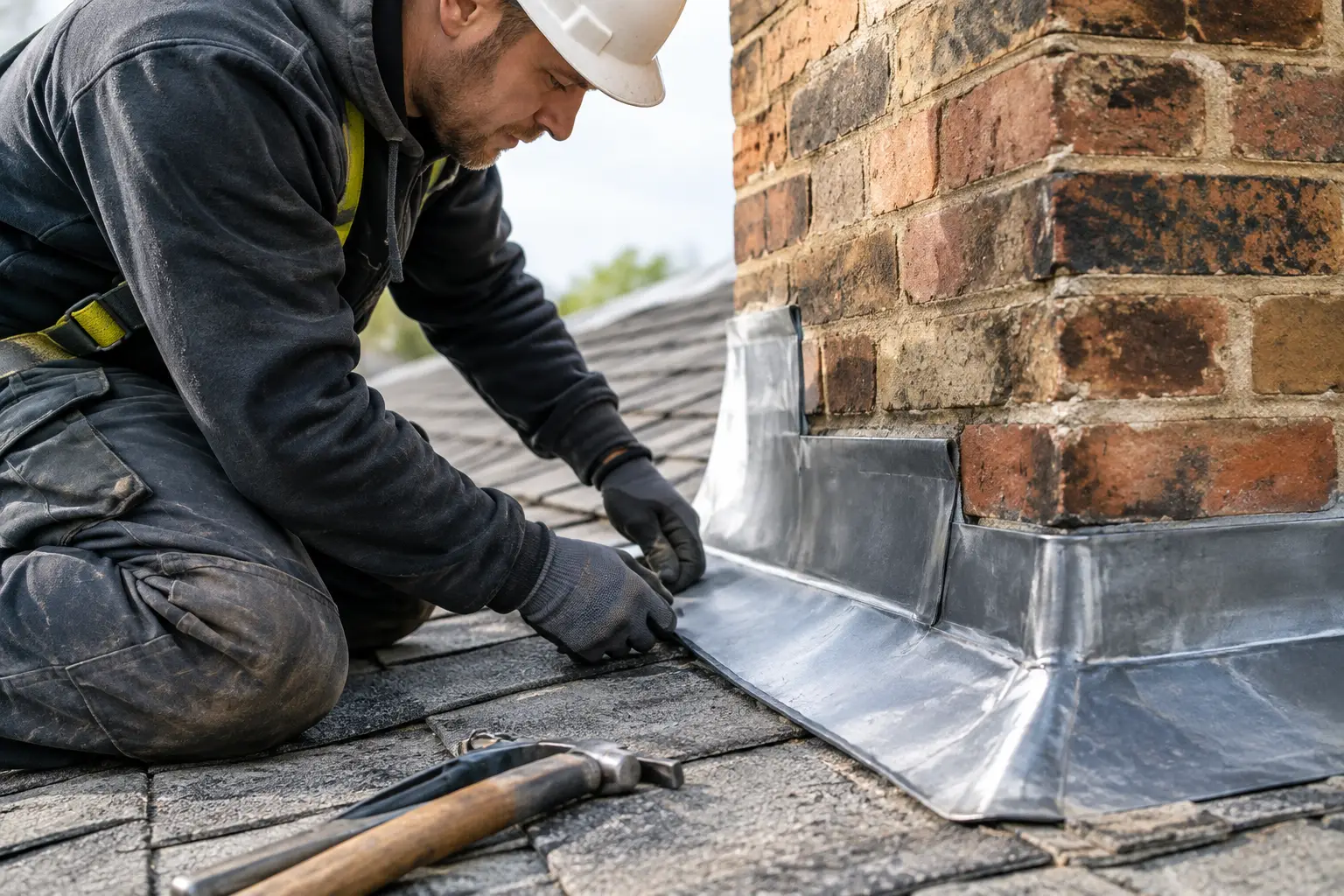
You will commonly find lead around chimneys, in roof valleys, along abutments where a roof meets a wall, around dormers and roof windows, and at changes in roof level. Flashings are the visible strips that create a waterproof seal at these junctions. Soakers are smaller pieces fitted between tile or slate courses where a roof meets a wall. Valleys channel large volumes of water down the roof slope.
When these components are correctly specified and fitted, rainwater follows a controlled route into the guttering. When they fail, water can track behind the lead, underneath tiles or into roof timbers before it becomes visible indoors. That is why a stain on a ceiling is not always directly below the point of entry.
Leadwork also has to work with the rest of the roof. Replacing only a visibly damaged section may not be enough if cracked pointing, loose slates, broken tiles or failing guttering are adding to the problem. A contractor who understands the whole roof can address connected defects rather than treating each symptom in isolation.
Signs your leadwork may need attention
Some faults are obvious after a storm, particularly if a flashing has lifted or part of a valley lining is visible from the ground. Others develop gradually. Water marks on internal walls, peeling paint near a chimney breast, damp insulation in the loft and a musty smell after rainfall all justify a roof inspection.
Outside, look for lead that has split, lifted, slipped out of a mortar joint or become distorted. White staining on brickwork near chimney flashings can indicate repeated water movement, while crumbling mortar around the lead may leave a route for rain. Do not climb onto the roof to investigate. Fragile tiles, wet surfaces and concealed weak areas make this unsafe, and walking in the wrong place can create further damage.
A leak that appears only during wind-driven rain is also a common warning sign. In calmer weather, a compromised flashing may shed water adequately. Once wind forces rain sideways beneath laps or into an open joint, the defect becomes clear. This is one reason why a roof can seem sound for months and then suddenly leak during severe weather.
Common leadwork repairs
The correct repair depends on the location, condition and age of the lead, as well as the roof covering around it. Minor works can include re-securing a lifted section, renewing mortar joints, replacing damaged clips or dressing lead back into position. Where there is a local split or fatigue crack, a targeted repair may be possible if the surrounding material remains sound.
More extensive deterioration usually calls for replacement. Chimney flashings, stepped flashings, soakers and valley linings must be formed with suitable laps, falls and fixings so water drains freely. The lead needs room to move naturally with temperature changes. If it is fixed too rigidly, it can crack over time. If laps are too short or detailing is poorly arranged, water can be driven beneath them.
Valley repairs deserve particular care. Valleys carry runoff from two roof slopes, so even a small fault can allow a significant volume of water into the roof. Leaves, moss and debris can make matters worse by slowing drainage and holding moisture in place. In some cases, cleaning and local repair is enough. In others, a worn lining or damaged tiles along the valley means the section needs to be renewed properly.
Chimney leadwork often requires related work to the stack itself. Loose brickwork, failed pointing, cracked chimney pots or defective flaunching can all allow water into the same area. Completing the repairs together can be more cost-effective and dependable than arranging separate visits for issues that share the same cause.
Why temporary sealant is rarely the answer
Roof sealants have a limited role in certain small, appropriate repairs, but they should not be used as a substitute for correctly formed leadwork. Applying mastic over a split, open joint or loose flashing may slow water entry for a short period, yet it does not resolve movement, poor laps or deteriorating mortar. It can also make a later repair more difficult.
The same applies to simply pushing lead back into place without checking why it moved. A section may have lifted because the fixing has failed, the chase in the brickwork has opened or movement elsewhere on the roof is placing it under strain. Professional repairs start with the cause, not just the visible gap.
For listed properties, period homes and older slate roofs, material choice and detailing need additional consideration. Modern repair methods must protect the building's appearance and perform properly alongside traditional materials. It is not always necessary to replace every older section of lead, but decisions should be based on condition rather than age alone.
When to arrange an emergency roof repair
If water is entering the property during rainfall, treat the situation as urgent. Move furniture and valuables away from the affected area, use containers to catch drips where safe, and avoid touching electrical fittings near water. If a ceiling is bulging, keep clear of the room and seek professional help promptly.
External signs such as loose lead flapping in high winds, displaced tiles around a chimney, storm damage to a valley or a large opening at a roof abutment also need rapid attention. The immediate aim may be to make the roof safe and weatherproof, followed by a planned permanent repair once conditions allow. This is often the right approach during severe weather, when working at height may not be safe.
A dependable contractor should explain what has been found, what needs to happen immediately and whether further work is recommended. Clear advice matters, particularly where a temporary weatherproofing measure is necessary before full replacement work can be completed.
Choosing the right contractor for leadwork
Leadwork is skilled roofing work, not an add-on to be rushed. Ask whether the contractor can inspect the surrounding roof covering, chimney and guttering as part of the assessment. This helps ensure the proposed work matches the actual source of the water ingress.
A clear quotation should set out the scope of work, including whether damaged tiles or slates need lifting and reinstating, whether chimney pointing is included, and how waste materials will be handled. The cheapest estimate is not necessarily the best value if it only covers a surface patch while leaving the underlying fault unresolved.
For managed properties and commercial sites, planned inspections can identify failing flashings and valleys before they cause disruption to tenants or operations. Maintenance is particularly useful after winter storms, following major roof works or where a building has mature trees that regularly shed debris onto roof slopes.
Armstrong Roofing & Building provides leadwork repairs, chimney work, tile and slate roofing, guttering and full re-roofs across the UK. With free quotations, no call-out charge and a 24-hour emergency response service, the focus is on getting the roof assessed quickly and recommending practical work that fits the condition of the property.
A well-fitted lead flashing may not be the most visible part of a roof, but it is one of the details that keeps the entire system working. If you have noticed staining, a recurring leak or visible damage around a chimney or valley, arranging an inspection early gives you more repair options and a better chance of keeping the issue contained.