

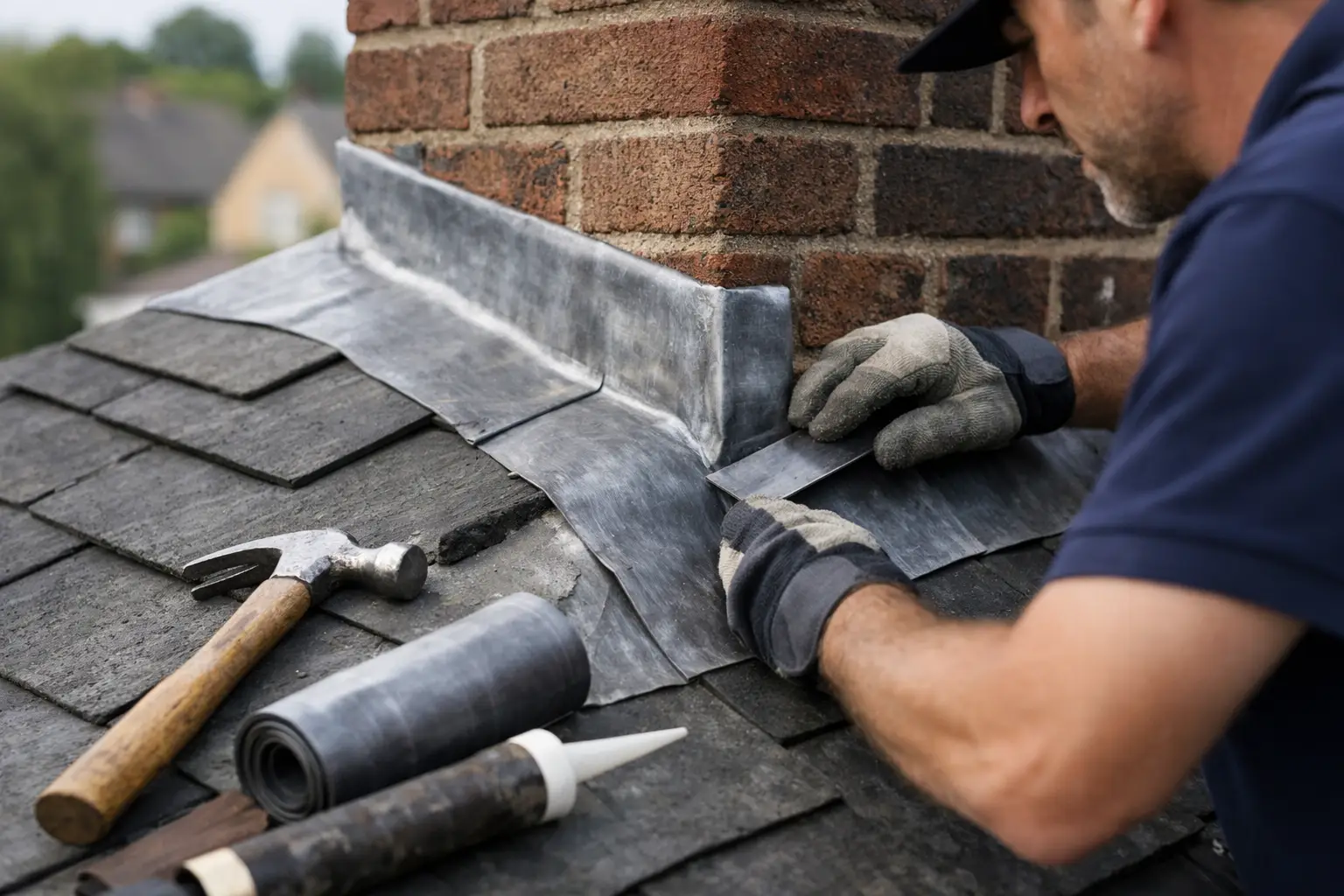
A leak around a chimney, dormer or roof junction is often blamed on the tiles first. In many cases, however, the problem sits in the lead flashing: the shaped leadwork that seals vulnerable changes in the roof surface and directs rainwater safely away. When it is damaged, poorly fitted or simply at the end of its serviceable life, water can find its way into the roof structure surprisingly quickly.
For homeowners, landlords and property managers, the key is not to wait for a stain to become a ceiling repair. A professional inspection can establish whether the leadwork needs a local repair, partial renewal or replacement as part of wider roof work.
What lead flashing does on a roof
Lead flashing is used wherever roofing materials meet another surface or where the roof changes direction. Common locations include chimney stacks, abutments against brickwork, valleys, dormer windows, parapet walls and rooflights. These are areas exposed to concentrated rainwater flow and movement between different building materials.
Tiles and slates shed most rain from the roof face. Flashing deals with the awkward details they cannot seal on their own. Properly formed leadwork overlaps and channels water outward, preventing it from reaching the felt, battens, roof timbers and internal finishes beneath.
Its long service life is one reason lead remains widely used on traditional and modern UK roofs. But lead is not maintenance-free. Weather, building movement and previous repairs can all affect how well it performs.
Signs your lead flashing may need attention
A visible leak is the clearest warning, but it is not the only one. Damp patches near a chimney breast, a dormer or an external wall may point to failing flashing above. Water may travel some distance before it appears indoors, so the stain is not always directly below the fault.
From ground level, look for lifted edges, open gaps where lead meets brickwork, cracking, loose mortar around chimney flashing, or sections that appear uneven after high winds. On a roof, split lead, worn laps and unsecured fixings can allow rain in. Moss and debris around valleys can also hold water against the leadwork and expose weaknesses during prolonged rainfall.
Commercial property managers should include roof junctions and parapet details in planned inspections. Flat roofs, pitched roofs and mixed-material roof sections all rely on sound flashing at their transitions. Small defects are usually simpler and less disruptive to correct before water affects insulation, ceilings or occupied areas.
If water is entering the building during heavy rain, treat it as an urgent roof repair rather than a cosmetic issue. Temporary protection may be appropriate while conditions are unsafe for permanent work, but the cause still needs to be identified and repaired.
Why lead flashing fails
Lead expands in warm conditions and contracts when temperatures fall. It is designed to accommodate a degree of movement, but oversized sections, poor detailing or inadequate fixing can lead to stress and splitting over time. Cracks are especially likely where lead has been restricted from moving as intended.
Chimney movement is another common cause. Mortar joints deteriorate, brickwork weathers and stacks can become less stable, affecting the flashing fixed into the masonry. Repointing alone may not resolve a leak if the stepped flashing, soakers or back gutter are also worn or incorrectly installed.
Age is only part of the picture. A relatively new repair can fail if it has been sealed heavily with mastic instead of correctly dressed and chased into the brickwork. Sealants have their place for specific details, but they should not be used to disguise poor leadwork. They can crack, detach and trap water where a properly formed lap would allow drainage.
Storm damage, falling branches and poorly carried out work around satellite fittings, solar installations or chimney repairs can also disturb lead. This is why an inspection should consider the entire junction, not just the most obvious gap.
Lead flashing repair or replacement?
The right approach depends on the condition of the lead and the surrounding roof. A sound section with a localised loose edge, failed pointing or minor opening may only need targeted repair. The roofer may re-secure the lead, renew mortar work, correct a lap or replace a limited damaged section.
Replacement is often the more sensible long-term option when the lead is split in several places, badly corroded, too thin, incorrectly detailed or repeatedly patched. Replacing isolated flashing while completing chimney repairs, re-roofs or tile and slate work can also be more cost-effective than arranging several separate visits.
At a chimney, the arrangement matters as much as the material. A durable repair may involve apron flashing at the front, stepped flashing along the sides, soakers beneath the tiles or slates, and a back gutter at the rear. Each part has a different role in managing water. Replacing one element without assessing the rest may leave the original source of the leak unresolved.
For listed buildings, period homes and older slate roofs, the choice of materials and detailing requires particular care. Leadwork should suit the roof construction and preserve the appearance of the property where possible. A cheaper substitute is not always appropriate, especially at complex junctions or on roofs exposed to severe weather.
Why correct leadwork matters more than a quick seal
It is tempting to apply roof sealant to a visible crack or gap, particularly when rain is forecast. That may offer very short-term protection in limited circumstances, but it rarely provides a dependable repair. Roofing details need to shed water by design, using properly formed overlaps, secure chases and correct falls.
Poor repairs can create additional problems. Excess sealant can conceal deterioration, prevent proper inspection and make future renewal more difficult. Improperly fixed lead may lift in wind, while poorly formed valleys can hold debris and direct water beneath tiles or slates.
Professional leadwork is measured, cut, dressed and secured to allow for the roof's layout and natural movement. The work should also be checked alongside nearby components such as ridge tiles, chimney pointing, gutters and roof coverings. Roofing defects often overlap, particularly on older properties where several materials are reaching the same stage of wear.
What to do if your roof is leaking now
First, protect the inside of the property. Move valuables away from the affected area, use a container to catch dripping water and, if it is safe to do so, reduce exposure around electrical fittings. Do not climb onto a wet roof or attempt to push loose lead back into place.
Take clear photographs of internal staining and any visible external damage from the ground. This can help record the issue, particularly for landlords and commercial premises managers. Then arrange a roof inspection promptly. The sooner the source is found, the better the chance of limiting damage to timbers, plaster, insulation and decorations.
Armstrong Roofing & Building Limited provides leadwork, chimney repairs, tile and slate roofing, re-roofs and emergency roof repairs across the UK. A free quotation and no call-out charge help property owners understand the required work before committing, while 24-hour emergency response is available when a leak cannot wait.
Planning lead flashing maintenance
Lead flashing does not need constant attention, but it should be part of regular roof maintenance. An inspection after severe weather, and periodic checks of older roofs, can identify open joints, failing mortar and debris build-up before they become internal leaks. Properties with large chimneys, dormers, valleys or adjoining roofs benefit most from a planned approach.
When arranging roof work, ask for the leadwork around the affected area to be assessed rather than pricing only for the visible symptom. A clear scope should explain whether the work is a local repair, a partial replacement or part of a wider roofing project. That gives you a sound basis for choosing a repair that is proportionate now and dependable through the next spell of bad weather.
A dry ceiling is reassuring, but it is not proof that a roof junction is sound. If you have noticed staining, loose flashing or recurring leaks around a chimney or roof edge, arranging an early inspection is the practical next step.