
A roof can look harmlessly green from the garden while moisture is being held against its surface day after day. So, is roof moss damaging tiles? It can be, particularly where growth is heavy, tiles are ageing or loose, and gutters are already struggling to clear rainwater. Moss is not automatically a reason to replace a roof, but it should not be ignored.
For homeowners, landlords and property managers, the sensible approach is to assess the roof as a whole. The condition of the tiles, ridge mortar, flashings, gutters and roof structure matters more than the amount of visible moss alone. A professional inspection can establish whether careful maintenance is enough or whether repairs are needed before a small issue becomes a leak.
How moss affects a tiled roof
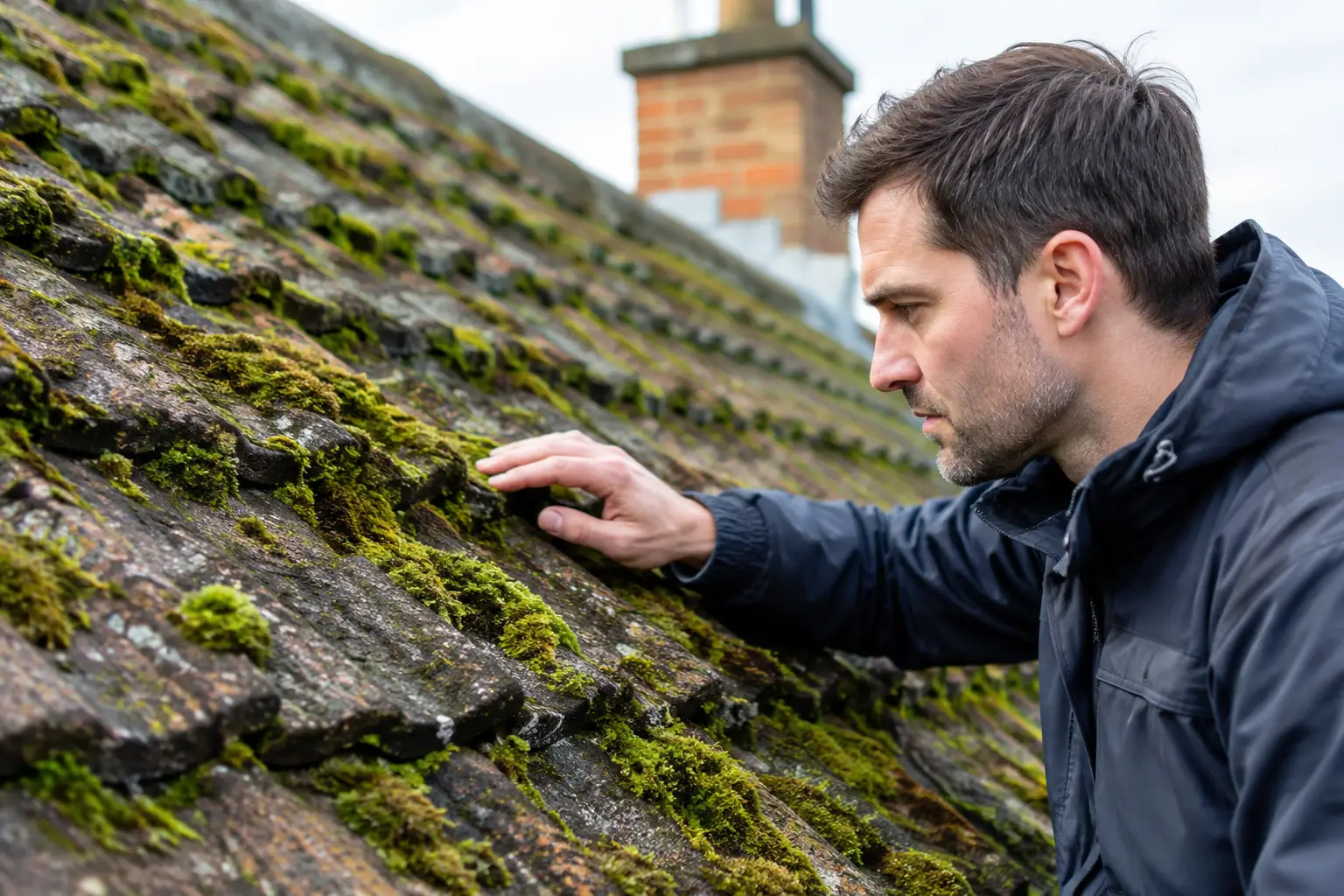
Moss thrives in damp, shaded areas and commonly appears on north-facing roof slopes, beneath overhanging trees and on older roofs with roughened tile surfaces. Its root-like structures do not usually bore through a sound concrete, clay or slate tile. However, a thick layer retains water and slows drying after rainfall.
Repeated wetting can accelerate weathering, especially on porous concrete tiles. In colder weather, trapped moisture may freeze and expand. Over time, this can contribute to surface flaking, cracking and erosion. A tile that is already weakened by age, foot traffic or storm damage is more likely to fail when moss is present.
The greater concern is often movement. Moss can grow beneath tile edges, around laps and close to ridge tiles. As it thickens, it may lift or displace tiles very slightly, creating a route for wind-driven rain. On a pitched roof, even a small gap can allow water to reach the underfelt, battens or roof space.
Is roof moss damaging tiles or just unsightly?
Light, dry moss on an otherwise sound roof may be largely cosmetic in the short term. That does not mean there is no maintenance requirement, but it is different from widespread, wet growth combined with broken tiles, crumbling mortar or overflowing gutters.
Moss is more likely to be causing damage when you notice loose or slipped tiles, granular debris in gutters, cracked tile edges, damp patches in the loft, staining on internal ceilings, or moss blocking valleys and drainage channels. These signs call for a closer inspection rather than a quick clean from ground level.
It also depends on roof material. Clay tiles and natural slate are generally less porous than many older concrete tiles, though no roof covering is immune to problems caused by blocked drainage or displaced components. Ridge and hip tiles, chimney junctions, leadwork and roof valleys deserve particular attention because they are key weatherproofing details.
The gutter problem that moss creates
Moss rarely stays on the roof. Rain, wind and birds break it into clumps that wash into gutters and downpipes. A blocked gutter can overflow against fascias, brickwork and window openings, leading to damp-related defects that appear unrelated to the roof at first.
On commercial buildings and larger residential blocks, blocked outlets and internal gutters can create a more urgent risk because standing water has limited places to escape. Regular clearance is therefore not just about keeping the roofline tidy. It helps direct rainwater safely away from the building.
If a gutter repeatedly fills with moss soon after cleaning, the roof should be checked. Removing the debris without dealing with heavy growth above simply treats the symptom.
Why scraping and pressure washing can make matters worse
It is tempting to hire a pressure washer or climb a ladder with a scraper. Both can create more damage than the moss itself. High-pressure water can strip the protective surface from concrete tiles, drive water beneath overlaps, disturb mortar and force debris deeper into gutters and valleys.
Aggressive scraping can crack brittle tiles or dislodge them, particularly where the roof is old or has previous repairs. Walking directly on roof coverings also risks breaking tiles and may be unsafe without the right access equipment, training and insurance.
A suitable moss-removal method depends on the roof's age, pitch, material and current condition. In many cases, a careful manual removal by a competent roofing contractor, followed by treatment designed for the surface, is the safer route. The aim should be to remove harmful build-up while protecting the roof, not to make an old roof look brand new in one afternoon.
When moss indicates an underlying roof issue
Moss often grows where water lingers. That makes it useful evidence during an inspection. A concentrated patch may point to shading, a shallow section of roof, a blocked valley, defective guttering or a tile that is not sitting correctly.
Growth around a chimney can also draw attention to failed pointing, damaged flashing or ageing leadwork. Around ridge tiles, it may highlight mortar that has cracked or opened up. Moss is not proof of a leak, but it can reveal areas that deserve closer examination before rain finds its way inside.
For landlords and managing agents, this is particularly relevant between tenant reports or scheduled maintenance visits. A roof may have no obvious internal leak yet, while loose tiles or blocked rainwater goods are already developing into a larger repair requirement.
What a professional roof inspection should check
A proper assessment looks beyond the visible green surface. The contractor should check the general condition of tile or slate coverings, identify cracked, slipped or missing units, and inspect ridge and hip mortar. Valleys, chimney details, leadwork, flashings, gutters and downpipes should also be considered.
Where safe access allows, an inspection may include checking for signs of moisture beneath the roof covering and reviewing the condition of underfelt and battens from within the loft. This helps separate a straightforward maintenance job from a repair project requiring replacement tiles, re-bedding, repointing or more extensive re-roof work.
Clear advice matters. A good contractor will explain what is urgent, what can be planned and what simply needs monitoring. Property owners should be wary of anyone recommending a full replacement solely because moss is visible, without explaining the condition of the roof beneath it.
Preventing moss from returning quickly
No treatment can permanently stop moss if a roof remains damp and shaded, but sensible maintenance can slow regrowth considerably. Keeping gutters clear, trimming back overhanging branches where appropriate and resolving drainage issues all help the roof dry more quickly after rain.
Replacing damaged tiles and repairing loose ridge mortar also removes gaps where moss and moisture can collect. On older roofs, planned maintenance is often more cost-effective than waiting for a storm to expose weaknesses.
A periodic visual check from ground level is worthwhile, especially after high winds and heavy rainfall. Look for new patches of moss, blocked gutters, uneven tile lines and debris around downpipes. If you can see a problem safely from the ground, there is no need to climb up to investigate it yourself.
When to arrange roof repairs
Arrange a professional inspection promptly if moss is accompanied by a leak, damp loft insulation, displaced tiles, failing mortar, an overflowing gutter or visible damage around a chimney. These faults can worsen rapidly during prolonged rain or windy conditions.
For urgent weather damage, Armstrong Roofing & Building Limited provides UK-wide roof repair support, including 24-hour emergency response, with no call-out charge and free quotations. For non-urgent concerns, a planned inspection gives you the opportunity to deal with moss, tile repairs and guttering together rather than arranging separate visits.
A moss-covered roof does not always need major work. But when growth is holding moisture against ageing tiles or blocking the roof's drainage route, early action is usually the lower-cost choice. A careful inspection now can protect the roof, the property beneath it and your peace of mind through the next spell of bad weather.