

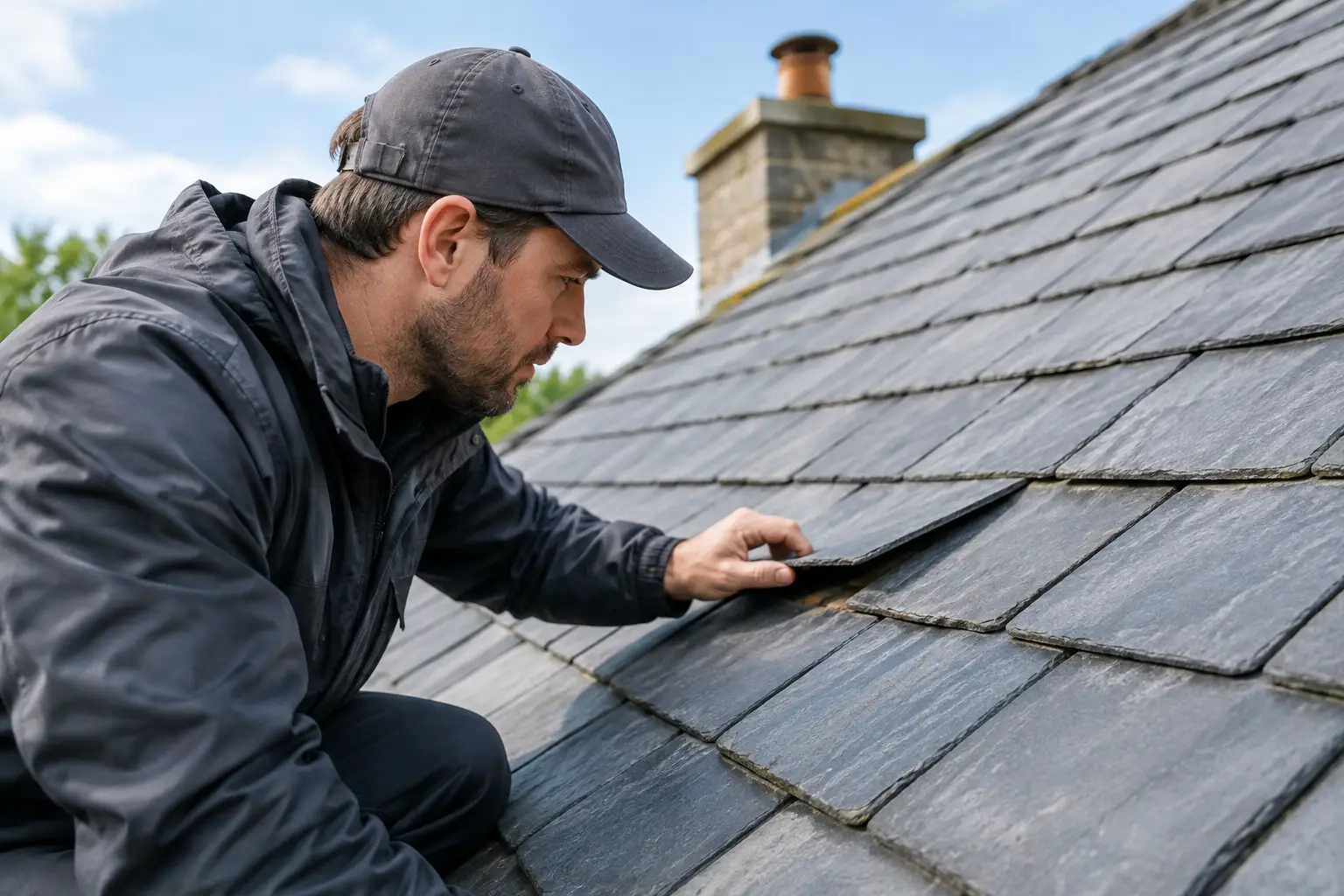
A slate on the ground after heavy rain or high winds is not just untidy - it can be the first visible sign that part of your roof is no longer secure. Knowing how to spot loose roof slates from ground level can help you arrange repairs before water reaches the roof space, insulation, ceilings or internal finishes.
Slate is one of the most durable roofing materials used on UK properties, but no roof covering lasts without attention. Fixings can fail, storm conditions can shift slates, and ageing underlay, battens or leadwork may allow a small defect to become a wider repair. The key is to notice the signs early and have the roof assessed safely by a competent roofing contractor.
Why loose slates need prompt attention
Each slate overlaps the one below it to create a weatherproof surface. When one becomes loose, slips out of position or breaks, rain can track beneath the surrounding slates. Water does not always appear directly below the fault. It may travel along timber, felt, battens or pipes before becoming visible as a damp patch indoors.
A single slipped slate is often a straightforward repair when dealt with quickly. Leaving it through a wet spell, however, can expose neighbouring fixings and create a larger opening. On older roofs, the issue may also point to deteriorating nails, sometimes called nail sickness, where the metal fixings have corroded and are no longer holding the slates securely.
For landlords and property managers, loose slates also present a safety and liability concern. A falling slate can damage gutters, vehicles and lower roofs, or injure someone below. Where a slate has fallen in a public-facing area, an urgent inspection is sensible.
How to spot loose roof slates from the ground
A safe visual check from outside can reveal a great deal. Stand well back from the building, ideally where you can see the roof slope clearly. Binoculars can help, but do not climb ladders, walk on the roof or lean out of upper windows to investigate. Slate roofs can be fragile, and a close inspection should be carried out using appropriate access equipment.
Look for slates sitting out of line
A sound slate roof has a consistent, flat appearance, with neat horizontal courses and regular overlaps. Look for a slate that appears lower than those around it, protrudes at one edge, has rotated slightly, or leaves a dark gap beneath it. These can indicate a slipped or loose slate.
Pay particular attention to the lower edge of the roof and areas around valleys, chimneys, roof windows and abutments. These junctions receive a high volume of rainwater and are more vulnerable when a slate shifts.
Check the ground and gutters after bad weather
Broken slate fragments around the property should never be ignored. A small piece may have broken away from a slate still in place, while a whole slate on the ground means a gap is likely to remain on the roof.
Gutters can also offer clues. If slate pieces, nail heads or unusual debris are collecting in the guttering, arrange an inspection. A blocked gutter can worsen the problem by forcing water back towards the roof edge and fascia.
Notice new noises in wind or rain
Rattling, tapping or clattering sounds above a top-floor room can suggest that slates or flashing are moving in gusty conditions. This does not always mean a slate has come loose - branches, guttering and soffits can make similar noises - but it warrants a professional check, particularly if the sound is new.
Watch for indoor signs of moisture
A loose slate may cause no immediate internal leak, especially during light rain. Look for fresh staining on ceilings, dampness near chimney breasts, peeling paint, mouldy smells in loft spaces or water marks around roof windows. In some cases, daylight visible from within the loft can indicate missing or displaced roof covering.
Do not assume an indoor damp patch identifies the exact position of the roof fault. Water can travel a considerable distance from where it enters, and defects in leadwork, valleys or chimney flashings can create similar symptoms.
Loose slates or a wider roof problem?
The condition of the rest of the roof determines whether a local repair is likely to be enough. If one slate has been damaged by a falling branch or an isolated storm event, replacing and securing that slate may resolve the issue. Matching the existing slate in size, thickness and appearance matters, particularly on period properties and listed buildings.
If several slates are slipping, the roof may have more widespread fixing failure. This is common on older slate roofs where original nails have reached the end of their serviceable life. Repeated small repairs can keep a roof weatherproof for a period, but there comes a point where a more planned programme of stripping, renewing battens and underlay, and re-slating offers better value and reliability.
A roof inspection should also consider associated elements. Cracked chimney mortar, failed lead flashings, loose ridge tiles and overflowing guttering can all allow water in or place additional stress on the roof structure. Addressing connected issues at the same time can prevent a return visit for another avoidable leak.
What to do if you find a loose slate
Keep people away from the area below the suspected defect, especially if further slates appear unstable after high winds. Move vehicles where practical and avoid placing bins, garden furniture or other items beneath the roof edge. Do not try to push a slate back into position from a ladder. It may break, dislodge adjacent slates or leave you working at height without safe support.
If rain is entering the property, contain it indoors with buckets and protect furniture or electrical items where it is safe to do so. Photograph any visible damage from ground level and note when the leak or fallen slate was first noticed. This information can help a roofer assess urgency and may be useful for insurance purposes.
For an active leak, missing slates after a storm or an immediate risk of falling materials, request an emergency roofing response. A professional can make the area safe, fit a temporary weatherproof repair where needed and advise on the permanent works required.
What a professional slate roof repair involves
A proper repair is more than placing a replacement slate over the gap. The roofer should identify why the original slate failed, inspect the surrounding slates and check the condition of the fixings, underlay and battens. Depending on access and roof condition, the work may involve replacing damaged slates, using suitable slate hooks or fixings, renewing local felt or batten sections, and repairing nearby leadwork.
Access is a practical consideration. A low, simple roof may be repaired quickly, while steep pitches, tall properties, fragile coverings or difficult chimney locations may require scaffolding or other safe access arrangements. This can affect cost and timing, but safe working should never be treated as optional.
For commercial buildings and managed properties, planned inspections can be particularly worthwhile. Regular checks after winter and severe weather help identify slipped slates, failing flashings and blocked gutters before they disrupt tenants, customers or operations.
When to call for urgent help
Arrange prompt professional assistance if you can see missing or hanging slates, find repeated slate debris on the ground, notice water entering the building, or hear movement from the roof during wind. The same applies if a loose slate is above an entrance, pavement, driveway or frequently used area.
Armstrong Roofing & Building Limited provides UK-wide roof repairs, tile and slate work, leadwork and guttering services, with free quotes, no call-out charge and 24-hour emergency support for urgent roofing problems. A clear assessment can establish whether you need a targeted repair or a wider maintenance plan.
A loose roof slate rarely improves with time. A safe ground-level check and timely professional repair can protect the roof, the people below it and the property beneath it long before a small gap becomes a costly internal leak.