

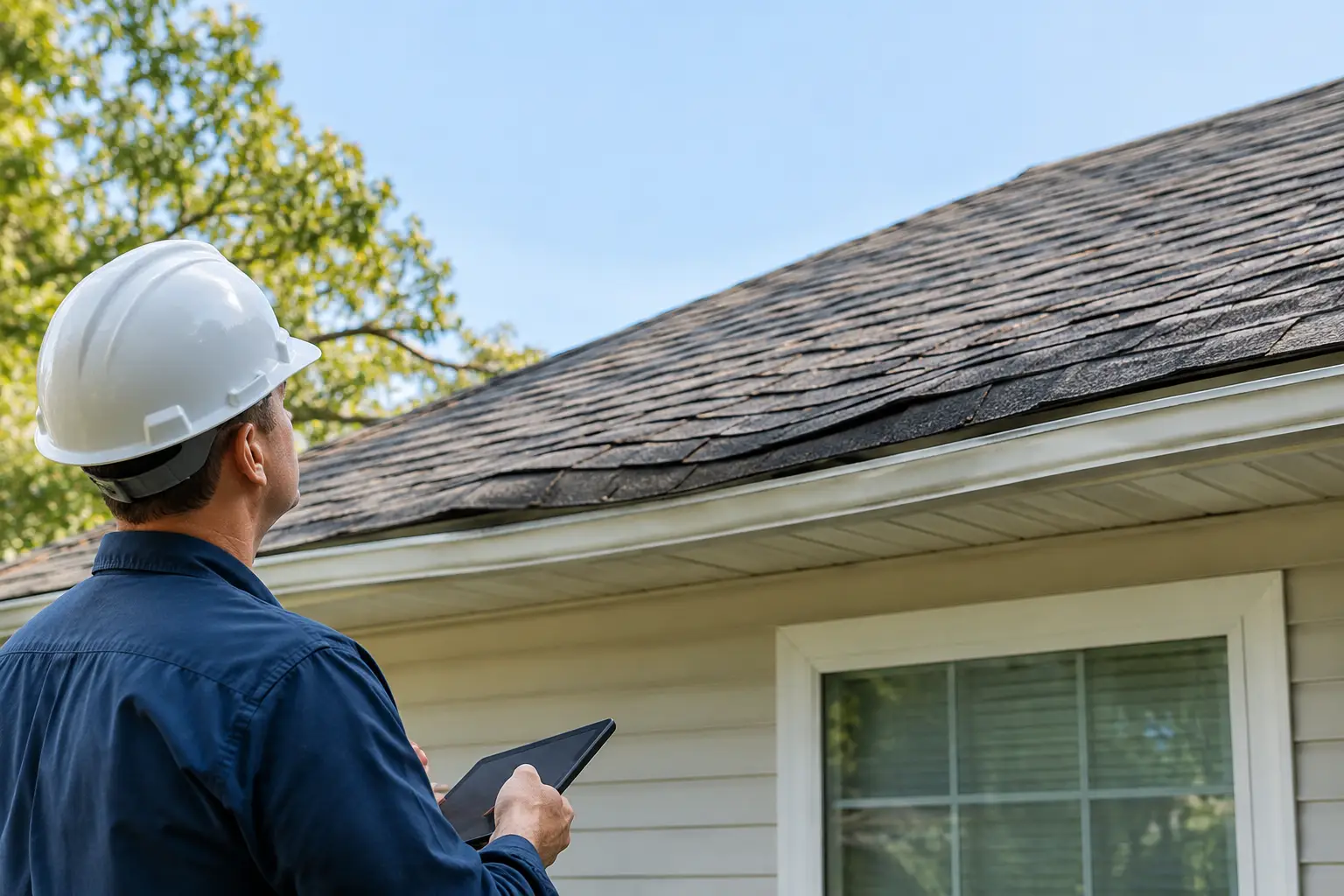
A roof rarely fails without giving some warning. A shallow dip in the ridge line, tiles that no longer sit evenly or a ceiling that has begun to bow can all point to movement in the roof structure. Knowing how to identify roof sagging early gives you the best chance of arranging a targeted repair before water damage, structural deterioration or a more extensive re-roof is required.
Roof sagging is not always an emergency, but it should never be dismissed as an age-related cosmetic issue. Older properties can settle over time, and some roof lines naturally have slight variations. The concern is a change in shape, a localised dip, or any sagging accompanied by cracking, leaks or signs of timber decay.
Start by looking at the roof line from ground level
Stand well back from the property, ideally across the road or at the far end of the garden, where you can see the full slope of the roof. The ridge should generally run straight from one end of the building to the other. A visible hollow, wave or downward curve in the middle is one of the clearest external signs of roof sagging.
Look along the lower roof edge as well. The eaves should appear level and consistent. If one section drops lower than the rest, or the fascia boards seem bowed, the supporting rafters or wall plate may be under strain. On a tiled or slate roof, uneven rows, slipped tiles and a patch that appears sunken can indicate that the deck or supporting timbers beneath have moved.
Perspective can be misleading, particularly on a long roof or uneven ground. Take photographs from the same position every few months if you are unsure. A change that becomes more pronounced over time needs professional assessment.
How to identify roof sagging inside the property
External checks are useful, but the loft often provides the strongest evidence of what is happening. Only enter the loft if it is safely boarded, adequately lit and accessible without putting weight on ceilings or insulation. Do not attempt to walk across unboarded joists or disturb damaged timbers.
From inside, look for a roof slope that bows between rafters rather than following a clean, even line. Rafters may appear bent, split or twisted. You may also see purlins, the horizontal supports running across many traditional roofs, that have dropped or are no longer firmly supported.
Ceiling changes below the loft can also be significant. A bowed ceiling, fresh cracks where walls meet ceilings, or plaster cracks that continue to widen may suggest movement above. These signs do not automatically mean the roof is sagging, as building movement and internal plaster failure have other causes. However, they are more concerning when combined with a visibly uneven roof line or a leak.
Pay close attention after heavy rain, snow or strong winds. Damp patches, staining, mould and drips can add weight to an already weakened structure. Water is often the factor that turns a manageable timber repair into a larger project.
Separate a roof dip from a designed roof feature
Not every irregular shape means a structural defect. Some period properties have roofs that have settled slightly over decades, while extensions may join the original roof at different levels. A roof with a deliberate valley, dormer, hip or change in pitch will also have visible lines and low points by design.
The key question is whether the area looks intentional and stable. A designed feature will usually have neat junctions, properly aligned tiles or slates, and flashing that follows the shape of the roof. A sagging area tends to look unsupported or distorted, with dips that interrupt otherwise straight lines and coverings that no longer lie flat.
If the roof has always looked slightly uneven but there are no leaks, cracking or recent changes, the issue may be less urgent. Even so, it is sensible to include it in routine roof maintenance. If the dip is new, worsening or accompanied by damage, arrange an inspection promptly.
Common causes of a sagging roof
Sagging happens when part of the roof structure cannot adequately carry its load. The cause matters because the correct repair may range from replacing a small number of rotten rafters to strengthening structural supports or carrying out a full re-roof.
Moisture damage is a frequent cause in the UK. A cracked tile, failed leadwork detail, worn flashing or blocked gutter can allow rainwater into the roof space. Over time, wet timber can rot and lose strength. Insect damage can also weaken timbers, although decay caused by persistent damp is generally the more common concern.
Age and previous alterations can contribute too. Older roofs may have undersized or altered supports, particularly where a loft has been converted, storage loads have increased or internal walls have been removed without appropriate structural provision. Excessive weight from multiple layers of roofing material, heavy snow or poorly supported solar installations can add pressure where the roof was not designed to carry it.
Storm damage should not be overlooked. High winds can dislodge tiles and expose underfelt, allowing water ingress that is not immediately visible from below. Following a storm, a roof that appears intact at first glance may still require closer inspection if new internal damp, cracking or movement develops.
Signs that need a faster response
A minor dip should be inspected, but certain symptoms call for urgent action. Keep people away from the affected area and seek professional help if you notice any of the following:
- A roof line that has suddenly dropped or changed shape.
- Cracking, splitting or visibly broken structural timbers in the loft.
- A ceiling that is bulging, bowing or dropping beneath the roof space.
- Active water ingress, particularly where timbers are wet or staining is spreading.
- Tiles, slates, masonry or chimney materials becoming loose around the affected section.
Do not climb onto the roof to investigate. Roof surfaces can be slippery, damaged tiles can fail underfoot, and a sagging area may be unsafe to load. A professional roofer can assess the coverings, drainage, leadwork and accessible structural elements without creating further risk.
What a professional inspection should establish
A proper inspection is more than confirming that the roof looks uneven. The contractor should identify whether the problem lies in the covering, roof deck, rafters, purlins, trusses, supporting walls or a combination of these elements. They should also check for the route of water ingress, because repairing visible timber without resolving the leak will only postpone the problem.
For a tiled or slate roof, the assessment may include broken or displaced coverings, condition of battens and underfelt, flashing around chimneys and roof junctions, and the state of gutters and downpipes. Flat roofs need a different approach, with attention to ponding water, deck deflection, membrane failure and insulation condition.
The repair recommendation should match the cause. Localised rot may be resolved through timber repairs and replacement tiles or slates. More widespread deterioration may require sections of the roof to be stripped back, strengthened and recovered. Where the roof has reached the end of its working life, a planned re-roof can be safer and better value than repeated patch repairs.
Do not delay maintenance around the roof
Small defects create the conditions in which sagging develops. Keeping gutters clear, repairing slipped tiles, renewing failed leadwork and addressing chimney defects can prevent water from reaching structural timber. Landlords and property managers should make roof checks part of planned maintenance, especially on older buildings and properties with previous leak reports.
For homeowners, the practical rule is simple: inspect from ground level after severe weather, investigate new ceiling stains quickly, and do not wait for a drip before acting. A dry loft does not always mean a roof is sound, but a damp loft is a clear reason to arrange a visit.
Armstrong Roofing & Building Limited provides roof inspections, repairs, tile and slate work, leadwork, guttering and re-roofs across the UK, with free quotations and no call-out charge. Where a sagging roof is linked to active leaking or storm damage, a 24-hour emergency response can help limit further damage while the correct repairs are planned.
A roof dip is often the visible result of a problem that has been developing out of sight. Having it checked while the issue is contained can protect the structure, the rooms below and the value of the property.