

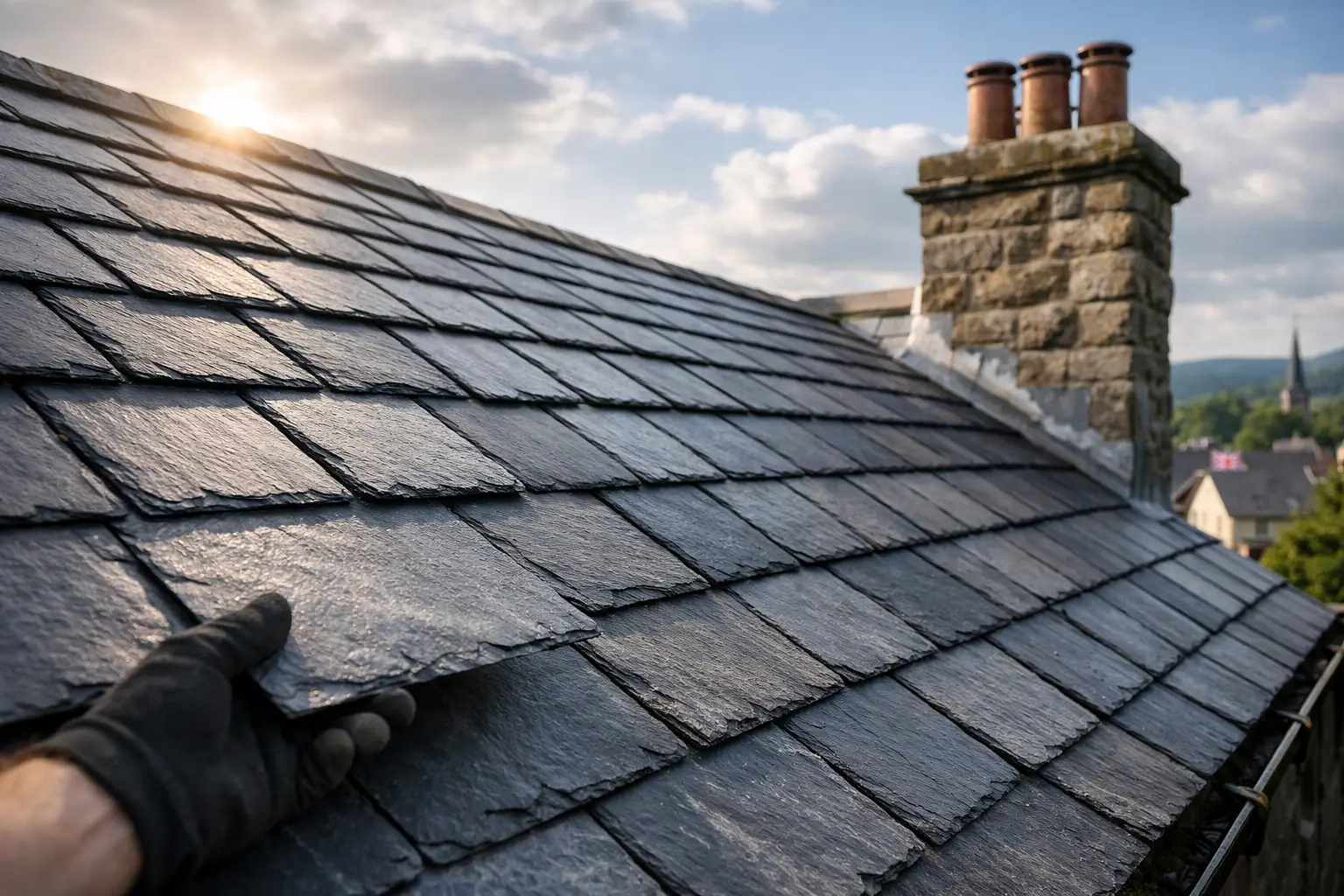
A well-laid slate roof can outlast several generations of a property. So, how long does slate roofing last? In the right conditions, a natural slate roof may last 75 to 150 years or more. Some high-quality Welsh and imported slates have remained in service for centuries. That impressive lifespan, however, depends on more than the slate itself.
A roof is a working system. The slates, fixings, battens, underlay, leadwork, chimneys and guttering all need to perform together. One slipped slate or failed fixing does not mean the whole roof has reached the end of its life, but it should not be ignored. Timely repairs can preserve the value and weather protection that make slate such a respected roofing material.
How long does slate roofing last in real conditions?
Natural slate is exceptionally durable because it is a dense, low-absorption stone. It does not rot, warp or suffer the same weathering as many manufactured roof coverings. A properly specified and installed natural slate roof will commonly provide at least a century of service, particularly where it receives sensible maintenance.
There is a significant difference between natural and man-made slate. Fibre cement or composite slates can be a practical, lighter and often lower-cost choice, but their expected lifespan is usually around 30 to 60 years, depending on the product, installation quality and exposure. They should not be assessed on the same basis as genuine stone slate.
The age of the roof is therefore only part of the picture. A 100-year-old natural slate roof may need local repairs and renewed leadwork yet remain fundamentally sound. Conversely, a much newer roof with poor fixings, inadequate ventilation or storm damage may need more extensive attention.
What determines a slate roof's lifespan?
The quality of the original slate matters. Good-quality slate is hard, consistent and able to resist repeated wetting, frost and temperature changes. Lower-grade slate can delaminate, becoming thin and flaky at the edges. This is sometimes called spalling, and it can lead to cracking or breakage.
Installation is equally important. Each slate needs the correct lap, headlap and fixing for the roof pitch, local weather conditions and slate size. If slates are fixed too tightly, too loosely or with unsuitable nails, the roof can develop problems long before the stone itself wears out. Copper nails have traditionally offered excellent longevity; older galvanised or ferrous fixings can corrode over time.
This fixing failure is known in the trade as nail sickness. The slates may still be perfectly usable, but their nails deteriorate until individual slates begin to slip. It is a common reason for repair work on older roofs and can often be dealt with by refixing or replacing affected areas. Where nail sickness is widespread, a larger refurbishment or re-roof may be the more dependable long-term option.
Weather exposure also plays a part. Coastal homes, high ground and properties exposed to prevailing winds face heavier rain and wind loads. Moss and debris do not automatically mean a roof is failing, but blocked valleys and gutters can hold water against the roof covering and cause avoidable deterioration. Nearby trees can add leaf build-up, broken slates and shading that keeps the roof damp for longer.
Finally, the supporting elements age at a different rate. Underlay, battens, mortar bedding, flashings and valleys generally have shorter service lives than natural slate. A slate roof can therefore require planned maintenance even when the slates themselves have decades of life remaining.
Signs your slate roof needs attention
A slate roof does not usually fail without warning, although storm damage can create an immediate issue. From ground level, look for missing, cracked or slipped slates, uneven rows, damaged ridge tiles, staining beneath gutters or loose flashing around chimneys and roof junctions. Inside, damp marks in the loft, a musty smell, water staining on ceilings or daylight visible through the roof covering all warrant a professional inspection.
It is sensible not to walk on a slate roof yourself. Even sound slates can crack under concentrated weight, and roof work carries obvious safety risks. A roofer can inspect the roof safely and identify whether the issue is isolated or part of a wider pattern.
After severe wind, heavy rainfall or a fallen branch, act promptly if water is entering the property. A temporary repair may prevent further damage to insulation, timbers, plasterwork and electrics while a permanent repair is arranged. For urgent leaks or storm damage, Armstrong Roofing & Building Limited provides a 24-hour emergency response, with no call-out charge.
When can a slate roof be repaired?
Repairs are often the right answer for a natural slate roof. Replacing a handful of broken slates, renewing a small section of lead flashing, clearing a blocked valley or repairing mortar around a chimney can restore protection without the cost and disruption of a complete replacement.
A good repair should match the existing slate as closely as possible in size, thickness, colour and texture. It should also address the cause, not simply the visible symptom. For example, replacing a slipped slate is useful, but the surrounding fixings should be checked where nail corrosion is suspected. Repeatedly replacing individual slates without investigating the wider roof can become poor value.
A full re-roof becomes more likely when widespread nail sickness affects many slopes, large numbers of slates are delaminating, battens have deteriorated or water ingress has caused extensive damage beneath the covering. In these cases, salvageable natural slates may sometimes be carefully reused alongside matching replacements, preserving the character of an older property while renewing the elements that have failed.
For listed buildings, conservation areas and period homes, the choice of slate and method of repair may be particularly important. The appearance, detailing and local planning requirements should be considered before work begins. An experienced contractor can explain the practical options clearly and provide a free quotation based on the condition of the roof rather than a guess from its age.
Maintenance that helps slate last longer
Slate is low-maintenance, not maintenance-free. An occasional professional roof check is a sensible precaution, especially for older properties, rental homes and commercial premises where small defects can go unnoticed. Inspections are particularly useful after winter storms and before a planned property refurbishment.
Keep gutters, hopper heads and valleys clear so rainwater can drain freely. Check that downpipes discharge properly and that water is not overflowing onto masonry or beneath eaves. Damaged guttering can make a sound roof appear to leak by directing water into places it should never reach.
Chimneys and roof junctions also deserve attention. Failed mortar, damaged pointing and worn leadwork can allow water in around an otherwise excellent slate covering. Addressing these connected areas at the same time is often more efficient than arranging separate visits for roofing, chimney repairs and guttering.
Avoid aggressive pressure washing or unnecessary moss removal. High-pressure cleaning can damage slates, dislodge fixings and force water beneath the roof covering. If moss or debris needs treatment, the method should suit the age and condition of the roof.
Is a slate roof worth the investment?
For many UK properties, natural slate is a premium choice with a strong long-term case. Its initial cost is normally higher than concrete tiles or artificial slate, and specialist installation is essential. Yet its longevity, appearance and ability to complement traditional buildings can make it excellent value over its lifetime.
The decision depends on the building, budget and intended ownership period. A homeowner planning a long-term renovation may favour genuine slate for its durability. A landlord or commercial property manager may prioritise a specification that balances lifespan, maintenance needs and capital cost. There is no one-size-fits-all answer, but a clear condition survey helps avoid paying for a full re-roof when a targeted repair will do, or delaying replacement until internal damage becomes costly.
If your slate roof has slipped slates, a recurring leak or signs of ageing around chimneys, valleys or gutters, arrange an inspection before the next spell of bad weather. Early, professional attention gives you the best chance of keeping a long-lasting roof doing the job it was built to do.