

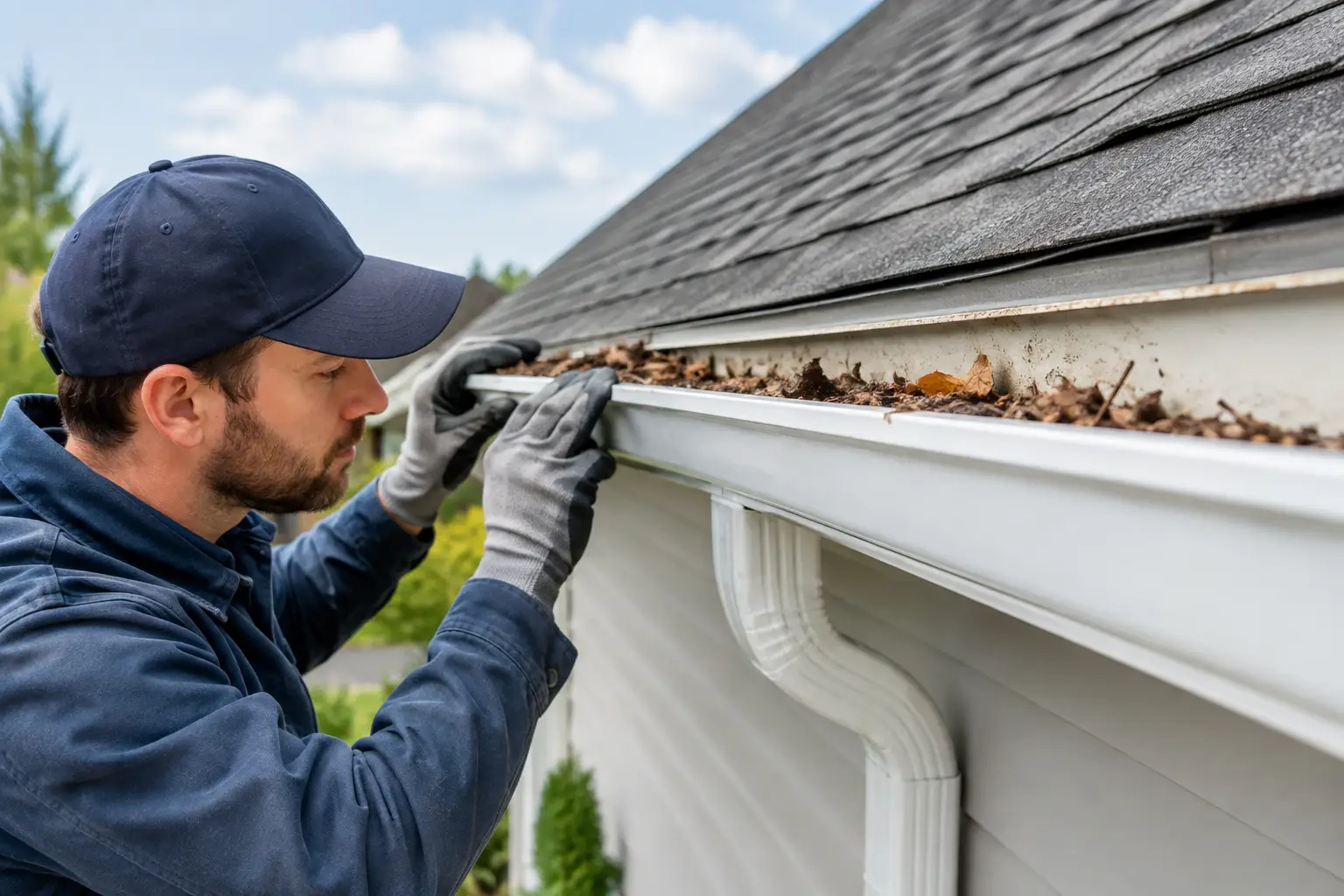
Water running over the edge of a blocked gutter may look like a minor nuisance, but it can quickly stain brickwork, soak fascias and find its way into the roofline. Effective guttering moves rainwater safely away from your property. When it fails, the damage is often gradual at first, then expensive to put right.
For homeowners, landlords and property managers, the right response depends on what has caused the issue. A simple blockage may need clearing and realignment. Cracked sections, repeated leaks or rotten fascia boards can point to more substantial repair or replacement work. Acting before water reaches the building fabric is usually the most cost-effective option.
Why guttering matters to the whole property
Gutters, downpipes, hopper heads and outlets work as one drainage system. Their job is to collect water from the roof and direct it into a suitable drain, rather than allowing it to run down external walls or pool around the foundations.
When rainwater overshoots or escapes through joints, it can lead to damp patches, peeling paint, damaged render and moss growth. On older properties, persistent water exposure may also affect timber eaves, soffits and fascias. In colder weather, standing water can freeze, adding weight and putting extra pressure on brackets and joints.
The problem is not always visible from ground level. A gutter can appear sound while holding water because it has been fitted at the wrong fall, has sagged between brackets or is obstructed at the outlet. That is why a proper inspection should look at the roof edge, the gutter run, the downpipe and the condition of the boards behind it.
Signs your guttering needs attention
A heavy shower often reveals faults that are hidden during dry weather. Water spilling over the front edge is the clearest warning sign, but it is not the only one. Look out for water marks below gutter joints, drips from corners, vegetation growing from the gutter, loose clips or a visible dip in the run.
Damp on an upstairs ceiling or wall can sometimes be connected to defective roof coverings or leadwork rather than gutters alone. Equally, a leak near a chimney may be caused by damaged flashing. The source should be identified before work begins, particularly where several parts of the roofline have aged at the same time.
Pay attention to what happens around the downpipe. If water backs up at the top, the pipe may be blocked with leaves, moss or debris. If water is discharging at ground level but pooling near the property, the underground gully or drain may need attention. Clearing a gutter will not solve a drainage issue further down the system.
After storms and high winds
Storms can dislodge brackets, split old plastic guttering and knock tiles or debris into the channel. Where a section is hanging loose, do not attempt to reach it from a ladder in poor conditions. Loose guttering can pull away suddenly, and work at height is best left to trained professionals with suitable access equipment.
If rainwater is entering the building, or a damaged gutter is affecting a public path, entrance or commercial forecourt, treat it as urgent. Temporary containment may reduce immediate risk, but the fitting, roof edge and drainage route should be checked as soon as possible.
When a gutter repair is the right answer
Repair is often sensible where the system is generally sound and the fault is localised. A leaking union, failed stop end, loose bracket or blocked outlet can usually be dealt with without replacing every length of gutter.
Minor alignment problems can also be corrected by adjusting brackets to restore the correct fall towards the downpipe. The fall needs to be subtle but sufficient. Too little and water sits in the gutter; too much and the appearance can be poor, with water potentially rushing past the outlet in severe rainfall.
Repairs are most worthwhile when the existing materials still have a useful life ahead of them and replacement parts can be matched properly. This can be particularly relevant for cast iron systems on period properties, where preserving the original appearance may be a priority. Cast iron is durable when maintained, but it needs prompt treatment if paint fails and rust takes hold.
A professional assessment should also consider the condition of the fascia. Refastening a gutter to decayed timber only delays the issue. In some cases, repairing the gutter and renewing a small area of fascia provides a more lasting result than treating either item in isolation.
When replacing guttering makes better sense
Replacement becomes the better long-term choice when leaks recur across several joints, lengths have become brittle or warped, or brackets no longer hold securely. A guttering system that has been patched repeatedly can cost more over time than a planned renewal, especially when it continues to put the roofline at risk.
Replacement may also be appropriate during a re-roof, fascia and soffit renewal, or major exterior refurbishment. Coordinating connected works avoids duplicate access costs and helps ensure tiles, underlay, leadwork, fascias and gutters meet correctly at the eaves.
Material choice matters, but the best option depends on the property, budget and appearance required. uPVC is widely used because it is practical, cost-effective and available in several colours. Aluminium is lightweight and can offer long, clean runs with fewer joints. Cast iron suits many traditional buildings and offers a distinctive finish, though it requires ongoing maintenance. There is no single material that is right for every roofline.
Capacity matters too. A larger or steeper roof, a wide valley or an area exposed to driving rain may need deeper gutters, more outlets or larger downpipes. Simply replacing like for like is not always enough if the existing system regularly overflows during normal rainfall.
Guttering maintenance that prevents avoidable damage
Most gutter failures begin with a build-up of leaves, moss, silt and roof debris. Properties near mature trees generally need more frequent checks, particularly in autumn and after windy weather. Flat roofs, valleys and tiled roofs that shed moss can also place extra debris into the gutters.
A regular maintenance visit should clear channels and outlets, test the flow through downpipes, check joint seals and inspect brackets for movement. It should also identify cracked tiles, slipped slates, damaged pointing and failing leadwork that could be contributing to the problem.
Gutter guards can reduce larger leaf build-up in some situations, but they are not maintenance-free. Fine debris can still settle on top or underneath, and the guards need to be compatible with the roof and gutter profile. They should be viewed as a possible aid, not a substitute for inspection.
For landlords and commercial property managers, planned checks are especially valuable. A small defect reported and repaired early is less likely to become an emergency leak, a complaint from an occupier or a disruption to business operations during bad weather.
Choosing a contractor for guttering work
The lowest quote is not always the lowest cost once access, materials and associated roofline repairs are considered. Ask what is included: clearing, repair or replacement; disposal of old materials; checking downpipes; and any work to fascias, soffits, tiles or leadwork identified during inspection.
A dependable contractor should explain whether a repair is genuinely viable, rather than recommending replacement by default. They should also be able to deal with connected roofing defects where required. This is particularly useful when water ingress has more than one cause.
Armstrong Roofing & Building provides guttering, roof repairs, re-roofs, tile and slate work, chimney repairs and leadwork across the UK, with free quotations, no call-out charge and 24-hour emergency response where urgent damage needs attention. Clear advice at the outset helps property owners decide whether a straightforward repair or a larger planned project offers better value.
Do not wait for a ceiling stain or a rotting fascia board to make the decision for you. If water is overflowing, dripping where it should not, or leaving marks on the building, arranging an inspection now can protect the roofline before the next spell of heavy rain.