

A flat roof can look sound from ground level while water is already finding its way beneath the covering. A damp patch on a ceiling, bubbling paint, loose flashing or persistent ponding after rainfall should never be ignored. Flat roofing relies on correctly formed falls, secure joints and well-finished edges to move water away from the building. When one of these details fails, a small defect can quickly become damage to insulation, timbers and internal finishes.
For homeowners, landlords and commercial property managers, the right response depends on the roof’s age, condition and construction. Some problems need a local repair. Others are a warning that the roof covering has reached the end of its serviceable life.
When does flat roofing need attention?
Leaks are the most obvious sign, but they are not the only one. Water entering through a flat roof may travel beneath the surface before appearing indoors, so the visible stain is not always directly below the fault. This is why a proper roof inspection matters before any repair is specified.
Look out for water that remains on the roof for more than 48 hours after dry weather returns. Small amounts of temporary ponding can occur, particularly on older roofs, but standing water places added strain on coverings and can expose poor drainage. Blocked outlets, downpipes and gutters are often part of the problem, rather than the roof membrane alone.
Other warning signs include cracked or split felt, lifting seams, damaged edge trims, deteriorating leadwork around abutments, and moss or debris holding moisture against the roof. On felt roofs, blistering can indicate trapped moisture or a breakdown in the layers below. On a commercial roof, worn walkways and damage around plant equipment deserve particular attention because repeated foot traffic can compromise the waterproof finish.
After high winds or heavy rainfall, it is sensible to arrange an inspection if there is any concern. Storm damage is not always dramatic. A loosened flashing, displaced coping or split at a rooflight can be enough to allow water into the structure.
Repair or replacement: what is the right choice?
A targeted repair is often the sensible option where a roof is generally in good condition and the defect is isolated. This may involve resealing a joint, repairing a split, renewing a damaged section of membrane, replacing failed flashing or clearing and correcting drainage points. A prompt repair can prevent a manageable issue becoming a much larger re-roofing project.
Replacement is usually more cost-effective when failures are widespread, repairs have become frequent, or moisture has affected the roof deck and insulation. Patching an ageing covering in several places may temporarily hold back water, but it does not restore the integrity of the whole roof. If the membrane is brittle, the seams are failing or the roof is near the end of its expected lifespan, a planned replacement gives a clearer long-term solution.
The roof structure also influences the decision. A timber deck that has softened through prolonged water ingress may require repairs before a new system is installed. On warm roofs, insulation and vapour control layers need to be assessed as part of the full build-up. On cold roofs, ventilation and condensation risk need careful consideration. A reliable quotation should account for these details rather than simply pricing a new surface covering.
Choosing a flat roof covering
There is no single best material for every flat roof. The right system depends on the roof’s size, access, intended use, existing structure and budget.
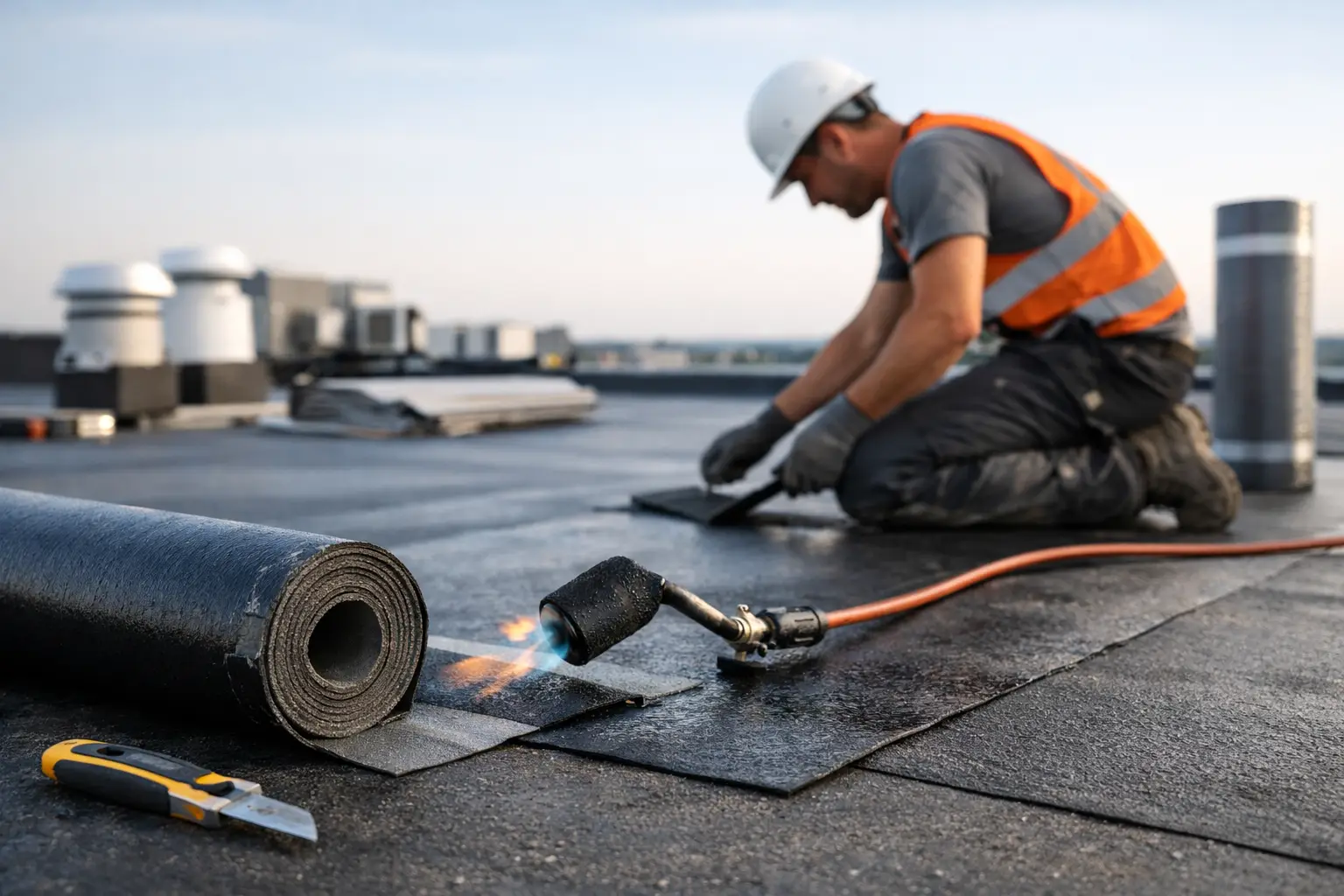
Felt roofing remains a familiar choice for many domestic garages, extensions and outbuildings. Modern high-performance felt systems are far removed from older basic coverings when properly installed in multiple layers with sound detailing. They can offer a practical, cost-conscious solution, especially where access and roof shape are straightforward.
GRP fibreglass roofing creates a hard, joint-free finish that is well suited to smaller domestic roofs, including extensions and bay roofs. It can provide a clean appearance and strong weather resistance, but preparation is critical. The deck must be stable and dry, and the system must be installed in suitable weather conditions.
EPDM rubber is a flexible membrane commonly used on larger flat roofs. Its large sheet sizes reduce the number of seams, which can be useful on simple roof areas. It is durable and adaptable, although details around outlets, edges, penetrations and changes in level still require skilled installation.
Liquid-applied systems can be particularly useful for complex shapes, rooflights and areas with numerous penetrations. They form a continuous waterproof layer, but substrate preparation and correct application thickness are essential. The material choice should follow an inspection of the roof, not a one-size-fits-all recommendation.
Drainage and detailing matter as much as the covering
Even a quality membrane will underperform if water has nowhere to go. Flat roofs are designed with a slight fall towards outlets, gutters or drainage channels. If the fall is inadequate, it may be possible to improve drainage during replacement using firring strips, tapered insulation or alterations to outlets and guttering.
Attention to perimeter details is equally important. Flashings, parapet walls, upstands, rooflight kerbs and pipe penetrations are common points of failure because they interrupt the main roof surface. Leadwork and associated masonry should be checked alongside the roof covering, particularly where an extension meets the main building.
Planned maintenance protects the roof investment
Flat roofs benefit from regular checks, especially after winter and periods of severe weather. For landlords and commercial property managers, a planned maintenance approach helps identify minor defects before they create tenant disruption, stock damage or business downtime.
A roof inspection should include the covering, joints, flashings, outlets, gutters, downpipes and surrounding masonry. Debris should be removed from drainage points, and any signs of standing water, cracking or movement should be recorded. Roofs with solar panels, air-conditioning units or other equipment need additional care because service access can cause accidental damage.
Avoid walking on a flat roof unless it has been designed for access or there is a clear safe route. Sharp objects, ladders and repeated footfall can puncture or weaken certain coverings. If access is necessary, suitable protective walkways may be required.
What to do if your flat roof is leaking
If water is entering the property, move furniture and valuables away from the affected area where it is safe to do so. Catch dripping water in a suitable container, but do not attempt to climb onto a wet or storm-damaged roof. Electrical fittings near the leak should be treated with caution, and an electrician may be needed if water has reached wiring or light fittings.
Take photographs of visible internal damage and any safe-to-observe external issues. This can be helpful for records and insurance discussions. Then arrange a professional inspection as soon as possible. Temporary weatherproofing may be appropriate in an emergency, but the underlying cause still needs to be found and repaired.
For urgent leaks, storm damage or concerns about an ageing roof, Armstrong Roofing & Building Limited provides UK-wide roofing support, free quotations, no call-out charge and a 24-hour emergency response service. The aim is to identify the fault clearly, explain the available repair or replacement options and carry out work that protects the property rather than merely covering the symptom.
A flat roof should not be left to fail gradually. Early action on ponding, damaged seams or deteriorating details can keep a repair straightforward and give you more control over the timing and cost of any future re-roof.