

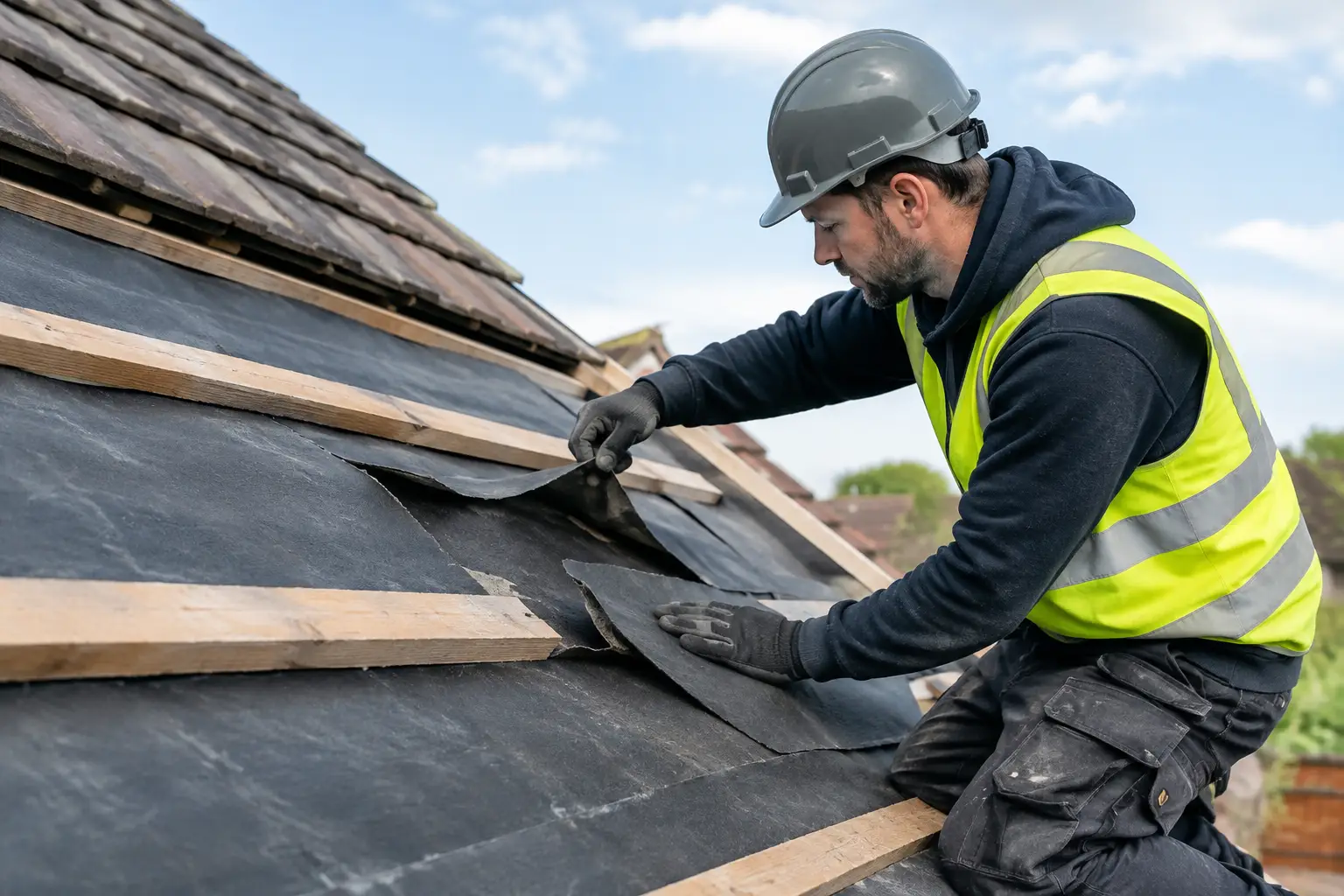
A few slipped tiles can let rain reach the layer beneath them long before water appears on your ceiling. To fix damaged roof underlay properly, the affected roof covering usually needs to be lifted so the membrane can be inspected, repaired and weathered back in correctly. Covering the problem from inside the loft may look tempting, but it rarely stops water travelling across the roof structure.
Roof underlay is the secondary weather barrier beneath tiles or slates. On older properties it may be traditional roofing felt; on newer roofs it is more likely to be a breathable membrane. Neither is intended to replace sound tiles, slates, leadwork or flashing, but both play a vital role when wind-driven rain gets past the outer covering.
Signs your roof underlay may be damaged
The first sign is often a leak after heavy rain or strong winds, particularly around a chimney, valley, roof window or roof edge. Damp insulation, water marks on rafters and drips in the loft can also point to a problem above. However, the visible wet area is not always directly below the fault. Water can run along battens, timbers or the underside of the membrane before it reaches a vulnerable point.
Outside, missing or cracked tiles, displaced slates, loose ridge tiles and failed flashing should be treated as warning signs. If you can see torn felt protruding at the eaves, it may have deteriorated with age or been damaged when tiles moved in a storm. A sagging membrane between rafters can also indicate that the material has weakened.
Condensation can be mistaken for an underlay leak. A cold loft with inadequate ventilation can produce moisture on the underside of the roof, especially in winter. The difference matters: replacing membrane will not solve a ventilation issue, while ignoring a genuine water ingress problem can lead to rotten battens, damaged insulation and mould.
When you need to fix damaged roof underlay quickly
A small tear is still urgent if water is entering the property. Rainwater does not need a large opening to cause harm, particularly where insulation holds moisture against timber. Arrange a professional inspection promptly if there is active dripping, a ceiling is bulging, tiles or slates have fallen, or a storm has disturbed part of the roof.
Where there is an immediate risk, the priority is to make the roof safe and prevent further ingress. This may involve securing loose materials, fitting a temporary weatherproof covering and then returning to complete the permanent repair in suitable conditions. It is safer and more effective than trying to work on a wet, steep or wind-exposed roof yourself.
For homeowners, landlords and site managers, documenting the damage with photographs from ground level can be useful. Do not climb onto the roof or pull at loose tiles. Disturbing a small damaged section can turn it into a larger failure, and fragile roofs or hidden rotten battens present a serious safety risk.
What a proper underlay repair involves
The repair method depends on the roof type, the extent of deterioration and the condition of surrounding materials. A roofer will first identify the route of water ingress rather than assuming that every damp patch means failed underlay. This means checking the tile or slate covering, valleys, chimney flashing, leadwork, guttering and the roofline as well as the membrane.
Localised damage beneath tiles or slates
If the membrane is sound apart from a limited tear, a local repair may be possible. Tiles or slates are carefully removed from above, and any broken battens are replaced. The damaged underlay is then cut back to stable material and a compatible section of membrane is fitted with sufficient overlap to shed water down the roof.
The detail at the top and sides of the patch is crucial. Water must flow over the new piece rather than behind it. Once the underlay is secure, battens are reinstated as needed and the original tiles or slates are refitted, with matching replacements used where materials are cracked or no longer serviceable.
This approach keeps disruption and cost proportionate where the rest of the roof remains in good condition. It is not always the right choice, though. If the felt is brittle across several slopes, patching one visible tear can simply postpone the next leak.
Damage around chimneys, valleys and roof junctions
Underlay faults near chimneys, abutments and valleys need extra care because these are high-water areas. The cause may be failed lead flashing, cracked mortar, a blocked valley or deteriorated underlay beneath the surrounding tiles. Repairing the membrane without addressing the defective detail above it will not provide a lasting result.
A full assessment may include renewing leadwork, replacing valley lining, rebedding tiles or carrying out chimney repairs alongside the underlay work. One contractor managing connected roofing tasks helps avoid gaps between trades and ensures the finished roof directs water into the gutters as intended.
Widespread underlay failure
Traditional felt can become brittle after decades of heat, cold and movement. Where it has split in numerous places or failed throughout a roof slope, the practical solution is often to strip the covering and renew the underlay and battens as part of a re-roof. It is a larger job, but it gives access to inspect rafters, improve ventilation details and correct defects that have been concealed for years.
A complete replacement is also worth considering if a roof has repeated leaks, widespread slipped tiles or an ageing covering nearing the end of its serviceable life. Conversely, a newer tiled or slate roof with isolated storm damage may only need a targeted repair. The right recommendation should be based on the roof's actual condition, not a one-size-fits-all answer.
Why internal patches are rarely a permanent answer
Some property owners see torn underlay from the loft and consider taping or covering it from beneath. While specialist tapes can form part of a controlled repair, an internal-only patch does not restore the way a roof sheds water. It may trap moisture, conceal ongoing damage and leave battens exposed to rain.
Roof underlay needs to be lapped correctly from the outside, beneath the tile or slate covering. The roof covering must then be reinstated so it protects the membrane from ultraviolet exposure and direct weather. There are occasions where a loft-side repair is used as a short-term measure, but it should not replace an external inspection and proper remedial work.
Spray foam should also be approached with caution. Applying foam to the underside of a roof can make future inspection and repairs more difficult, restrict ventilation and hide defects in timbers or felt. It is not a substitute for sound roof repairs.
Protecting the repaired roof
Once the underlay has been repaired, regular maintenance can reduce the chance of another unexpected leak. Gutters and valleys should be kept clear so water does not back up beneath tiles. After severe weather, look from ground level for displaced materials, damaged flashing or debris around roof outlets.
Older roofs benefit from periodic professional checks, especially where there are chimneys, multiple valleys or mature trees nearby. Early attention to a loose slate or split flashing is usually far less disruptive than dealing with damp insulation and damaged ceilings later.
For urgent leaks, storm damage or planned re-roofing, Armstrong Roofing & Building Limited provides UK-wide roofing support, free quotations, no call-out charges and 24-hour emergency response. A clear survey should explain what has failed, whether a local repair is suitable and what work is needed to protect the property for the long term.
A roof does not need to look dramatic from the street to be letting in water. Acting when the first damp mark appears gives you the best chance of keeping a manageable repair from becoming a larger restoration project.