

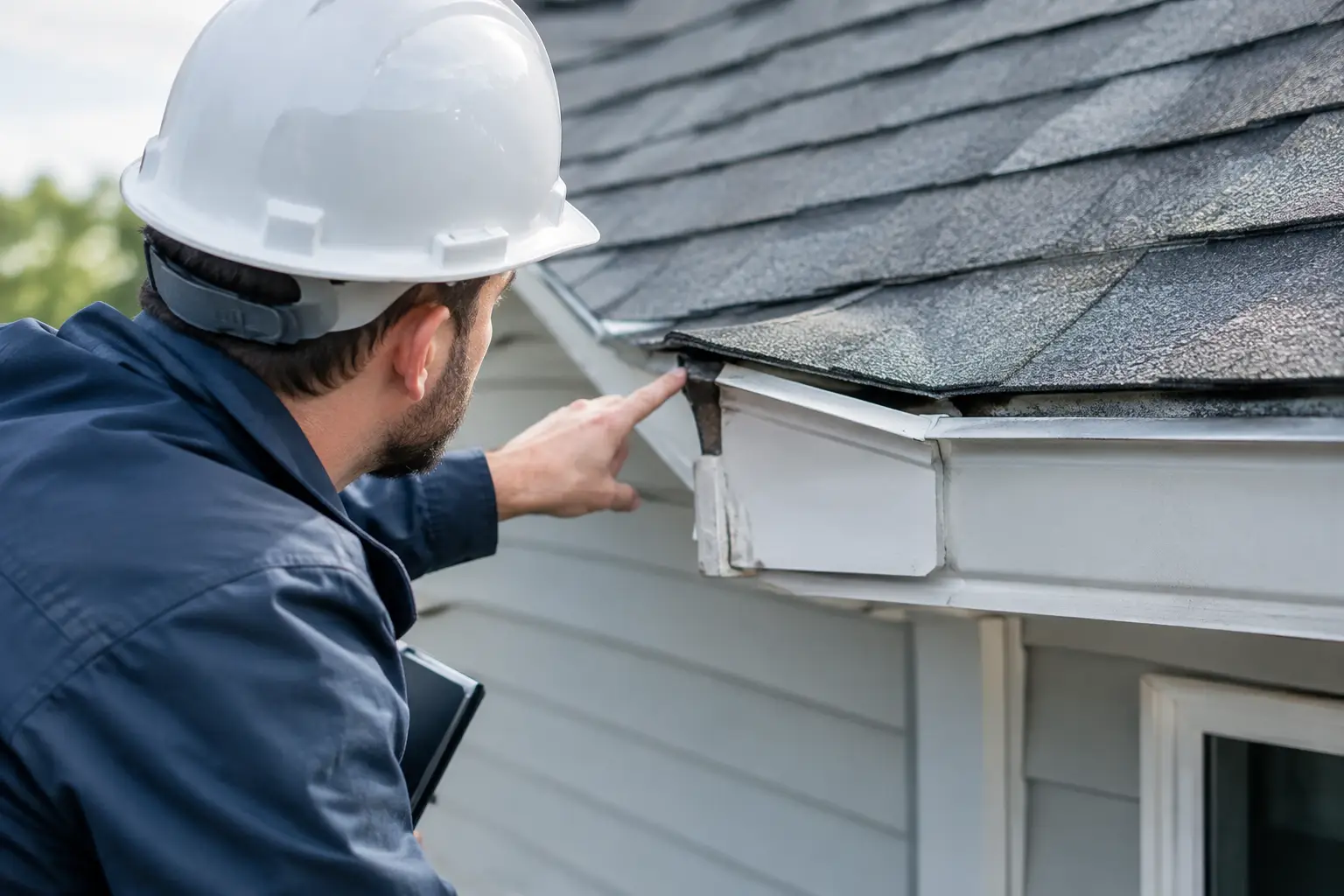
A roof leak that returns after a recent repair is frustrating for any property owner. In this failed flashing repair case study, the visible stain on an upstairs ceiling was not caused by a single cracked tile, as first suspected. The underlying issue was poorly detailed leadwork around a chimney, allowing rainwater to track beneath the roof covering during prolonged wet weather.
The property had already received a local repair from another contractor. Sealant had been applied around the chimney flashing and several tiles had been lifted and reset. It reduced the leak briefly, but it did not address the reason water was reaching the roof structure in the first place.
The Property and the Reported Problem
The case involved a traditional pitched roof on an older residential property, finished in concrete interlocking tiles with a brick chimney stack close to the ridge. The homeowner reported damp marks forming on the ceiling of the front bedroom after heavy rain, particularly when wind drove rain against the chimney side of the roof.
The previous repair had focused on the most obvious area. There was a split in the mortar at the edge of the chimney and aged sealant around the flashing. From ground level, this appeared a reasonable place to start. However, roof leaks do not always show themselves directly below the entry point. Water can travel along battens, felt and timbers before appearing inside.
A temporary repair may be appropriate when a property needs immediate protection during severe weather. It is not, however, a substitute for sound leadwork where the roof covering meets a chimney, wall or dormer.
Failed Flashing Repair Case Study: What Went Wrong
On closer inspection, the main problem was not simply old sealant. The original lead flashing had been patched repeatedly rather than renewed. Sections of the lead apron at the front of the chimney were poorly dressed to the tiles, leaving small gaps where water could be forced underneath.
The stepped side flashing was also inadequate. Instead of properly formed lead steps chased into the brickwork joints, parts of the detail relied on surface-applied material and mortar. Over time, movement between the roof and chimney stack had broken this connection. The result was a route for water to enter behind the flashing.
There was a further issue at the rear of the chimney. The back gutter, sometimes called a rear gutter or soaker arrangement depending on the detail, was too shallow and partially blocked with debris. During light rain it appeared to cope. In heavier rainfall, water collected behind the chimney and overflowed towards the roof underlay.
This is why simply applying more sealant was never likely to provide a dependable result. Sealant can assist with small finishing details, but it cannot replace correctly installed leadwork, proper laps or an effective drainage channel. It also deteriorates under constant exposure to sun, frost and rain.
How the Roof Was Diagnosed Properly
A lasting repair began with a full visual inspection from roof level. This allowed the condition of the tiles, mortar, leadwork and surrounding roof structure to be assessed together rather than in isolation.
The roof tiles around the chimney were carefully lifted. Beneath them, the underlay showed staining and signs of repeated water entry. The timber battens were damp but had not suffered serious decay, which meant prompt action could prevent a wider roof repair. The chimney brickwork itself was generally sound, although some repointing was needed where mortar joints had opened.
The inspection also confirmed that several tiles had been fixed too tightly against the flashing during the earlier repair. Roof coverings need the right overlap and spacing to direct water into gutters and away from vulnerable junctions. A tile pushed hard against a lead edge can trap debris or direct water sideways instead of allowing it to shed naturally.
For landlords and property managers, this is a useful reminder that a recurring leak should be investigated beyond the internal damp patch. The ceiling stain is the symptom. The condition of the roof junction is usually the cause.
The Repair That Addressed the Cause
The failed materials were removed rather than covered over. This included old sealant, loose mortar and defective sections of flashing. The surrounding tiles were set aside for reuse where they remained in good condition, keeping unnecessary replacement work to a minimum.
New leadwork was then formed to suit the chimney and roof pitch. A correctly sized lead apron was installed to the front, with proper laps and dressed edges to guide water over the tiles. New stepped flashing was chased into the brickwork joints and secured appropriately, creating a weatherproof connection between the chimney stack and roof slope.
At the rear of the chimney, a new back gutter detail was formed with sufficient capacity to handle rainfall running down both sides of the roof. The surrounding tiles were reinstated with the correct headlap and side lap, ensuring water would pass over the leadwork rather than behind it.
The necessary chimney repointing was completed with compatible mortar. This mattered because cracked or loose pointing can allow water into the brickwork behind the flashing, even where the lead itself is sound. Roofing, chimney repairs and leadwork often need to be considered as one system.
Finally, the guttering below the affected slope was cleared and checked. A blocked gutter will not usually cause a chimney flashing leak, but it can compound water problems at the eaves and give the impression that a repair has failed. Connected exterior elements should be assessed together.
Why a Cheaper Patch Can Cost More
A quick sealant repair may cost less at the outset, particularly when the weather is poor and a homeowner needs an immediate response. There are situations where a temporary emergency repair is sensible. It can limit water damage until conditions allow safe, permanent work to take place.
The trade-off is that a patch should be clearly identified as temporary. When defective leadwork is covered with sealant rather than renewed, the water path may remain hidden. Moisture can then continue affecting battens, underlay, insulation and ceiling finishes before the leak becomes obvious again.
A full renewal is not automatically necessary for every flashing issue. If leadwork is otherwise well formed and a small split or lifted edge is identified early, a local repair may be entirely suitable. The right scope depends on the lead condition, roof age, chimney movement, tile layout and evidence of water ingress beneath the covering.
This case required more than a surface repair because several elements had failed together. Replacing only the most visible section would have left the rear gutter and side flashing vulnerable.
Signs Your Flashing May Need Attention
Damp patches near a chimney or along an external wall after wind-driven rain are common warning signs. You may also notice flaking paint, a musty smell in the loft, loose mortar around a chimney stack or staining on the underside of the roof lining.
From outside, look for lifted lead edges, cracked sealant, slipped tiles near roof junctions and vegetation or debris collecting behind a chimney. Do not climb onto the roof to inspect these areas yourself. Wet tiles, fragile slates and uneven surfaces create a real fall risk, and leadwork can be damaged by unnecessary foot traffic.
If water is actively entering the property, an emergency call-out can help protect the building while the source is assessed. For planned repairs, a clear written quotation should explain whether the recommendation is a local repair, renewed flashing, chimney work or more extensive roof maintenance.
A Better Standard for Roof Junction Repairs
The key lesson from this failed flashing repair case study is straightforward: water management matters more than a tidy-looking patch. A roof junction must be detailed so rain is directed outward, overlaps work in the right order and materials can accommodate normal movement between the roof and masonry.
Armstrong Roofing & Building Limited provides roof repairs, leadwork, chimney work and emergency support across the UK, with free quotations and no call-out charge. Where a leak has returned, the priority is to identify the full route water is taking, then recommend work that is proportionate to the condition of the roof.
If a damp patch has reappeared after a recent repair, acting early can prevent a manageable flashing issue from becoming damage to timbers, plaster and decoration. A thorough roof-level assessment gives you a clearer basis for the next decision and a better chance of fixing the problem once.