

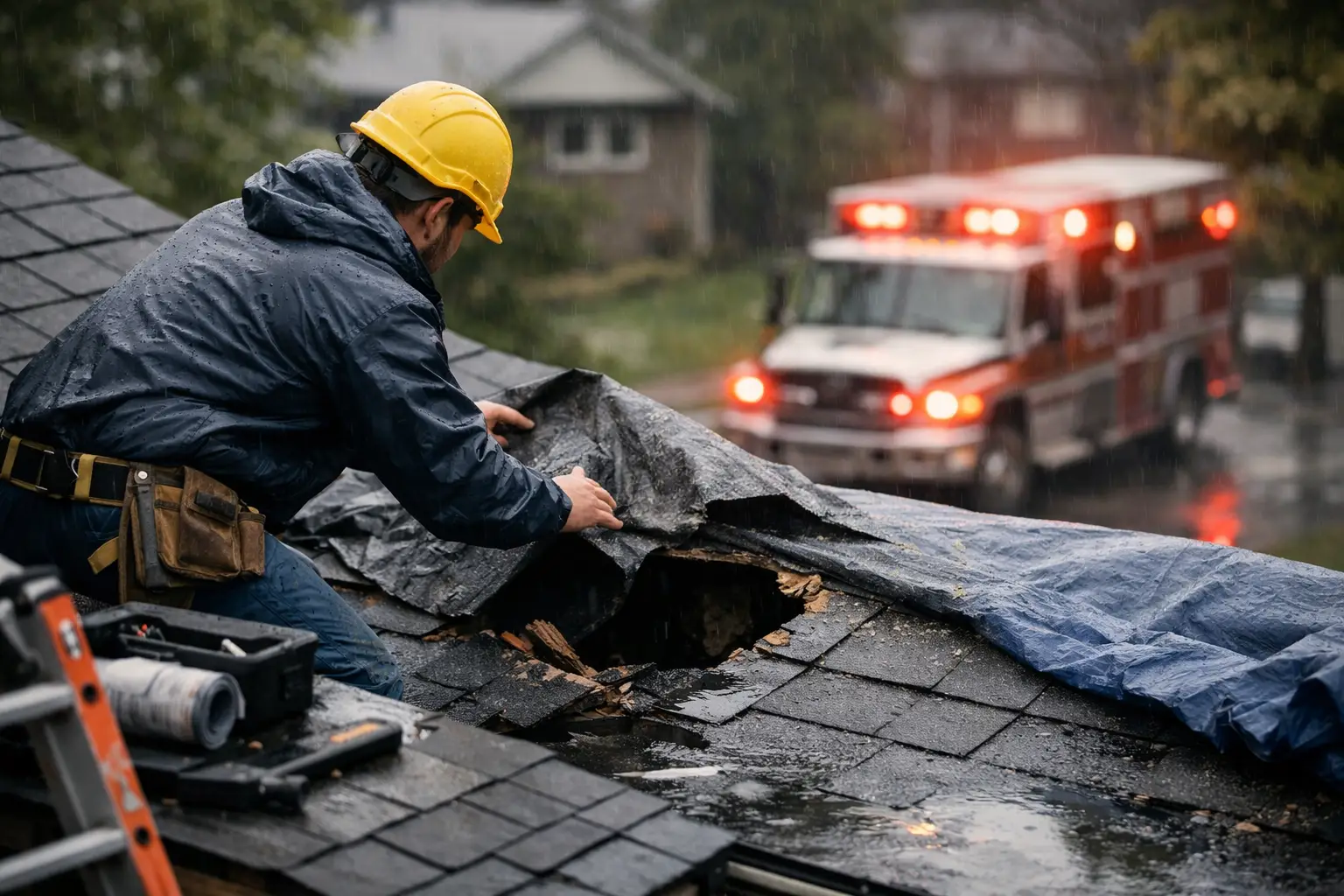
A ceiling stain that spreads after heavy rain, water dripping near a light fitting or tiles scattered across the garden are not problems to leave until next week. Emergency roof repair is about making the property safe, limiting further damage and finding the real source of the failure before a small defect becomes a costly internal repair.
For homeowners, landlords and commercial property managers, the priority is not diagnosing every detail from ground level. It is taking sensible immediate action, protecting people and belongings, and arranging a professional roofing inspection as soon as possible.
When emergency roof repair is needed
Not every slipped tile requires an out-of-hours visit, but some signs demand prompt action. Active water ingress is the clearest example, particularly when it is affecting electrics, ceilings, insulation, timber or occupied rooms. A roof damaged by high winds, fallen branches or impact can also leave the structure exposed very quickly.
Call for urgent assistance if water is entering the building, a section of roof covering has lifted or fallen, flashing or leadwork has come away, or a chimney appears unstable. Flat roofs should also be treated seriously when ponding water is finding its way through the ceiling or bubbling beneath the surface.
In older properties, a leak may travel along rafters or roof felt before appearing indoors. The visible damp patch is therefore not always directly below the damaged tile, slate, valley or flashing. This is why a proper inspection matters more than a quick guess at the source.
Make the property safe before help arrives
Do not climb onto a wet, steep or storm-damaged roof. Even a minor repair can become dangerous when slates are loose, surfaces are slippery or wind conditions are still poor. Keep children, visitors and pets away from the affected area outside, especially where broken tiles, gutters or chimney debris may fall.
Inside, move furniture, electrical items and soft furnishings away from the leak where it is safe to do so. Use buckets or waterproof containers to catch drips and place towels around them to protect flooring. If water is close to lights, sockets or wiring, switch off the relevant circuit only if you can do so safely from a dry location. Where there is any doubt, contact a qualified electrician as well as a roofer.
If a ceiling is bulging with trapped water, keep clear of the area. A saturated ceiling can collapse without much warning. Photograph the damage from a safe position, including any visible external damage from the ground. These images can be useful for insurers and help a roofing contractor understand the urgency before arrival.
What an emergency roof repair visit should include
A professional emergency call-out should begin with a safe assessment of the roof, not an immediate promise of a permanent fix. Weather, access, roof height and the extent of damage all affect what can be completed on the day.
The first aim is usually to stop or reduce water ingress. This may involve securing loose tiles and slates, installing a temporary weatherproof covering, repairing dislodged flashing, clearing a blocked valley or making damaged guttering safe. Where a permanent repair is practical and materials are available, it can often be completed during the same visit.
A reliable roofer should then explain what has failed, the work required and whether further repairs are recommended. For example, one broken slate may be isolated damage. Repeated slipped tiles, perished felt, cracked mortar, damaged leadwork and blocked gutters may point to a wider maintenance issue. The right approach depends on the roof's condition, not simply the first defect that can be seen.
Common causes of urgent roof damage
Storms are a frequent trigger for emergency call-outs, particularly on roofs with ageing tiles, slates or ridge lines. Strong winds can lift loose coverings and drive rain beneath details that normally cope well in settled weather. Heavy rain then exposes weaknesses around valleys, chimneys, roof windows and abutments.
Guttering is another common cause of avoidable leaks. When gutters and downpipes overflow, water can track behind fascias, soak brickwork and enter at roof edges. Clearing debris may solve the immediate problem, but split joints, poor falls or corroded sections may need repair or replacement to prevent a repeat.
Chimneys need particular attention after storms. Damaged flashing, loose pointing, cracked flaunching or unstable pots can allow water in and create a safety risk below. Leadwork around chimneys and dormers is durable when installed correctly, but it can split, lift or fail at joints over time.
Temporary repairs versus permanent roofing work
A temporary repair is not poor workmanship when it is the safest response to conditions. During driving rain or high winds, a contractor may need to make the roof weather-tight first and return when it is safe to complete a lasting repair. This protects the building while avoiding unnecessary risk to workers and occupants.
Permanent work may include replacing broken tile and slate sections, renewing felt and battens, rebuilding damaged roof edges, repairing chimney details or replacing failed leadwork. If the roof is reaching the end of its serviceable life, a targeted repair may still be sensible in the short term, but a planned re-roof could offer better value than repeated call-outs.
A clear quotation should distinguish between emergency making-safe work and any recommended follow-on repairs. That gives property owners the information needed to act quickly without being pressured into work that has not been properly explained.
Costs, insurance and clear quotations
The cost of emergency roofing work varies with access, roof type, material, the severity of damage and whether a temporary repair or a more extensive repair is needed. A simple replacement tile is very different from stabilising storm damage around a chimney or tracing a persistent leak on a large commercial roof.
If you intend to make an insurance claim, check your policy requirements before authorising major work where possible. Insurers generally expect policyholders to take reasonable steps to prevent further damage, which is where emergency making-safe work is often essential. Keep photographs, invoices and a written description of the damage and repairs completed.
The cheapest immediate option is not always the best value. A patch that does not address failed flashing, rotten timber or widespread tile movement may only postpone the next leak. Ask what has caused the problem, whether the repair is temporary or permanent, and what further work is genuinely necessary.
Emergency roof repair for landlords and commercial premises
Landlords have a duty to respond to defects that affect a tenant's safety or the building's weatherproofing. Fast action can reduce disruption, protect ceilings and finishes, and prevent a small leak from developing into mould or electrical damage. Keeping records of inspections and repairs is also useful for planned maintenance decisions.
For commercial premises, leaks can interrupt trading, damage stock and create slip hazards. Warehouses, offices, shops and managed blocks may need work planned around access restrictions, tenants or operating hours. A contractor with broad capability can deal with the immediate issue and coordinate connected work such as guttering, leadwork, chimney repairs and larger roof renewals.
Armstrong Roofing & Building Limited provides UK-wide roofing support with free quotations, no call-out charge and a 24-hour emergency response service, helping property owners move from urgent protection to properly specified repair work.
Do not wait for the next spell of rain
Once an emergency repair has been completed, arrange for any recommended follow-on work before weather exposes the roof again. A prompt inspection, clear scope of work and properly completed repair will protect more than the roof itself. It protects the rooms, people and investment beneath it.