

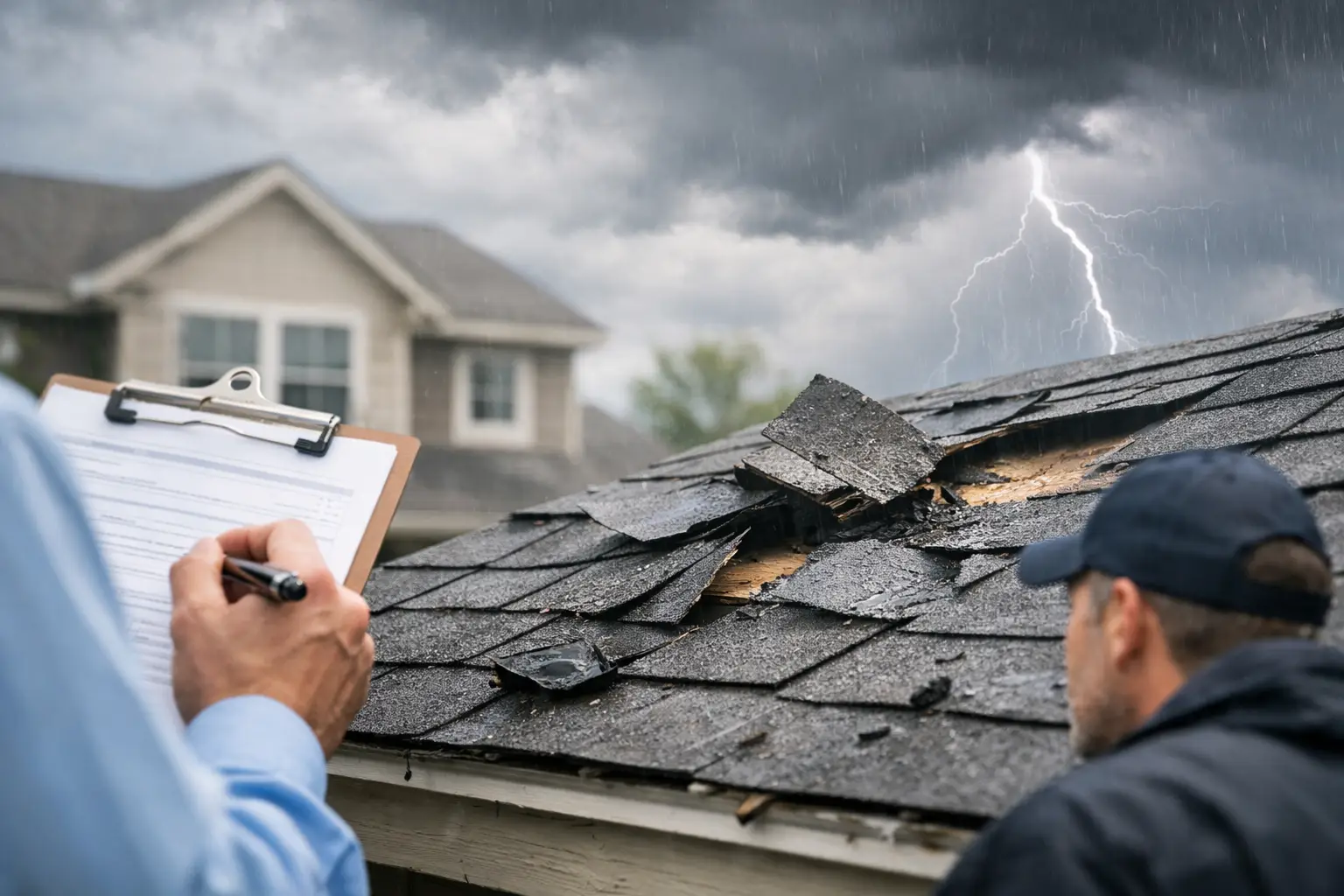
A loose tile after a windy night can quickly become a ceiling stain, a damaged loft insulation layer or a dangerous section of roof. So, does home insurance cover storm roof damage? In many UK policies, buildings insurance can cover sudden damage caused directly by a storm. The detail matters, though. Insurers will look at the weather, the condition of the roof before the event and the exact cause of the damage before accepting a claim.
The priority is to protect the property safely, record what has happened and speak to your insurer early. A professional roofing inspection can then identify the immediate risk and separate storm damage from any pre-existing maintenance issues.
When home insurance covers storm roof damage
Buildings insurance is designed to cover the structure of your home, including the roof, roof timbers, tiles, slates, flashing, chimneys and often gutters. Where high winds, heavy rain, hail or falling branches cause sudden physical damage, a standard buildings policy may contribute towards repair or replacement costs.
Typical examples include wind lifting tiles or slates, a branch puncturing the roof covering, storm conditions damaging leadwork, or rain entering through an opening made by the storm. If water then damages ceilings, plaster, built-in units or electrics, those repairs may also form part of the buildings claim.
However, cover is never automatic simply because a roof has leaked after bad weather. Most insurers assess whether the conditions meet their definition of a storm and whether those conditions were strong enough to cause the reported damage. They may use local weather records, including wind speeds and rainfall, as part of that assessment.
A claim is generally stronger where there is a clear chain of events: severe weather occurs, visible damage appears shortly afterwards and a roofer confirms that the damage is consistent with that event. Photographs taken as soon as it is safe to do so can be valuable evidence.
What insurers commonly exclude
Storm damage cover is not a substitute for routine roof maintenance. Insurers commonly decline claims where water entered through worn, defective or poorly maintained parts of the roof rather than through new damage caused by the storm.
For example, cracked mortar at a chimney, deteriorated felt, corroded flashing, blocked gutters or old tiles that were already loose may be classed as wear and tear. If a period of rain exposes a long-standing defect, the repair may be your responsibility even if the weather was unpleasant.
This can feel frustrating, especially where the leak first becomes visible during a storm. The key question is usually not when the water appeared inside, but why it was able to enter. A roof that has reached the end of its serviceable life may need repairs or a re-roof regardless of whether the insurer accepts the claim.
Policies may also exclude damage to fences, gates, garden structures and certain outbuildings, or apply different limits to them. Flat roofs, listed buildings and non-standard construction can have specific terms. Landlords should also check that their policy reflects how the property is occupied, as an unsuitable policy can create problems at claim stage.
Buildings insurance, contents insurance and excesses
The roof itself sits under buildings insurance, not contents insurance. Contents cover may become relevant if rainwater damages furniture, carpets, electronics or personal belongings inside the property, provided storm damage is included in the policy.
Before arranging non-urgent permanent work, check your policy schedule for the excess. This is the amount you pay towards a successful claim. If the repair cost is only slightly above the excess, claiming may not be worthwhile, particularly if it could affect future premiums.
Also check whether your policy includes a separate escape-of-water excess or a higher excess for certain types of weather damage. Terms vary between insurers, and the policy wording rather than a general assumption should guide your decision.
What to do after a storm damages your roof
Do not climb onto the roof or attempt a repair from a ladder in high winds, rain or darkness. Broken slates, loose ridge tiles, damaged chimney stacks and wet surfaces create serious risks. Keep people away from the affected area and move belongings from beneath any active leak where possible.
Contact your insurer or use its claims helpline as soon as practical. Ask whether it needs to approve repairs, appoint a loss adjuster or inspect the damage before permanent works begin. Most insurers expect you to take reasonable steps to prevent further damage, so temporary protection is often sensible.
A roofing contractor can make the property safe through an emergency repair, such as securing loose materials, fitting a temporary weatherproof covering or preventing water entering through a damaged section. Keep all invoices, photographs and written findings. If a contractor identifies urgent defects unrelated to the storm, ask for those to be clearly separated from the storm-related work in the quotation.
Useful evidence includes:
- Photos and video of the damage from ground level, including any internal water staining
- The date and approximate time you noticed the damage
- Photos of fallen branches, displaced tiles or other visible signs of the storm
- A written roof inspection or repair quotation
- Receipts for reasonable emergency measures and drying work
Avoid throwing away damaged materials until the insurer confirms it does not need to inspect them. Equally, do not leave the roof exposed while waiting for a decision if more rain is due. Preventing further damage is usually the sensible course, provided you document the condition first and keep the insurer informed.
Why a professional roof inspection helps your claim
A storm can cause damage that is not obvious from ground level. A few missing slates may be visible, while lifted flashing, fractured ridge mortar, disturbed underlay or cracked chimney pointing remains hidden. Water can then travel some distance before appearing on a ceiling, making the source difficult to identify without a proper inspection.
A clear roofing assessment gives you a practical repair plan and supporting information for your insurer. It should explain what has been damaged, what needs immediate attention and whether there are underlying defects that should be addressed separately. This protects you from authorising unnecessary work while giving the insurer a clearer account of the loss.
For commercial premises and managed properties, early inspection is particularly valuable. A small defect can interrupt operations, damage stock or create a health and safety issue if it worsens. Property managers should keep a record of inspections, maintenance and previous repairs, as this can demonstrate that the roof has been responsibly maintained.
When a claim is declined
If an insurer says the issue is wear and tear or poor maintenance, ask for the decision and supporting evidence in writing. Compare it with your policy wording and with the findings from an independent roofing inspection. There may be a valid distinction between an old roof requiring maintenance and a sound roof that suffered sudden storm damage.
Do not assume a declined claim means no action is needed. Water ingress can damage timbers, insulation and internal finishes long after the weather has passed. Arrange repairs promptly, particularly where tiles, slates, leadwork, gutters or chimney components have been affected.
Where the damage is not covered, a straightforward repair quotation lets you make an informed decision without delay. In some cases, targeted repairs are sufficient. In others, repeated leaks and widespread deterioration may make a planned re-roof the more economical long-term option.
Reduce the risk before the next storm
No roof can be made completely immune to severe weather, but routine maintenance reduces the chance that a minor defect becomes an insurance dispute. Replace broken tiles and slates, clear gutters and valleys, check flashings and leadwork, and have chimney stacks reviewed where mortar is failing. Older roofs deserve particular attention before autumn and winter.
Armstrong Roofing & Building Limited provides UK-wide roof inspections, urgent repairs, tile and slate work, leadwork, chimney repairs and complete re-roofs, with free quotations, no call-out charge and 24-hour emergency response. If a storm has left your roof exposed, getting a clear professional assessment quickly can help protect the property while you decide the right route with your insurer.
The most helpful next step is not to guess whether the damage is claimable. Make the roof safe, gather clear evidence and obtain an expert view before a small opening becomes a larger repair.