
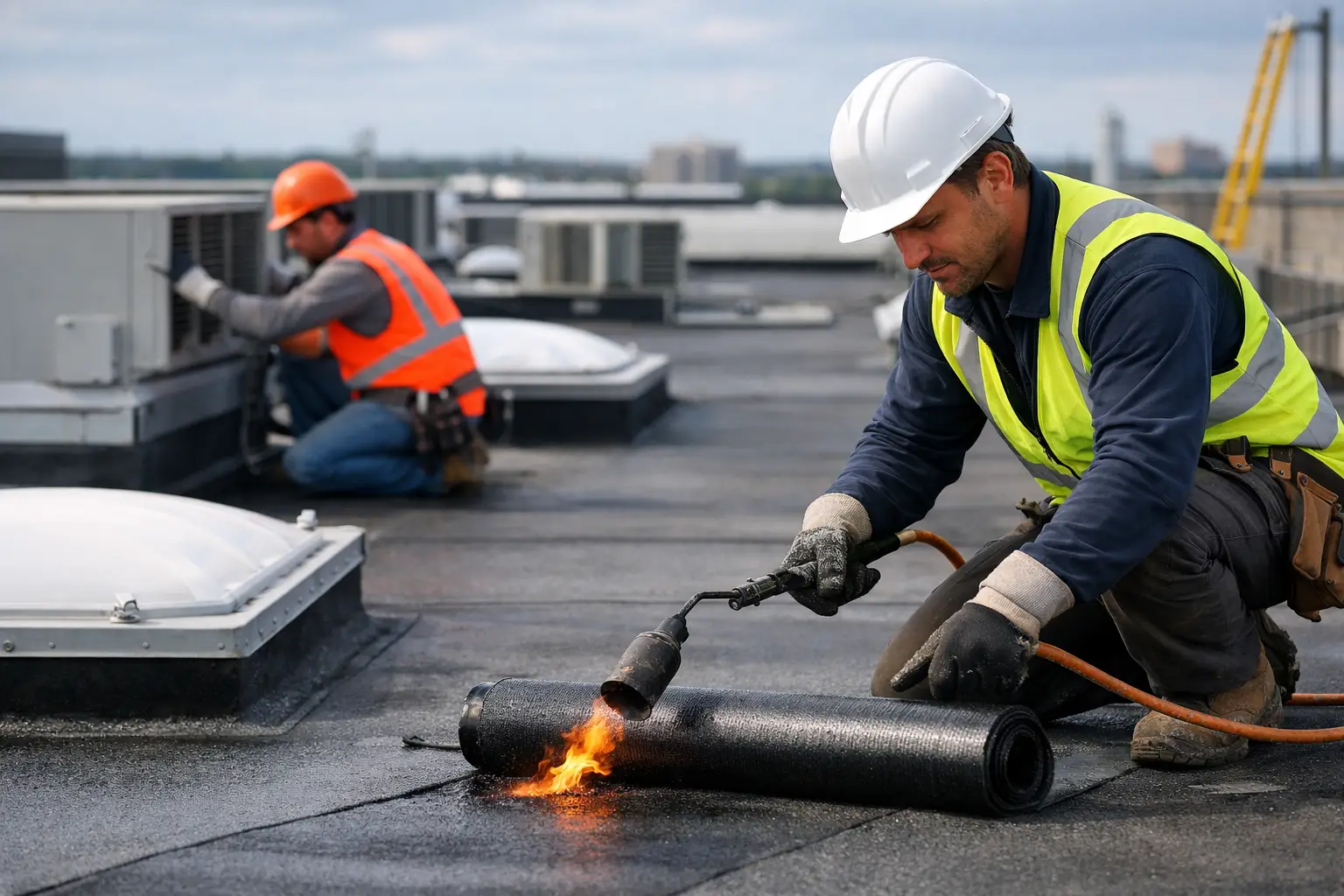
A failed roof can stop a business day before anyone has had time to assess the damage. Water over stock, a leak above electrical equipment, loose materials after high winds or a blocked outlet on a flat roof all need a prompt, practical response. Commercial roofing is not simply about fitting a covering over a building. It is about protecting the people, equipment, operations and income beneath it.
For landlords, facilities managers and business owners, the right approach depends on the roof’s condition, the type of premises and how urgently work is needed. A small defect caught early may be a straightforward repair. Leave it through repeated rainfall, and the same issue can affect insulation, roof timbers, internal finishes and day-to-day trading.
When a Commercial Roof Needs Attention
Commercial roof problems do not always begin with a dramatic collapse or a ceiling leak. Many develop gradually, especially where ageing materials, poor drainage or earlier repairs have left vulnerable areas. Regular visual checks can identify obvious concerns, but a professional inspection is the safer way to establish what is happening beneath the surface.
Warning signs include staining on ceilings or walls, water pooling on a flat roof, split felt or damaged membranes, cracked tiles or slates, displaced flashing, leaking gutters and deteriorated mortar around chimneys or parapets. On larger sites, occupants may report musty smells, cold spots or drips only during heavy rain. Each can point to moisture entering the roof structure.
Storm damage requires particular attention. High winds can lift tiles, ridge components, leadwork and sheet materials, while debris can block gutters and downpipes. Even where the roof looks broadly intact from ground level, water may already be tracking beneath a damaged edge or flashing. Acting quickly reduces the risk of a minor defect becoming a wider repair project.
Emergency Repairs That Protect Your Premises
An emergency call-out is appropriate when there is active water ingress, loose roof materials, a damaged roof following severe weather or an immediate risk to people and property. The priority is to make the area safe and prevent further damage. That may involve temporary weatherproofing, securing loose materials, clearing a critical drainage blockage or carrying out an urgent repair where access and conditions allow.
A temporary measure is not always the final answer. It gives the building protection while the full condition of the roof can be assessed properly. Once the immediate risk has been controlled, a contractor can advise whether targeted repairs will provide a dependable result or whether broader renewal is the more sensible investment.
For commercial premises, speed matters, but so does clear communication. Decision-makers need to understand what has failed, what work is required now and whether further work should be planned. This is particularly useful for landlords managing occupied properties and facilities teams responsible for multiple sites.
Repair, Maintenance or Re-roof: Making the Right Call
Not every leaking roof needs replacing, and not every aged roof is a good candidate for patch repairs. The right choice comes down to the condition of the roof, the extent of the defect, the building’s use and the expected life left in the existing covering.
Targeted repairs are often suitable where damage is localised. Replacing broken tiles or slates, renewing failed leadwork, repairing defective flashing, resolving damaged felt or addressing guttering issues can restore protection without the disruption of a full replacement. This is usually the most cost-effective route when the surrounding roof remains sound.
Planned maintenance is valuable for roofs that are still performing but require regular attention. Gutters, valleys, outlets and roof edges collect leaves, moss and debris. If rainwater cannot drain freely, it can pond, back up beneath materials and add unnecessary pressure to joints and seams. Routine maintenance also provides an opportunity to spot loose components before wind and rain exploit them.
A complete re-roof becomes more likely where repairs are becoming frequent, materials have reached the end of their serviceable life or water ingress is occurring across several areas. While a re-roof involves greater upfront cost and planning, repeatedly repairing a failing roof can prove more disruptive and expensive over time. A clear quotation should set out the scope of work so that clients can make an informed comparison.
The Cost of Delaying Roofing Work
Roofing decisions are often deferred because the visible problem seems manageable. That can be reasonable where a contractor has confirmed the defect is minor and the roof is otherwise in good order. However, delay is a poor bargain when water is already entering the building.
Moisture can affect insulation performance, corrode fixings, damage stored goods and create faults in ceilings, lighting or electrical systems. For a retail unit, warehouse, office, school or hospitality venue, the wider cost may include disruption, reputational damage and lost use of part of the property. Prompt repair protects more than the roof itself.
Key Areas of Commercial Roofing Work
A dependable roofing contractor should be able to deal with the connected elements that keep a roof weatherproof. Focusing on one visible issue while ignoring the drainage, flashing or masonry around it can leave the underlying cause unresolved.
Tile and slate roofing remains common on many commercial, mixed-use and heritage-style buildings. Individual materials can crack, slip or become loose, and valleys and roof junctions often need close attention. Matching replacement materials where appropriate helps preserve the building’s appearance while maintaining protection.
Leadwork is another critical area. Lead flashings, soakers, valleys and coverings form weatherproof junctions around chimneys, walls, dormers and changes in roof level. When leadwork splits, lifts or has been poorly detailed, water can find its way into the building even if the main roof covering appears sound.
Chimneys, parapets and associated brickwork also deserve inspection. Failed pointing, loose pots, damaged flaunching and defective flashing can all contribute to leaks or falling-material risks. Guttering and downpipes complete the system by moving water safely away from the roof and building. A blocked or poorly aligned gutter can cause overflow that is easily mistaken for a roof leak.
Planning Work Around Business Operations
Commercial projects need more than sound workmanship. They need sensible scheduling, safe access arrangements and a clear understanding of how the premises operate. A small office may need work planned around staff access; a warehouse may require protection for stock and loading areas; a landlord may need advance communication with tenants.
The best time for planned work is usually before failure forces the issue. Surveys and maintenance can be arranged around quieter trading periods where practical, while larger renewal projects benefit from a defined scope and staged programme. That does not mean waiting for perfect weather - roofing work is weather-dependent, but experienced contractors plan around conditions and protect exposed areas carefully.
It is worth asking practical questions before work begins. Will access equipment be required? Are there public areas below the roofline? Does the building contain sensitive equipment or occupied spaces that need additional protection? Is there a drainage issue that should be resolved alongside roof repairs? Addressing these points early helps prevent avoidable delays.
Choosing a Contractor for Commercial Roofing
Commercial clients need a contractor that can respond when a leak is urgent and provide reliable support when a larger project is planned. Look for clear service descriptions, a detailed quotation, relevant experience across repair and renewal work, and a straightforward explanation of what the roof needs.
Price matters, but the lowest figure is not always the best value if the scope is unclear or essential details have been excluded. A proper assessment should distinguish between an immediate repair, recommended maintenance and any longer-term works that may be worth budgeting for. This gives property owners control rather than leaving them to react to the next failure.
Armstrong Roofing & Building Limited provides UK-wide roofing support for urgent repairs, routine maintenance and complete re-roofs, with free quotations, no call-out charge and a 24-hour emergency response service. Its 4.9/5 customer rating reflects the reassurance clients expect when their property needs dependable attention.
A commercial roof rarely fails without giving some indication that it needs care. Whether the issue is a single slipped slate, failing leadwork, standing water or an ageing roof that has had one repair too many, timely advice allows you to protect the building before a manageable problem becomes a costly interruption.