
When a chimney stack needs attention
A loose pot, a damp patch beside the chimney breast or fragments of mortar on the ground can all point to a problem high above the roofline. This chimney stack repair guide is designed to help UK property owners understand what those signs mean, what repairs may be required and when to arrange professional help before a small defect becomes a serious safety or water ingress issue.
Chimney stacks take the full force of rain, frost, wind and changing temperatures. Unlike much of the roof, they have exposed brickwork, mortar joints, pots, flaunching and leadwork working together in one vulnerable area. A failed joint or cracked flashing can allow water into the roof space, ceiling and walls long before the damage is visible indoors.
Common chimney stack repair warning signs
The most obvious warning sign is visible deterioration. Brickwork may look weathered, mortar may be recessed or missing, and a chimney pot may lean or appear unstable. From ground level, use binoculars if needed, but never climb onto a roof or ladder to inspect a stack yourself.
Inside the property, look for fresh staining around the chimney breast, peeling paint, mould, a musty smell in the loft or water marks after heavy rain. These symptoms do not always mean the stack is the sole cause - defective roof tiles, valleys or gutters can also be responsible - but they should be investigated promptly.
Other signs include:
- Pieces of mortar, brick or flaunching found in gutters or on the ground
- Lead flashing lifting away from the stack or showing splits
- Vegetation growing from mortar joints, which indicates retained moisture
- A chimney that looks out of line, bowed or cracked
- Damp worsening after wind-driven rain rather than during every shower
A blocked or unused flue can create separate concerns. If a chimney is no longer in use, it still needs suitable ventilation and weather protection. Fully sealing an old chimney without considering airflow can trap moisture within the structure.
What a professional chimney inspection should assess
A proper assessment looks beyond the damaged area. The contractor should inspect the stack brickwork, pointing, pots, cowls, flaunching, lead flashings and the surrounding roof covering. They should also check whether the chimney is sound enough for local repairs or whether partial rebuilding is more appropriate.
The condition of the leadwork matters particularly. Step flashing, cover flashing and soakers are designed to direct water safely onto the roof rather than behind it. When lead has split, slipped or been poorly dressed, repointing brickwork alone will not stop a leak.
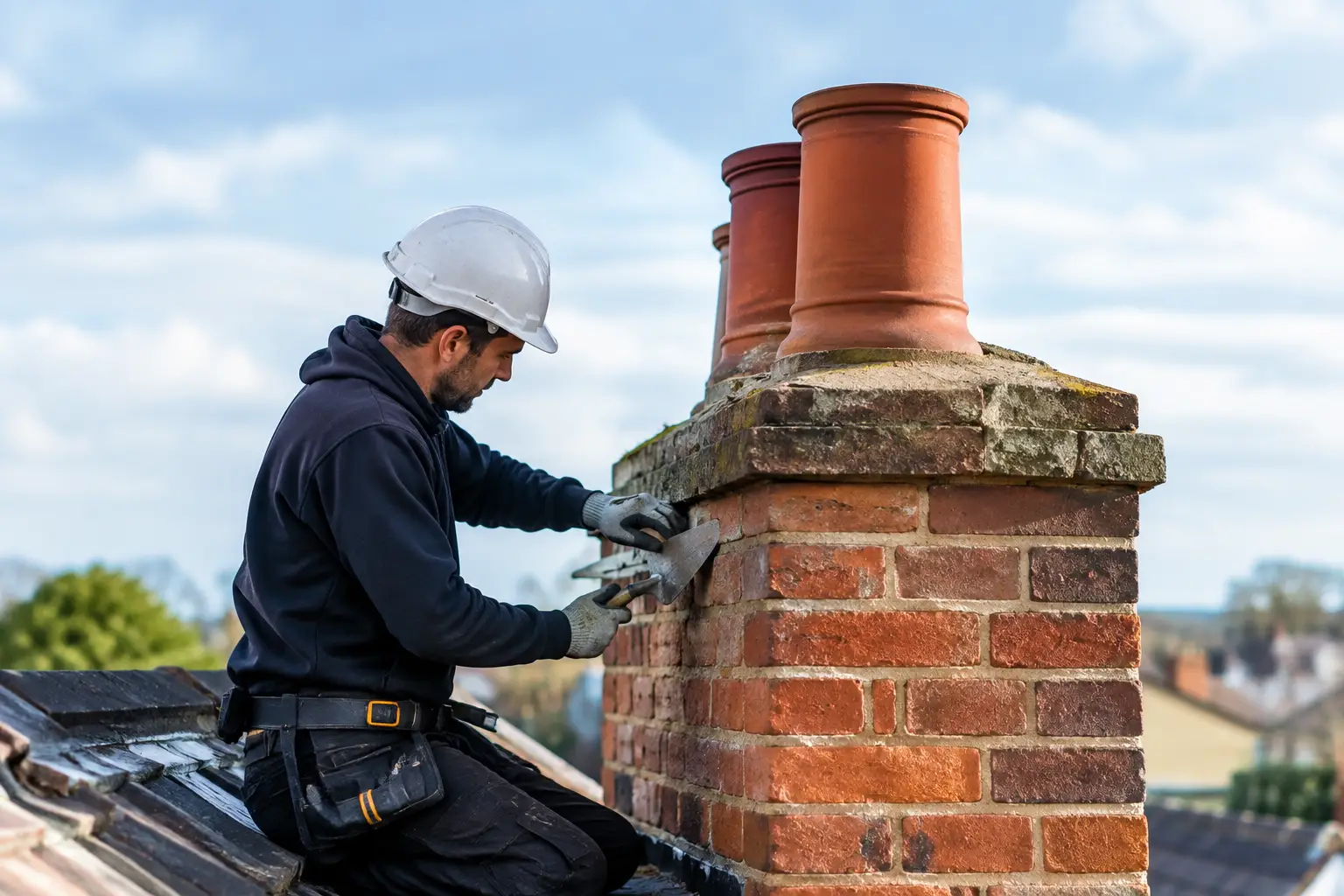
Access is a practical part of the decision. Minor work may be possible from a roof ladder in limited circumstances, but safe chimney repairs commonly require scaffold access. This protects the workforce, prevents rushed workmanship and gives proper access to rebuild sections, replace leadwork and clear debris without damaging tiles or slates.
For landlords and property managers, inspections are also an opportunity to identify nearby maintenance needs. A failing stack may sit alongside cracked ridge tiles, worn valleys, blocked gutters or ageing roof coverings. Addressing connected defects during one planned visit can reduce repeat access costs and further disruption.
Chimney stack repair guide: choosing the right repair
The right repair depends on the stack's condition, the cause of failure and whether the chimney remains in use. A credible recommendation should be specific rather than a one-size-fits-all suggestion.
Repointing and brick replacement
Where the brickwork remains stable, raking out failed mortar and repointing the joints can restore weather resistance. The mortar should be appropriate for the age and type of masonry. On older properties, an unsuitable hard mortar can damage softer historic bricks by forcing moisture through the brick rather than the joint.
Individual spalled or cracked bricks may be replaced at the same time. If damage is concentrated near the top courses, rebuilding the upper section can be more reliable than repeated patch repairs.
Rebuilding an unstable stack
A leaning stack, deep cracking or widespread loose masonry may require a partial or complete rebuild. This is not simply a cosmetic repair. The contractor needs to dismantle unsafe material carefully, rebuild on a sound base and form the stack correctly for the roof and flue arrangement.
Where a chimney has become redundant, owners may choose to reduce it below roof level and make good the roof covering. That can remove a long-term maintenance liability, but it needs careful consideration. Ventilation, roof structure, internal chimney breast arrangements and the appearance of the property all affect whether removal is suitable.
Flaunching, pots and cowls
Flaunching is the mortar bedding around chimney pots. Cracked or eroded flaunching can leave pots unstable and allow water into the top of the stack. Renewing it, securing or replacing pots, and fitting an appropriate cowl can improve weather protection.
Cowls are not universal fixes. The correct type depends on whether the flue serves an open fire, stove, boiler or ventilation route. A poorly selected cowl can affect draw or create problems for an active appliance, so it should be chosen with the flue's purpose in mind.
Lead flashing repairs
Lead flashing is often the difference between a dry chimney breast and a recurring leak. Repairs may involve renewing split sections, redressing lifted lead, replacing failed soakers or cutting new cover flashing into sound mortar joints. Surface sealant can sometimes form part of a minor detail repair, but it is rarely a lasting substitute for correctly installed leadwork.
Why temporary repairs have limits
When water is entering during severe weather, a temporary covering or local weatherproofing measure may be necessary to limit immediate damage. That can be a sensible emergency response, particularly where loose materials or active leaks pose a risk.
However, temporary work does not cure failed mortar, unstable brickwork or defective flashing beneath the surface. Once conditions are safe, arrange a full inspection and a clear quotation for the permanent repair. Repeated patching can cost more over time if the underlying fault continues to spread.
Safety and emergency action
Do not attempt chimney stack repairs from a domestic ladder. Wet tiles, loose brickwork and gusting wind make chimney work one of the highest-risk areas of property maintenance. Keep people clear of the area below if debris is falling, and avoid parking vehicles close to the building.
If part of a stack has collapsed, a pot has become loose or storm damage has opened the roof to rain, treat it as an urgent roofing issue. Photograph visible damage from a safe position if possible, then contact a professional roofing contractor for emergency attendance. If there is an immediate danger to the public, occupants or neighbouring property, contact the relevant emergency services as well.
A reputable contractor should explain whether the first visit is to make the property safe, carry out a temporary weatherproof repair or complete the full scope of works. This clarity matters when weather conditions, access arrangements or scaffolding mean permanent repairs cannot start on the same day.
Planning costs and avoiding repeat problems
Chimney repair costs vary because the work is driven by height, access, the extent of masonry damage, leadwork requirements and the condition of the surrounding roof. A small repointing job is very different from rebuilding a stack and renewing flashings on a steep slate roof.
Ask for the quotation to distinguish the repair scope from access requirements and any associated roof work. It should explain what is being renewed, whether matching bricks or tiles are needed, and how the area will be made weather-tight. The cheapest quotation may omit leadwork, safe access or the remedial work needed around the stack.
Once repaired, have the chimney and roof checked periodically, particularly after storms and before colder, wetter months. Keep gutters clear so water does not back up around the base of the stack, and deal with slipped tiles or damaged pointing before frost widens the defect.
For property owners who need prompt, dependable support, Armstrong Roofing & Building Limited provides chimney work, leadwork, roof repairs and emergency call-outs across the UK, with free quotations and no call-out charge. A sound chimney stack should protect the building quietly for years - acting early when it first shows distress is the best way to keep it that way.