

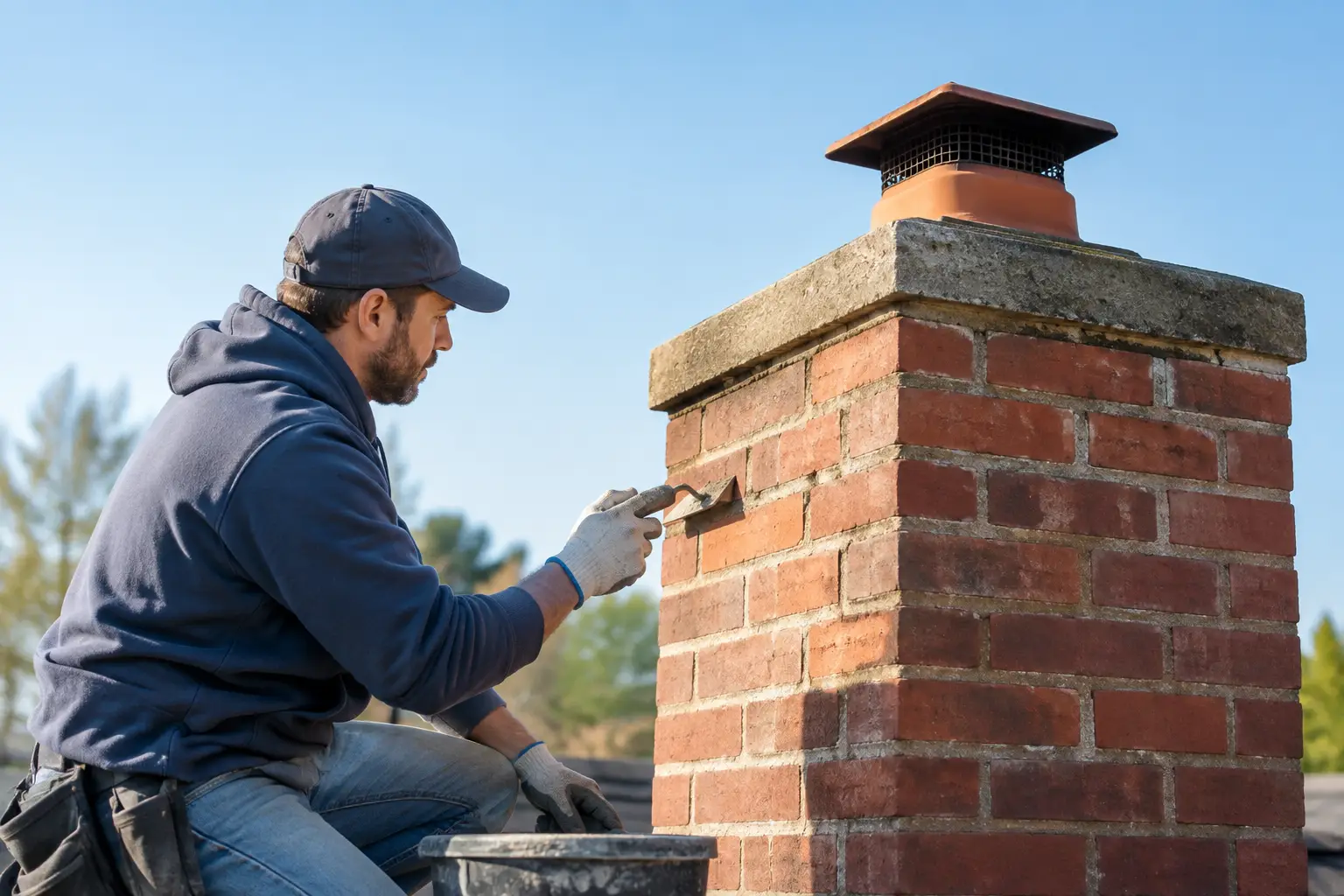
A chimney can look sound from ground level while the mortar between its bricks is quietly failing. Once joints become cracked, recessed or loose, rain can enter the stack, frost can force masonry apart and individual bricks may become unstable. A professional chimney repointing service deals with this early-stage deterioration before it develops into leaks, falling debris or costly rebuilding work.
For homeowners, landlords and property managers, the key is acting on visible warning signs rather than waiting for water marks to appear indoors. Chimney repairs are usually safer, more effective and less disruptive when completed before a damaged stack affects the roof structure below it.
What chimney repointing involves
Repointing is the process of carefully removing failed mortar from the joints between chimney bricks and replacing it with suitable new mortar. It is not simply a cosmetic finish. The mortar helps hold the stack together, closes routes for water penetration and protects brickwork from the effects of changing weather.
A proper repair starts with an inspection of the full chimney stack, not just the joints visible from one angle. A roofing contractor will assess the condition of the brickwork, chimney pots, flaunching, lead flashing and surrounding tiles or slates. This matters because failed pointing is often accompanied by another issue, such as split flashing, loose bricks or damaged cement around the pots.
Deteriorated mortar is then raked out to an appropriate depth without damaging the brick faces. The joints are cleaned, prepared and refilled with compatible mortar before being finished to suit the existing masonry. The correct mortar mix depends on the age and type of the property. Older brickwork may need a more breathable lime-based mortar, while newer construction may require a different specification. Using an overly hard mortar on soft historic bricks can cause more harm than good over time.
Signs you need a chimney repointing service
Mortar rarely fails all at once. It gradually washes out, cracks or becomes powdery through years of rain, wind, frost and heat from the flue. A close inspection is the surest way to confirm the condition, but several signs should prompt you to arrange one.
The most obvious is missing or deeply recessed mortar between bricks. Joints should not look hollow, sandy or broken away at the edges. Cracks running through the mortar, loose brick fragments on the ground, or small pieces of mortar in gutters can also indicate that the stack is deteriorating.
Damp patches around the chimney breast are another common warning. They do not always mean the pointing is solely responsible. Water may be entering through defective leadwork, failed flaunching, cracked render or a damaged chimney cowl. However, a chimney stack with open joints is highly vulnerable to driven rain, particularly on exposed properties.
Look out for leaning pots, crumbling cement around the base of pots and vegetation growing from joints. Moss alone is not necessarily a major concern, but weeds or established growth can push joints apart and hold moisture against the masonry. If a chimney appears to be leaning, has loose bricks or is shedding material after a storm, keep clear of the area and seek urgent professional advice.
Why delays can make chimney repairs more expensive
A chimney stack sits above the roofline and receives more than its share of bad weather. Water entering open mortar joints can soak into bricks and, during colder periods, freeze and expand. This freeze-thaw cycle breaks down both mortar and masonry, turning a localised repointing job into a partial rebuild.
There is also the risk of internal damage. Once water gets through the stack, it can affect the chimney breast, loft timbers, insulation and ceilings. The source of a leak is not always directly above the damp area, so attempting a quick surface seal without identifying the cause can leave the underlying problem unresolved.
For rented and commercial properties, delayed repairs can create a wider management issue. Loose masonry presents a safety risk, while recurring damp complaints can disrupt occupiers and lead to avoidable maintenance costs. Planned chimney maintenance is normally easier to schedule and budget for than an emergency repair following severe weather.
Repointing, rebuilding or sealing: what is the right repair?
Not every weathered chimney needs full repointing, and not every failing stack can be saved by repointing alone. The right approach depends on the condition of the mortar, the bricks and the chimney’s associated components.
If the bricks remain sound and the mortar has deteriorated, localised or full repointing can restore the stack’s weather resistance and stability. Where a limited section has failed, targeted repointing may be enough. This can be a sensible option when the remainder of the chimney is in good order.
If bricks are fractured, spalled, loose or badly eroded, they may need replacing before joints are renewed. A stack with extensive movement, major cracking or severe weather damage may require partial rebuilding. Although this is a larger job, rebuilding an unsafe section is better than covering up structural defects with new mortar.
Water-repellent treatments can occasionally have a role, but they are not a substitute for sound pointing. Applied to a chimney with open joints or defective flashing, a sealant may only delay the problem. It can also restrict how older masonry manages moisture if the wrong product is used. The repair should always address the route water is taking into the structure.
Do not overlook flashing and flaunching
The lead flashing where the chimney meets the roof is one of the most important defences against leaks. It should be checked alongside the pointing, particularly if damp is appearing in the loft or on the chimney breast. Leadwork can split, lift or become poorly dressed over time, allowing water into the roof covering.
Flaunching is the mortar bed around chimney pots. When it cracks or breaks away, pots can become unstable and rain can enter around the flue openings. Renewing failed flaunching, securing pots and assessing cowls as part of the same visit can prevent repeat access costs later.
What affects the cost and timescale?
The cost of chimney repointing is shaped by access, the size and height of the stack, the amount of failed mortar and whether related repairs are required. A straightforward repair to an accessible chimney is very different from work on a tall, exposed stack requiring scaffolding, multiple brick replacements and lead flashing repairs.
Access is often the largest practical consideration. Safe working arrangements may involve scaffolding, roof ladders or other specialist equipment depending on the property and scope of work. While this can add to the initial price, it allows repairs to be completed safely and thoroughly rather than from an unsafe or limited position.
Weather also affects scheduling. Mortar needs suitable conditions to cure correctly, so persistent heavy rain or freezing temperatures can delay external masonry work. An experienced contractor will explain if temporary protection or an alternative repair sequence is needed, especially where a leak needs immediate attention.
A clear quotation should set out the recommended work, identify any additional defects found during inspection and explain whether the price includes access equipment, brick replacement, flashing repairs and removal of waste. It is sensible to be wary of vague estimates that do not distinguish between a small patch repair and comprehensive repointing.
Choosing a contractor for chimney work
Chimney repairs involve working at height, handling masonry and understanding how the stack connects to the roof. The contractor should be able to assess the chimney as part of the wider roofing system, rather than treating the mortar joints in isolation.
Ask what condition the brickwork is in, whether the leadwork and flaunching have been checked, and whether the proposed mortar is suitable for the property. Photographs before and after the work can be useful, especially where much of the repair is not visible from the ground.
Armstrong Roofing & Building Limited provides chimney repairs alongside tile and slate roofing, leadwork, guttering and re-roofs across the UK. With free quotations, no call-out charge and a 24-hour emergency response service, the team can assess urgent storm damage as well as planned maintenance for homes and commercial properties.
Act before a minor chimney defect becomes a roof leak
A chimney does not need to be visibly collapsing to need attention. Recessed joints, loose mortar and early damp marks are enough reason to arrange a professional inspection. Addressing failed pointing while the stack is still fundamentally sound can protect the roof below, reduce the chance of internal water damage and avoid more extensive rebuilding work later.
If you have noticed changes after high winds, heavy rain or a period of freezing weather, do not climb onto the roof or try to patch high-level masonry yourself. Arrange an assessment, understand what is causing the deterioration and choose repairs that deal with the chimney, flashing and roof junction properly.