
A redundant chimney can leave a property with leaks, crumbling brickwork and ongoing maintenance costs. But can a chimney be removed without creating bigger problems for the roof or structure? In many cases, yes - provided the work is properly assessed, supported and weatherproofed from the outset. Chimney removal is not simply a case of taking down a stack and replacing a few tiles.
For homeowners, landlords and property managers, the right approach depends on whether the chimney is shared, how much of it is being removed, the age and construction of the building, and whether it still serves an appliance. A competent roofing and building contractor can inspect the stack, loft structure and roof covering before recommending a safe, practical route.
Can a chimney be removed safely?
A chimney can often be removed safely, either in full or down to a lower level, but the remaining structure must be considered carefully. Older properties in particular may have chimney breasts that contribute weight to internal walls, floors or adjoining structures. Removing the visible stack from the roof does not automatically mean the breast below can also be taken out.
There are three common options. The first is full removal, where the stack, chimney breast and associated flue are removed through the building. This can create valuable space but is usually the most disruptive option. The second is removing the stack above roof level while retaining the chimney breast inside. The third is reducing the stack to below roof height and sealing it with an appropriate concrete or leaded finish, although this is not always the best long-term appearance or weathering solution.
The correct choice should be based on the chimney’s condition, future use of the property and the roof’s construction. If water is entering around failed flashing, repointing, leadwork repairs or a chimney rebuild may be more appropriate than removal.
Start with a proper structural and roof assessment
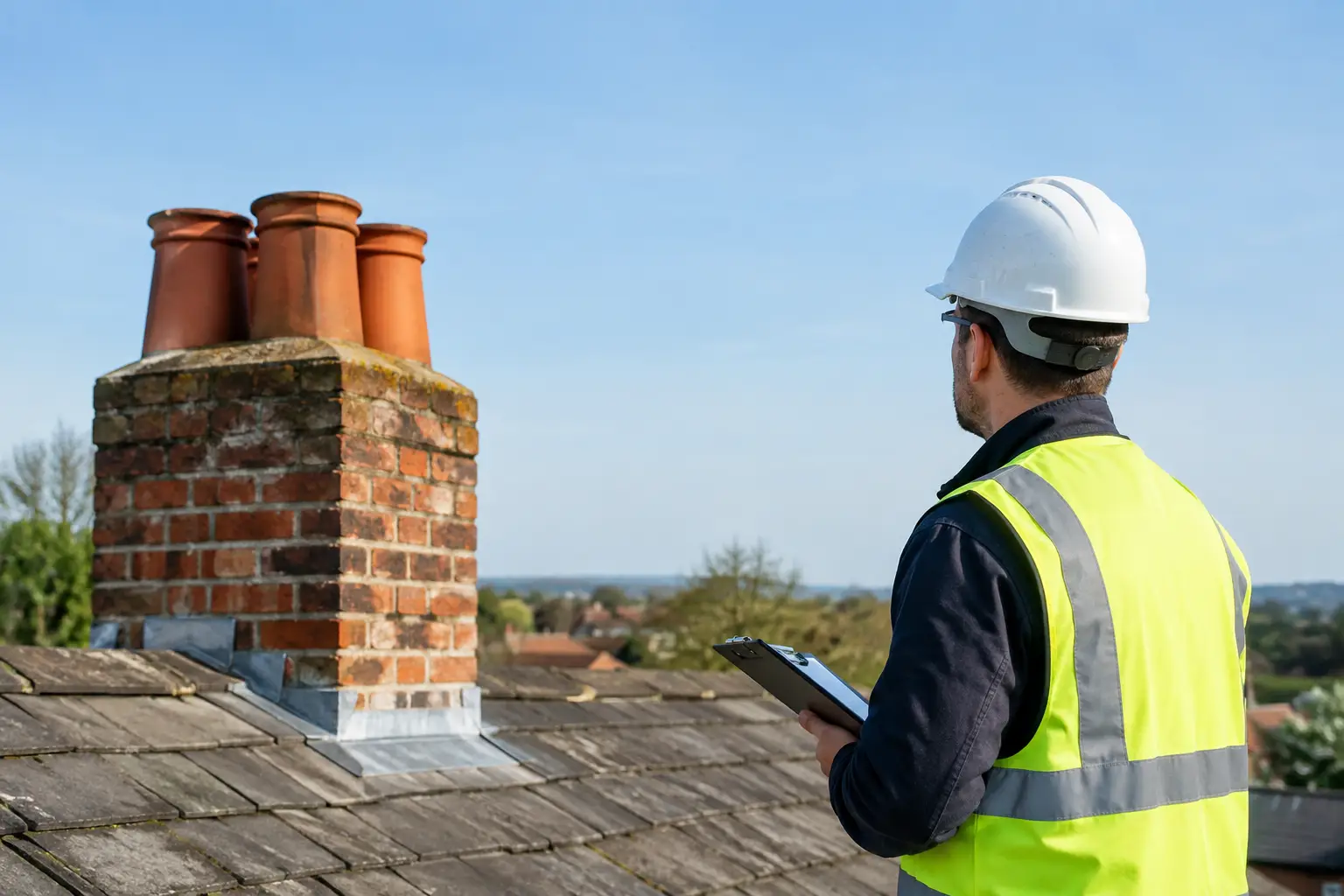
Before any demolition work begins, the contractor should establish what the chimney supports and what supports it. This includes checking the loft, roof timbers, party walls, internal breast, flues and the condition of surrounding tiles or slates. A chimney that appears standalone externally may still be connected to important structural elements internally.
Where a chimney breast is being removed, structural calculations and suitable steel support may be required. Building Regulations commonly apply to this type of alteration. The local authority building control team or an approved inspector may need to review the work, particularly where load-bearing elements are changed.
For stack removal, the roof needs just as much attention as the brickwork. Once the chimney is gone, the opening must be rebuilt to match the roof pitch and covering. Rafters may need extending or trimming, underlay and battens need restoring, and replacement tiles or slates should blend as closely as possible with the existing roof. Poorly finished removal work can result in recurring leaks, uneven roof lines and difficult-to-source repairs later.
Planning permission and shared chimneys
Most chimney removal work does not require planning permission under normal circumstances. However, there are important exceptions. Listed buildings, properties in conservation areas and homes subject to specific planning controls may need consent before external alterations are made. Removing a chimney can materially change a historic roofscape, so it should never be assumed that permission is unnecessary.
Shared chimneys need additional care. In a terraced or semi-detached house, the chimney may sit on a party wall or serve an adjoining property. Removing one side of a shared stack can affect the neighbour’s flue, weather protection and structural support. Party Wall procedures may apply, and clear agreement with the adjoining owner is essential before work starts.
Landlords and managing agents should also check whether the chimney serves a communal system, a neighbouring flat or an old ventilation route. Even an unused-looking pot may be connected to a live flue. Gas appliances, solid-fuel stoves and boilers must be disconnected or rerouted correctly by suitably qualified tradespeople before any chimney works take place.
When removal makes practical sense
Removal is often considered when a chimney stack is badly deteriorated and repeated repairs no longer represent good value. Loose brickwork, failed flaunching, damaged pots, deteriorated mortar and defective lead flashings can all create water ingress and safety concerns. If the chimney is no longer used, complete removal may eliminate a future maintenance liability.
It can also be a sensible part of a wider re-roof. When tiles or slates are already being stripped, access is in place and roof timbers are exposed, it may be more efficient to remove an unwanted stack and reinstate the roof at the same time. This avoids paying separately for scaffolding and reduces the risk of mismatched repairs.
Inside the property, removing a chimney breast can make a small room more usable. Yet the gain in floor area should be weighed against the disturbance involved. Floors, ceilings, skirting boards, plasterwork and decorations will need making good. In some homes, retaining the breast and simply removing a defective stack is the lower-risk and more economical solution.
The roof details that prevent future leaks
The quality of the roof reinstatement is what separates a sound chimney removal from a costly callback. The new section needs to be tied correctly into the existing roof, with no weak point where water can track beneath tiles or slates. This is especially important on older tile and slate roofs, where materials can be fragile or unevenly weathered.
A contractor should check that the roof covering, membrane, battens and timber framing are all restored rather than patched over. Matching reclaimed slates or compatible tiles may be needed where the original materials are no longer manufactured. The ridge line, valleys and nearby leadwork should also be inspected, as these details can be disturbed by access and demolition.
If a chimney is reduced rather than removed entirely, its cap must shed water effectively and be finished to withstand frost and driving rain. An inadequate cement cap can crack and admit moisture into the remaining masonry. In many cases, a properly rebuilt roof section is the cleaner and more durable option.
What affects the cost of chimney removal?
Costs vary widely because the scope of work can be very different from one property to another. Removing a small, isolated stack during a planned re-roof is not comparable to taking out a full chimney breast from a multi-storey Victorian terrace.
The main cost factors are access and scaffolding, the height and condition of the stack, whether the chimney is shared, structural support requirements, disposal of masonry, roof covering materials and the internal making-good work required. Listed building consent, Building Regulations applications and specialist surveys can also add to the overall budget.
A detailed quotation should explain exactly what is included: demolition, protection of the property, scaffold, waste removal, structural works, roof timber alterations, tile or slate replacement, leadwork, internal repairs and certification where required. A vague price for “chimney removal” can leave major elements unaccounted for.
Why emergency chimney problems should not wait
A leaning stack, falling mortar or loose chimney pot needs prompt attention, particularly after high winds or prolonged rain. The immediate solution may be to make the area safe, remove unstable components or carry out temporary weatherproofing while a permanent repair or removal plan is prepared.
Do not attempt to remove loose masonry from a ladder or access a damaged roof yourself. Chimneys are exposed structures, and deterioration is not always visible from ground level. A professional inspection can establish whether repointing, rebuilding, partial dismantling or full removal is the safest response.
Armstrong Roofing & Building Limited provides chimney work alongside tile and slate roofing, leadwork, re-roofs and emergency roof repairs across the UK. With free quotations, no call-out charge and 24-hour emergency response, the focus is on identifying the cause of the problem and completing the connected roofing work properly.
If an unused chimney is creating leaks or concern, arrange an inspection before another winter exposes the same weakness. A clear assessment now can protect the roof, the structure and the people beneath it.