

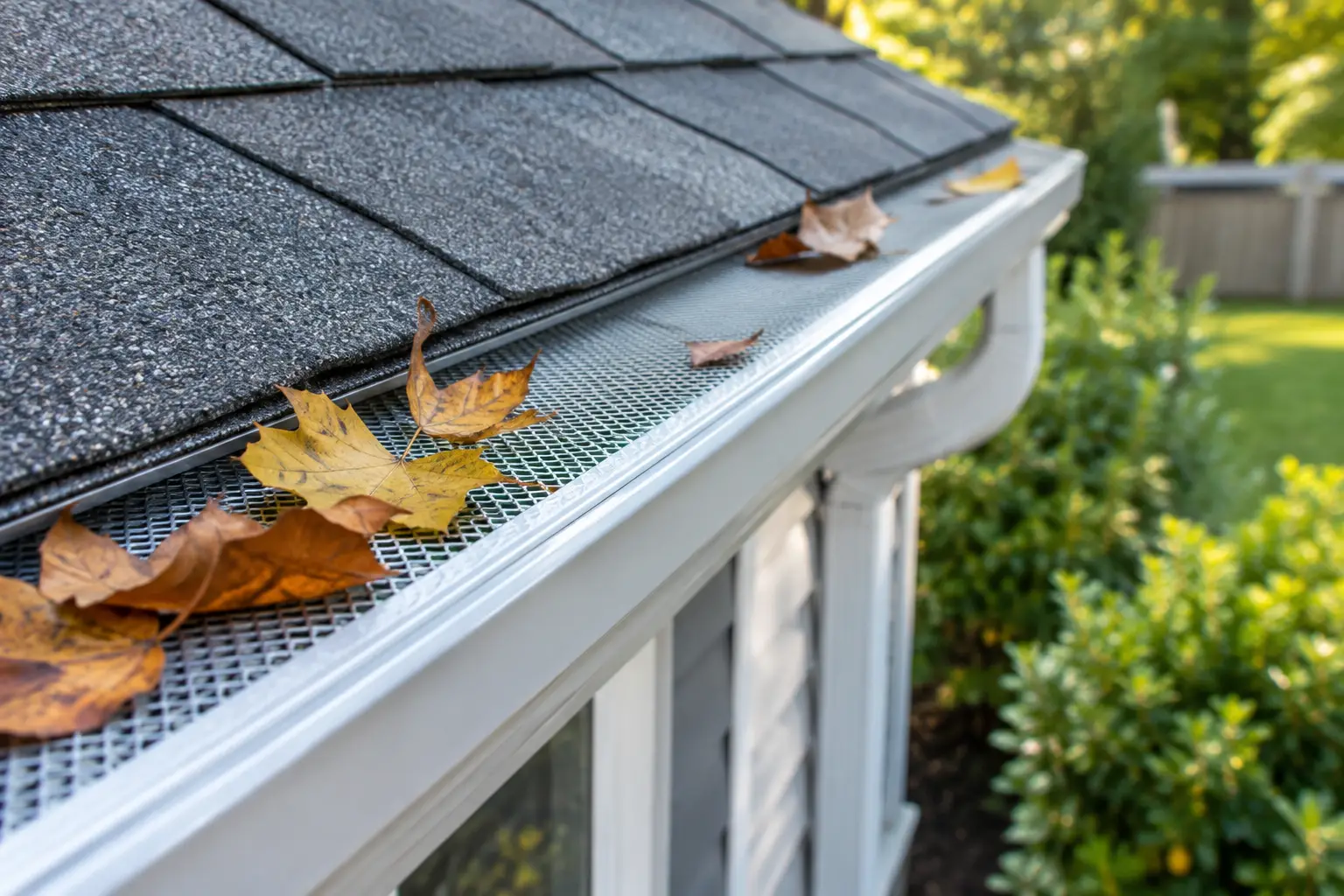
A gutter can look clear from ground level while wet leaves, moss and roof grit are building up beneath the surface. That is when rainwater begins to spill over the front edge, soak brickwork or run back towards the roofline. The best gutter guards for leaves can reduce this risk, but only when the guard suits the property, the surrounding trees and the condition of the existing guttering.
For many UK homes, a guard is not a substitute for maintenance. It is a practical way to slow down the build-up of debris between cleans, particularly where mature trees shed heavily in autumn. Choosing the wrong type, however, can cause water to overshoot the gutter or allow debris to sit on top and rot.
What a gutter guard needs to do
A good gutter guard should let rainwater enter the gutter while stopping the majority of leaves, twigs and larger roof debris from getting inside. It also needs to remain secure through wind, frost and heavy rainfall. That sounds straightforward, but UK weather and roof construction make the choice more complicated.
Fine debris is the usual challenge. Birch seeds, pine needles, moss from ageing tile and slate roofs, and granules from some roof coverings can pass through wide openings. Very fine mesh may catch more material, yet it can also collect moss and leaf fragments on top. Once that layer becomes wet, water flow can reduce quickly.
The right result is not a completely maintenance-free gutter. It is a system that keeps the outlet clear, reduces blockages and makes routine cleaning safer and less frequent.
Best gutter guards for leaves: the main options
Aluminium or steel mesh guards
Mesh guards are often the strongest all-round option for properties affected by broad leaves, such as sycamore, oak and beech. The mesh sits across the gutter and allows water through while leaves are carried away or dry out on the surface.
A metal mesh guard is generally more durable than lightweight plastic and can suit long gutter runs on houses, blocks of flats and commercial buildings. Fine stainless-steel mesh can be effective where smaller debris is a concern, but it must be installed with the correct angle and support. A poorly fitted mesh can sag, trap debris or interfere with the roof edge.
Mesh works best on sound guttering with a suitable fall towards the downpipe. If the gutter is already holding standing water, a guard will not solve the underlying drainage problem.
Brush-style gutter guards
Brush guards are made from bristles set around a central wire. They sit inside the gutter and create a barrier that leaves struggle to pass through. They are quick to fit and may be useful as a short-term measure on simple, accessible gutter runs.
Their limitation is maintenance. Leaves, moss and seeds can lodge in the bristles, especially after prolonged rain. The debris often needs lifting out by hand, which can make them less suitable for properties beneath dense trees or for high, difficult-to-access rooflines. They also reduce the usable capacity of the gutter during heavy downpours.
Foam inserts
Foam gutter inserts fill the channel of the gutter while allowing water to filter through. They are inexpensive and straightforward to install, but they are rarely the best long-term answer for leaf-heavy areas.
Organic debris can settle into the foam and break down over time. Moss can root into its surface, and damp conditions may shorten its lifespan. On older roofs that shed grit or moss, foam inserts usually create another material that needs regular removal and replacement.
Surface-tension or hooded guards
Hooded guards use a shaped cover with a narrow opening. Rainwater follows the curved surface into the gutter, while leaves should fall away. When professionally selected and fitted, they can handle substantial leaf fall and may be a good option for certain roof pitches.
They are not universal. Their performance depends on the roof slope, the distance between the roof edge and gutter, and the volume of rainfall. During intense rain, water can sometimes run over the cover rather than into the gutter. This risk is greater where gutters are undersized, poorly aligned or receiving fast runoff from a large roof area.
Plastic clip-on screens
Plastic screens and grilles are widely available and can provide basic protection against larger leaves. They can be suitable for a low-level porch, garage or short outbuilding run where access is easy.
For a main roofline, they are more likely to become brittle with age, lift in strong winds or clog where leaves collect across the top. They are a budget option rather than a fit-and-forget solution.
Match the guard to the roof and the trees
The best choice is based on what enters the gutter, not simply which product claims the most protection. Large deciduous leaves call for a durable mesh or well-designed surface guard. Pine needles, moss and fine seeds may require a finer mesh, but that only works if the roof is maintained and the mesh can be cleaned safely.
Tile and slate roofs deserve particular care. Loose mortar, moss growth and slipped tiles can send debris into the gutter repeatedly. Before fitting guards, check the roofline, verge, flashing, fascia boards and gutter brackets. A guard fixed to damaged timber or distorted guttering can make later repairs more difficult.
Consider rainfall too. A small semi-round gutter that already overflows in a storm may need a larger-capacity gutter or additional downpipe rather than a guard alone. The guard should support drainage, not restrict it.
For landlords and property managers, access should carry real weight in the decision. A guard that needs frequent brushing may be unsuitable on a three-storey building or a commercial premises where safe access equipment is required. A more durable professionally fitted system can be better value when it reduces repeat maintenance visits.
Problems gutter guards will not fix
Gutter guards can help prevent leaf blockages, but they cannot correct a broken drainage system. Water running over the gutter may be caused by failed joints, a blocked downpipe, incorrect falls, sagging brackets or an outlet positioned too high. In winter, ice can expose weak fixings and split older plastic gutter sections.
Overflow at one point often indicates a local blockage. Overflow along the whole run can suggest that the gutter is too small, incorrectly pitched or being overwhelmed by runoff. If water is staining walls, entering the eaves or causing damp around window heads, it is worth arranging an inspection before fitting any guard.
On older properties, gutter problems can also sit alongside failing leadwork, chimney defects or roof damage. Dealing with the connected issue early is usually more effective than repeatedly clearing the same section of gutter.
Professional fitting makes a difference
The quality of installation matters as much as the guard itself. The gutter must be cleaned first, outlets and downpipes checked, and the fall tested with water. Any loose brackets, leaking joints or damaged fascia should be addressed before the new guard is secured.
Fitters also need to avoid compromising the roof covering. On tiled and slate roofs, forcing guards beneath tiles or fixing into unsuitable points can disturb the roof edge. The guard must allow water to enter correctly without creating a route for wind-driven rain behind the fascia.
For high-level work, professional installation removes the temptation to work from an unstable ladder or lean out from a window. It also gives property owners a clear view of whether the guttering needs repair, realignment or replacement rather than an accessory alone.
Keep guards working after installation
Even the best gutter guards for leaves need occasional checks. Inspect them after autumn leaf fall, following storms and whenever you notice water overflowing. Look for debris sitting on top, lifted sections, moss build-up and slow flow at downpipes.
A seasonal visual check from the ground is useful, but do not ignore warning signs because a guard is fitted. Damp patches, peeling paint on fascia boards, staining on masonry and dripping from joints all point to a problem that needs attention.
If your guttering is repeatedly overflowing, arrange a proper assessment rather than adding another temporary layer. Armstrong Roofing & Building can inspect guttering alongside roof edges, tile and slate work, leadwork and associated repairs, with free quotations and no call-out charge. The most useful guard is the one fitted to a clean, secure and correctly draining system, ready for the next spell of heavy rain.