
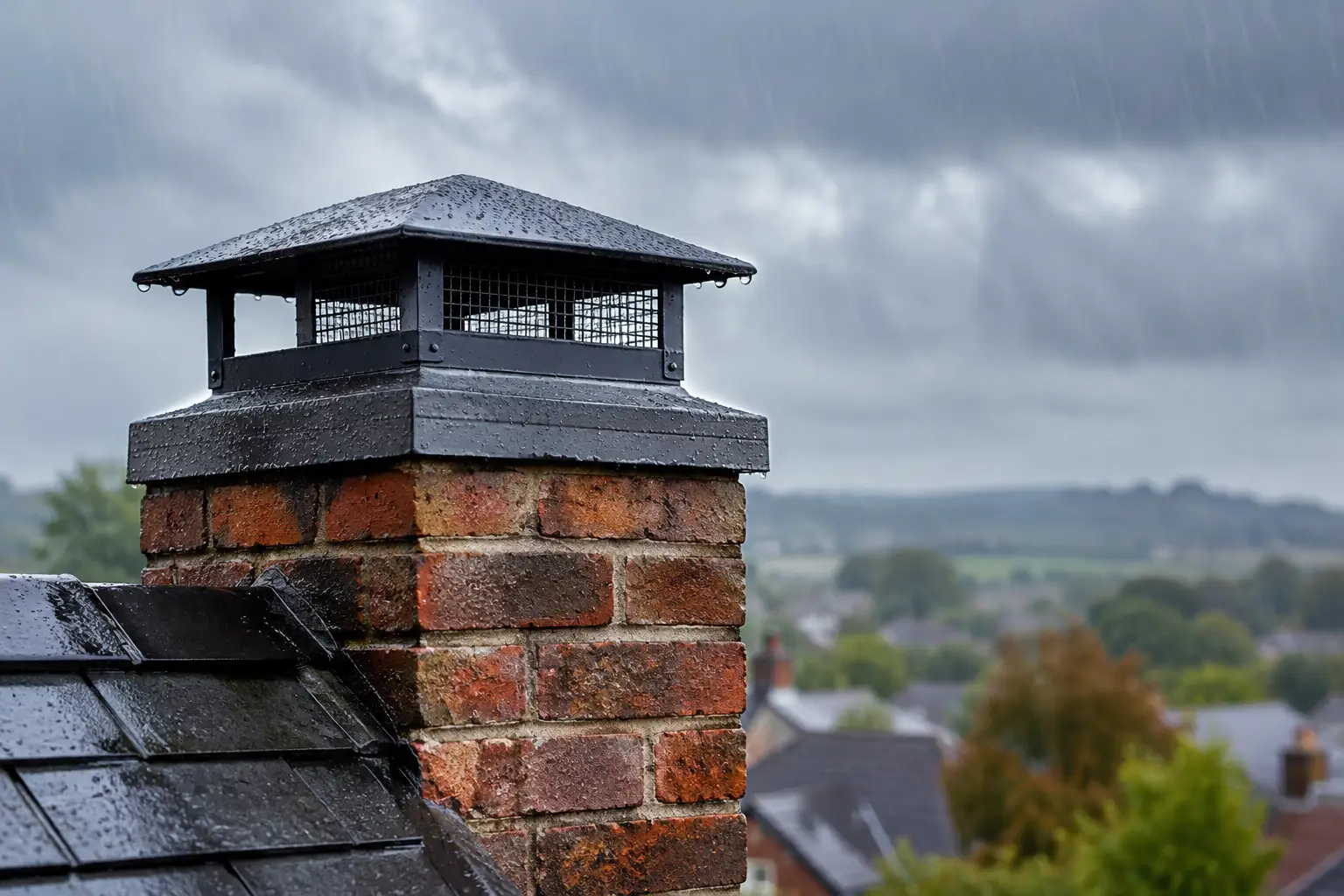
A chimney pot is an exposed opening at the highest point of the roof, so it receives the full force of wind-driven rain. Finding the best chimney caps for rain is not simply about placing a cover over the pot. The cap must shed water effectively while allowing a working flue to draw safely, and it must be fixed well enough to withstand repeated UK storms.
For an unused chimney, a suitable cap can reduce rainwater entering the stack and help limit internal damp. For a live fireplace, stove or boiler flue, the wrong product or a poor installation can restrict ventilation, affect appliance performance and create a safety issue. The right answer depends on how the chimney is used, its condition and the type of pot already in place.
Why rain entering a chimney causes problems
A small amount of rain inside an open flue may not look urgent, but repeated water ingress can cause gradual and expensive damage. Moisture can soak into porous brickwork and mortar, then freeze and expand during colder weather. This can loosen joints, crack chimney pots and contribute to spalling brick faces.
Water also travels. It can run down the flue, emerge around the fireplace opening, stain internal walls or combine with soot deposits to create unpleasant smells. In older properties, damp around a chimney breast is sometimes blamed on the roof when the cause is a damaged pot, failed chimney cap, worn lead flashing or defective pointing higher up the stack.
A cap is therefore one useful part of chimney maintenance, not a substitute for a proper inspection. If there are loose bricks, open mortar joints or failed leadwork, those defects need repair as well.
Best chimney caps for rain: the main options
There is no single cap that suits every chimney. The best chimney cap for rain protection is one that matches the flue's purpose and diameter, provides weather cover without obstructing airflow, and is made from a material suitable for the location.
Rain caps for active flues
A rain cap, sometimes called a cowl, sits above the chimney pot with a hood that deflects rainfall away from the flue opening. It is commonly the most appropriate choice for an active open fire or solid-fuel appliance because it maintains an open route for fumes while reducing direct rainfall.
Many rain cowls include a bird guard. This can be useful where nesting material, leaves or debris are likely to enter the flue. However, mesh and guards require consideration on solid-fuel systems. Soot can build up, and any guard must be compatible with the appliance and swept as part of routine chimney maintenance.
In exposed areas, an anti-downdraught cowl may be worth considering. These are designed to help stabilise the draw where gusting wind pushes smoke or fumes back down the chimney. They cost more than a basic rain cap, but may be a sensible choice where smoke blowback is already a recurring problem.
Solid caps for disused chimneys
A disused flue needs a different approach. A solid chimney cap or ventilated cap can stop most direct rain entry while allowing the chimney to breathe. Completely sealing a redundant flue without ventilation can trap moisture inside the stack, particularly where there is residual damp or a cold chimney breast.
A ventilated capping solution is usually preferable where the fireplace opening has also been closed off. It helps air circulate through the flue and reduces the chance of condensation building up. The detail matters: the cap should fit securely, but the flue should not be treated as an airtight void.
Chimney pots with integral hoods
For chimney stacks being repaired or rebuilt, a new pot with an integral rain hood can provide a tidy, durable finish. This can be a practical option where the existing pot is cracked, undersized or poorly suited to the flue liner. It also avoids trying to adapt a cap to an old, uneven pot.
The trade-off is that replacing pots involves more work at roof level. Access, scaffold requirements and the condition of the stack all affect the cost. If the chimney needs repointing, flaunching repairs or leadwork at the same time, combining the work can be more efficient than arranging separate visits.
Choose the material for the chimney and the exposure
Galvanised steel caps are widely used and can offer good value, but the coating can deteriorate over time in wet, coastal or highly exposed locations. Stainless steel is generally a stronger long-term option for demanding conditions and is often chosen for solid-fuel applications, subject to the flue and appliance specification.
Aluminium is lightweight and resistant to corrosion, although it is not always the best choice for every high-heat application. Clay and terracotta options can complement traditional stacks, while concrete caps may suit certain redundant chimney arrangements. The important factor is not appearance alone. The cap must be compatible with the fuel type, the liner or flue size, and local weather exposure.
A cheap cap that rusts, rattles loose or restricts the flue is poor value. Equally, the most expensive cowl is unnecessary if the real problem is broken flashing or a chimney stack that needs rebuilding.
Correct fitting matters as much as the cap
Chimney caps are installed at height, often above a pitched roof with fragile tiles or slates below. Safe access and secure fixing are essential. A cap needs to be correctly sized for the pot and fixed with suitable stainless-steel straps, clamps or screws, depending on the design.
It should not wobble in the wind or rely on a loose push-fit arrangement. A loose cowl can become a serious hazard in storm conditions, as well as allowing water to enter around the fitting. The pot itself should be checked before fitting. If it is cracked, leaning or loose in the flaunching, installing a new cap alone does not resolve the underlying risk.
For active flues, fitting must also account for clearance, ventilation and manufacturer requirements. This is particularly important for wood burners and other appliances where flue performance directly affects safe operation. A chimney sweep or qualified installer may need to confirm the flue is clear and suitable before a cowl is fitted.
Signs your existing chimney cap needs attention
Visible corrosion, missing mesh, a tilted cap or a cowl that rattles during wind are clear reasons to arrange an inspection. Inside the property, brown staining around the chimney breast, damp patches after heavy rain, falling debris in the fireplace and persistent smoky smells can all point to water ingress.
Do not assume a cap is the sole cause. Rain can enter through open mortar joints, defective lead flashing at the base of the stack, damaged render, cracked pots or failed roof tiles nearby. A professional roofing inspection can identify where water is actually getting in before money is spent on the wrong repair.
Where water is entering during a storm, or bricks and pots appear loose, it should be treated as an urgent roofing issue. Temporary measures may limit further damage, but permanent repairs should address the cap, stack and roof junction together.
When to arrange a professional chimney inspection
A straightforward replacement on a sound, accessible chimney may be relatively quick. Older stacks, tall properties, commercial buildings and storm-damaged chimneys require a more careful assessment. A roofer can check the chimney pot, flaunching, pointing, leadwork and surrounding tiles or slates as one weatherproofing system.
Armstrong Roofing & Building Limited provides chimney repairs, leadwork, tile and slate roofing, and emergency roofing support across the UK. A free quote and no call-out charge can help property owners understand the scope of work before committing to repairs.
If your chimney is letting in rain, avoid waiting for internal staining to become a larger repair. A correctly specified, securely fitted cap and a sound chimney stack give rain far fewer routes into the property.