

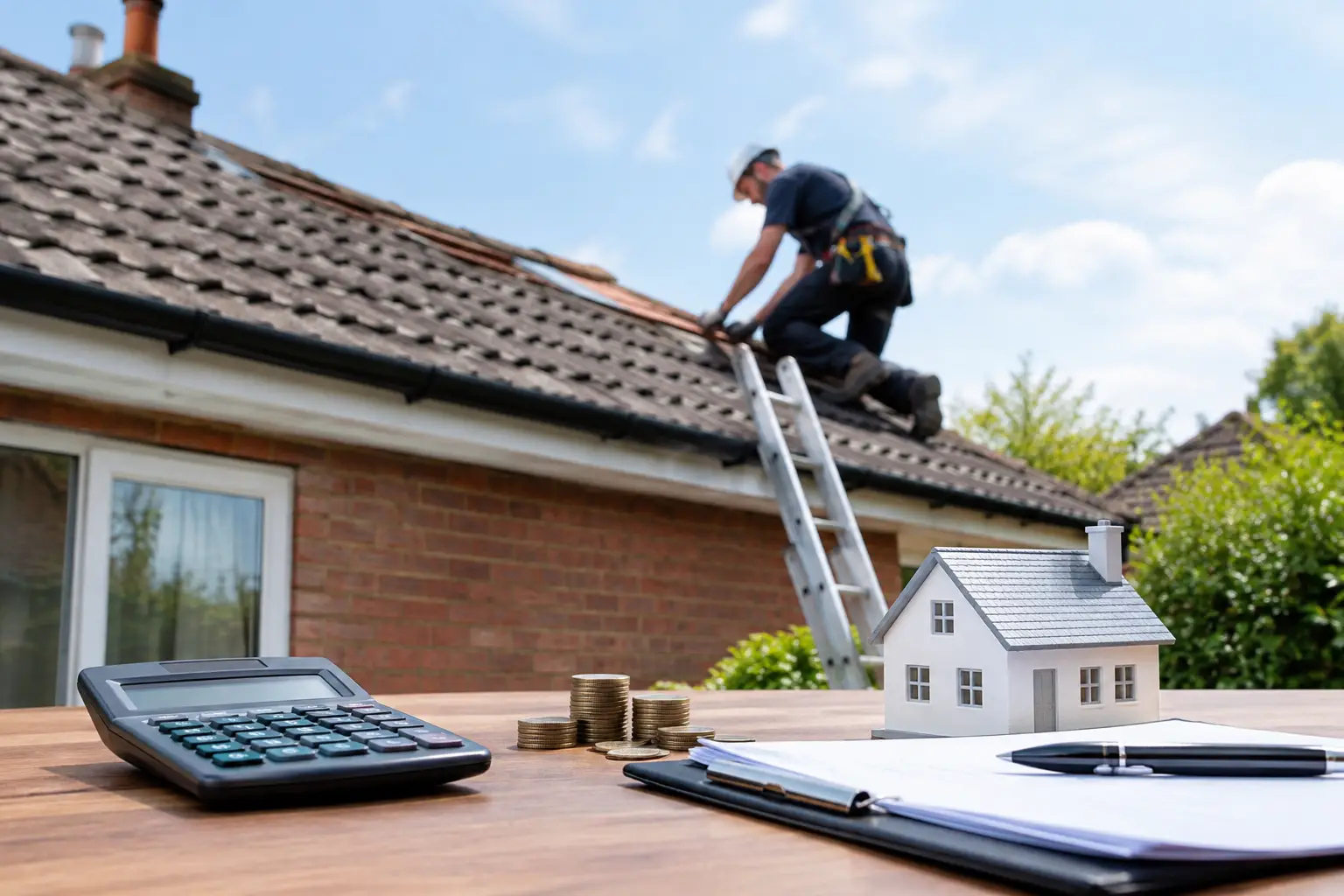
A leaking roof can demand action long before tax paperwork is on anyone’s mind. But are roof repairs deductible when the invoice arrives? In the UK, the answer usually depends on who owns the property, how it is used and whether the work is a genuine repair or a capital improvement.
For homeowners, roof repair costs are generally not deductible from personal income tax. For landlords and businesses, qualifying repair and maintenance costs can often be claimed against rental or trading income. The distinction matters, particularly where a small leak develops into a major re-roof, chimney repair or leadwork project.
Are Roof Repairs Deductible for Landlords?
If you let a residential or commercial property, the cost of repairing and maintaining its roof is normally an allowable expense where the work restores the property to its previous condition. This can reduce the taxable profit from the rental business.
Typical examples include replacing slipped or broken tiles, repairing storm damage, renewing damaged flashing, repointing a chimney, clearing and repairing gutters, and fixing a localised leak. Emergency work to make a roof watertight after wind or rain damage is also commonly treated as a repair, provided it does not form part of a wider improvement.
The key test is the purpose of the work. Repairs keep an existing asset in working order. Improvements create something substantially better, larger or different. HMRC treats those categories differently.
A landlord who replaces a handful of cracked slates or renews worn leadwork is usually maintaining the building. A landlord who adds a new roof extension, changes the roof structure to create additional usable space or upgrades an ordinary roof into a materially higher-specification construction may be making a capital improvement instead.
That does not mean a sizeable invoice automatically makes the work capital. A full re-roof can still be a repair in some circumstances, especially when it replaces an exhausted roof with a modern equivalent and simply returns the property to a lettable condition. The scale of the work is relevant, but the nature and effect of the work are more important.
Repair or Improvement: The Decision That Matters
Roofing materials change over time. It may be impossible, impractical or unsafe to replace old materials with identical ones. Using modern tiles, membranes or insulation as part of a necessary repair does not automatically turn the work into a capital improvement.
For example, replacing deteriorated felt and tiles with current equivalent materials as part of a necessary roof renewal may still be a revenue repair. By contrast, raising the roofline, adding dormers, converting loft space, installing a more complex roof design or carrying out works that significantly enhance the property beyond its original condition is more likely to be capital expenditure.
There are grey areas. Better thermal performance may result from complying with current Building Regulations during a roof replacement, without being the main purpose of the job. Equally, insulation installed as part of a substantial conversion or upgrade project could be capital. The scope of works, contractor’s quotation and condition of the roof before work begins can all help demonstrate the correct treatment.
A useful question is this: was the work needed to restore the roof, or was it intended to improve or alter the property? If the answer is both, an accountant may need to apportion the costs between repair and capital elements.
Initial repairs after buying a property
One area that catches landlords out is repairing defects that were already present when the property was bought. If a reduced purchase price reflected a visibly defective roof, the cost of putting that roof right may be treated as capital expenditure rather than an immediate rental expense.
This is particularly relevant with older properties, auction purchases and homes bought for refurbishment. A survey, pre-purchase photographs and sale particulars can all be useful evidence. If the roof deteriorates after purchase through normal wear, weather damage or tenant use, later repair costs are more likely to be allowable.
What About Your Own Home?
For most owner-occupiers, there is no income tax deduction for repairing a roof on a private residence. Whether the work involves a few missing tiles, chimney leadwork or an entire replacement roof, it is normally a personal expense.
There can be separate considerations if part of the home is used exclusively for a business, if the property is a furnished holiday let subject to the rules in force for the relevant tax year, or if it is later sold and capital gains tax becomes relevant. These situations are more specialised and should be discussed with a qualified tax adviser.
Insurance may also cover certain sudden damage, such as storm damage, depending on the policy and the insurer’s assessment. Routine wear and tear, age-related deterioration and maintenance issues are often excluded. Acting quickly to prevent further water ingress is still sensible, both to protect the building and to support an insurance claim where cover may apply.
Can a Limited Company Claim Roof Repair Costs?
A limited company can normally deduct the cost of repairs to a commercial building or an investment property where the expense is incurred wholly and exclusively for its business or property activity. Repairs to warehouse roofs, office gutters, flat roofs, chimney stacks and associated exterior elements may qualify where they preserve the existing asset.
Capital works are treated differently. They are not normally deducted from day-to-day profits in the same way as repairs, though tax relief may be available through other routes depending on the type of expenditure and property. Structural building costs do not usually qualify for plant and machinery allowances, so getting the classification right before submitting accounts is worthwhile.
If the company is VAT registered and the property activity allows VAT recovery, it may be able to reclaim VAT on qualifying roofing invoices. This is separate from whether the underlying repair cost is deductible for corporation tax. Exempt property activities, including some residential lettings, can restrict VAT recovery.
Keep Clear Records Before Work Starts
A good roofing invoice does more than show the total cost. It helps explain what was repaired, why it was necessary and whether any improvement work was included. Ask for a clear written quotation and retain the final invoice, payment evidence and photographs of the damage where possible.
For larger works, keep the survey or inspection report, insurance correspondence, any Building Regulations paperwork and a clear breakdown where the project includes both repairs and improvements. A quote stating “replace failed lead flashing and renew damaged tiles to stop water ingress” is far more useful for tax records than a vague description such as “roof works”.
Landlords should keep records for the relevant HMRC retention period and ensure expenses are entered in the correct accounting period. Individual landlords using the cash basis generally claim allowable expenses when they pay them, while companies and some larger businesses may account for costs on an accruals basis. Your accountant can confirm which method applies.
Do Not Delay Necessary Repairs for Tax Reasons
Tax treatment should not decide whether a roof is made safe. A small leak can quickly damage timbers, insulation, ceilings and electrical fittings, increasing both the final cost and the disruption to tenants or business operations.
Prompt repairs are often the most economical option. Professional assessment can identify whether the issue is limited to tiles, slates, ridge work, flashing, gutters or a chimney defect, or whether the roof covering has reached the point where planned renewal is the better long-term decision. For landlords, timely maintenance also supports the obligation to keep a rented property safe and in repair.
Armstrong Roofing & Building provides UK-wide roof repairs, re-roofs, tile and slate work, leadwork, chimney repairs and guttering, with free quotations, no call-out charge and 24-hour emergency response for urgent roofing problems.
Where the cost is significant or the work includes alterations, obtain tax advice before treating the invoice as a repair expense. The best time to resolve a tax classification question is while the scope, photographs and contractor paperwork are still clear - not years later when HMRC asks why the work was claimed.