

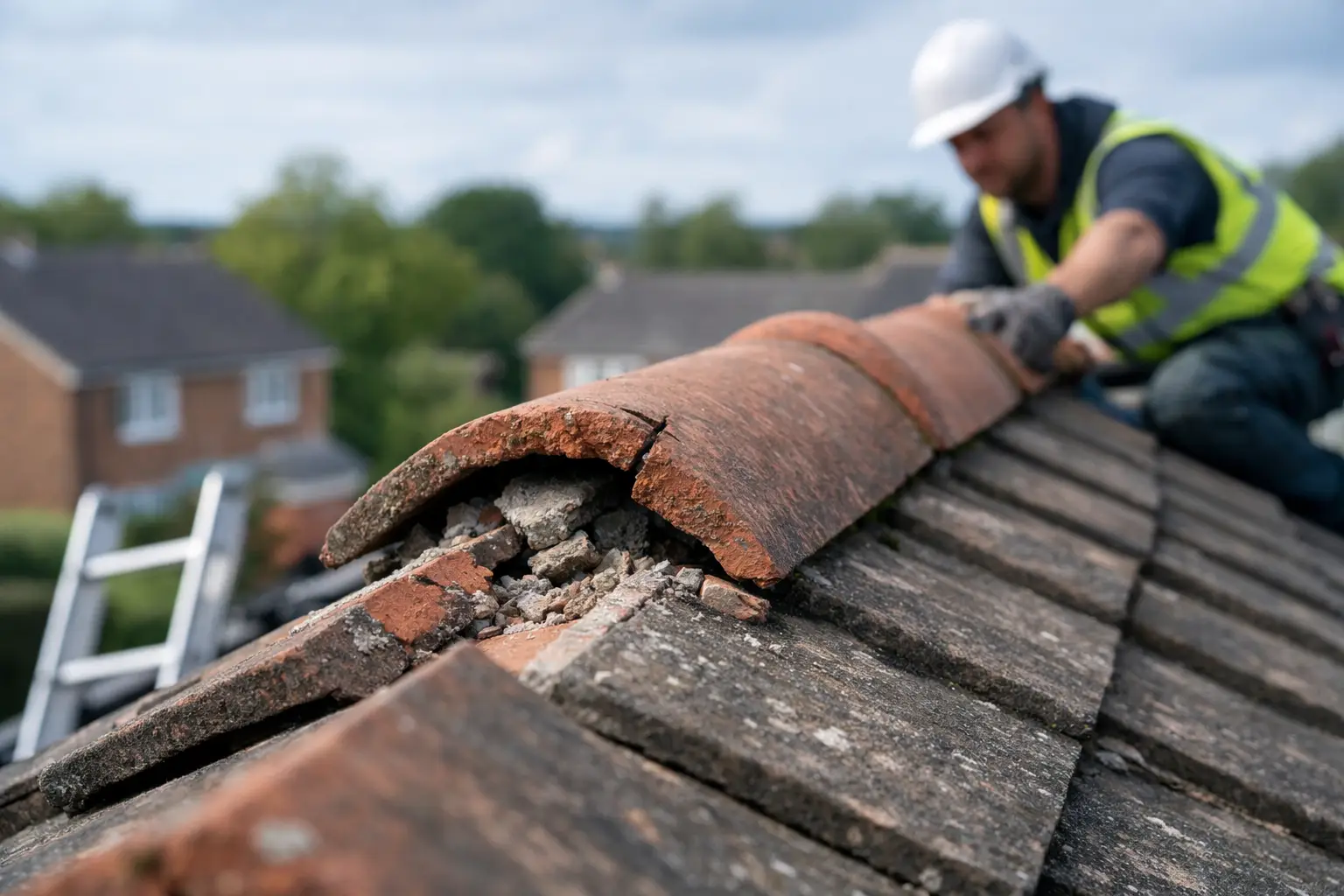
A ridge tile shifting at the top of a roof can look like a minor defect from ground level, but it deserves prompt attention. Are loose ridge tiles dangerous? They can be, particularly in high winds, during heavy rain or where people regularly pass beneath the roofline. The immediate risk is a tile falling, while the longer-term risk is water getting into the roof structure.
Ridge tiles sit along the highest point of a pitched roof, where the two roof slopes meet. They protect the ridge from wind-driven rain and help hold the roof covering together. When their bedding mortar fails, fixings deteriorate or the roof moves with age and weather exposure, individual tiles can become loose or unstable.
Are Loose Ridge Tiles Dangerous to People and Property?
Yes, a loose ridge tile can become a safety hazard. Ridge tiles are heavy, and a falling tile can damage vehicles, conservatories, gutters, lower roof sections and neighbouring property. More seriously, it can injure anyone below, including residents, visitors, pedestrians or contractors working around the building.
The level of danger depends on the tile’s condition and location. A tile that has only begun to crack in its mortar bed may not be about to fall immediately. One that is visibly lifted, has slipped out of line, rocks in the wind or has already dropped mortar onto the ground needs urgent professional assessment. Do not rely on calm weather as reassurance. A gust strong enough to catch an unsecured tile can turn a manageable repair into an emergency.
For landlords, managing agents and commercial property managers, a loose ridge tile may also create a liability concern. If the building is accessible to tenants, staff or members of the public, isolating the area beneath the affected roof slope is a sensible short-term precaution until the roof can be made safe.
Why Ridge Tiles Come Loose
Most loose ridge tiles result from ageing mortar. Traditional ridge tiles are commonly bedded in mortar, which gradually weakens through years of frost, rain, temperature changes and movement in the roof. Cracks allow water in, and repeated freezing and thawing can break down the bedding further.
Storms are another common cause. Strong winds can loosen a tile that was already poorly supported, while flying debris may crack the tile itself or dislodge surrounding mortar. On older properties, general roof movement, timber deterioration or previous repairs carried out with unsuitable materials can all contribute.
Modern dry-fix ridge systems use mechanical fixings and ventilation components rather than relying solely on mortar. They can offer a durable alternative during a re-roof or larger ridge renewal, but they still need correct installation and periodic inspection. The right approach depends on the roof’s age, condition, tile type and the extent of the failure.
Warning Signs You Should Not Ignore
A roof-level inspection is the only reliable way to confirm the condition of ridge tiles, but several signs can be spotted safely from the ground. Look for a ridge line that appears uneven, lifted tiles, gaps beneath the tiles, visible cracking, or pieces of mortar on the driveway, patio or path.
Inside the property, new damp patches near the top of upstairs walls, staining in the loft or a musty smell after rainfall can indicate that water is entering around the ridge. Water does not always appear directly below the problem, as it can travel along timbers or felt before becoming visible.
You may also hear rattling or knocking from the roof during windy conditions. This could be a loose ridge tile, although it may also relate to flashing, guttering or another part of the roof covering. Either way, it is worth arranging an inspection rather than waiting for visible damage.
What to Do if a Ridge Tile Is Loose
Keep clear of the area directly below the affected section of roof. Move cars, garden furniture and bins if it is safe to do so, and keep children and pets away from the immediate area. If the tile is above a public pavement, entrance or shared access route, take reasonable steps to prevent people walking beneath it while help is arranged.
Do not climb onto the roof, lean a ladder against the ridge or attempt to push the tile back into place. Working at height without the right access equipment is dangerous, and handling one loose tile can disturb others around it. Applying sealant or fresh mortar from a ladder is not a dependable repair and may conceal the real extent of the issue.
If a tile has fallen, if several tiles are moving, or if high winds are forecast, treat it as an emergency roof repair. A professional roofer can make the roof safe, assess the surrounding ridge and recommend whether a local repair or wider renewal is needed. Armstrong Roofing & Building provides UK-wide roofing support, including 24-hour emergency response, free quotations and no call-out charge for customers facing urgent roof defects.
Repairing a Loose Ridge Properly
A lasting repair starts with a close inspection of the ridge tiles, bedding, roof covering and adjacent details. A contractor will check whether the tiles themselves are sound, whether the mortar has failed along a longer run, and whether water has affected the ridge board, underlay or roof timbers.
For an isolated problem, the work may involve carefully removing loose material, replacing any damaged tile and re-bedding the ridge using appropriate materials. Where multiple tiles are loose or mortar is failing across the ridge, patching each one separately can be poor value. Repointing or renewing the whole ridge section is often more reliable and gives the roofer the chance to check alignment and weatherproofing throughout.
There is a trade-off between the lowest immediate cost and the repair that will hold up over time. A small, well-contained defect may only need a targeted repair. An older roof with widespread cracking, slipped tiles or recurrent leaks may need a more substantial ridge renewal, tile and slate repair, leadwork attention or a planned re-roof. Clear photographs, a written scope of work and a free quotation help property owners make that decision with confidence.
Can Loose Ridge Tiles Cause a Leak?
They can. The ridge is exposed to rain from every direction, so gaps around tiles allow wind-driven water into the roof. At first, this may only dampen the underlay or insulation. Left unresolved, moisture can affect timber, create mould conditions in the loft and damage ceilings or internal finishes.
A leak is not guaranteed simply because a ridge tile is loose, especially in dry weather or where the underlay is still performing. However, waiting for an internal leak before arranging a repair is rarely wise. By then, the work may involve both external roofing repairs and internal remedial costs.
Preventing Future Ridge Problems
Ridge tiles should be included in routine roof maintenance, particularly after severe weather. A visual check from ground level a few times a year can identify obvious changes, while a professional inspection is sensible for older roofs, properties surrounded by trees or buildings in exposed coastal and elevated locations.
Keep gutters and valleys clear so water can drain as intended, and deal with slipped tiles, damaged flashing and chimney defects before they allow wider movement or moisture into the roof. If scaffolding is already in place for chimney work, guttering repairs or a re-roof, it can be cost-effective to inspect and address the ridge at the same time.
A loose ridge tile is not always a sign that the entire roof is failing. It is, however, a warning that a key weatherproofing detail needs attention. Acting early protects the people below, limits water damage and gives you more control over the scope and cost of the repair.